2026 Kawasaki Ninja ZX-10R and ZX-10RR : A New Era of Aerodynamics and Precision
Kawasaki has finally taken the wraps off the 2026 Kawasaki Ninja ZX-10R and ZX-10RR, which feature arguably the most extensive upgrade to its litre-class superbikes in recent times. These new variants mix state-of-the-art aerodynamics with evolved chassis geometry and advanced electronics, bringing in Euro 5+ compliancy while retaining the raw 204 bhp power that has made the ZX-10R series legendary in WorldSBK.
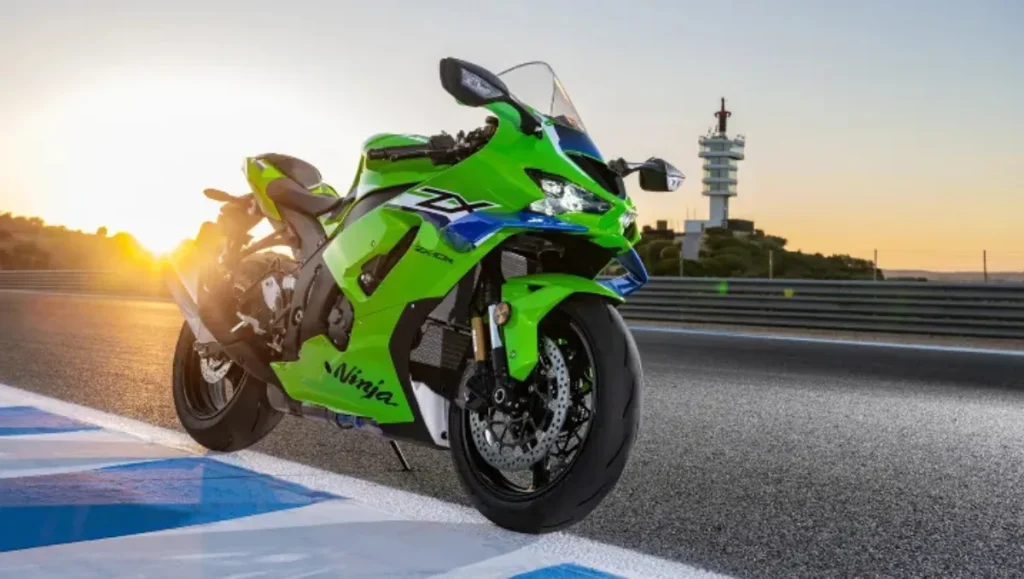
From sharper styling to smarter technology, the 2026 Kawasaki Ninja ZX-10R and ZX-10RR represent a focused evolution aimed at real-world agility and racetrack precision.
New Striking Design and Aerodynamic Enhancements
The very first thing that enthusiasts will notice about the 2026 Kawasaki Ninja ZX-10R and ZX-10RR is its all-new front end. Kawasaki engineers have introduced a sharper, sleeker fairing with a repositioned Ram Air intake now above the headlights instead of between them. This not only gives the bikes a more aggressive face but also improves airflow efficiency at high speeds.
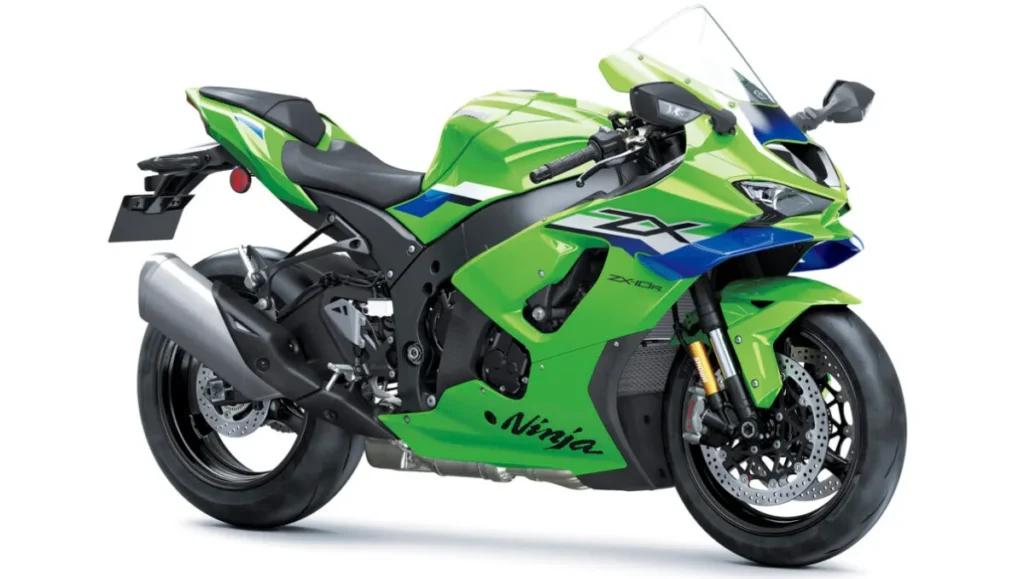
Integrated into the fairing are newly developed ABS resin winglets, which now deliver up to 25 percent more downforce than before. Despite the increased frontal area, drag has risen by a mere 0.3 percent, courtesy of Kawasaki’s aerodynamic optimization. These functional winglets enhance front-end stability, reduce lift under hard acceleration, and improve mid-corner grip—key benefits for riders on both the track and twisty roads.
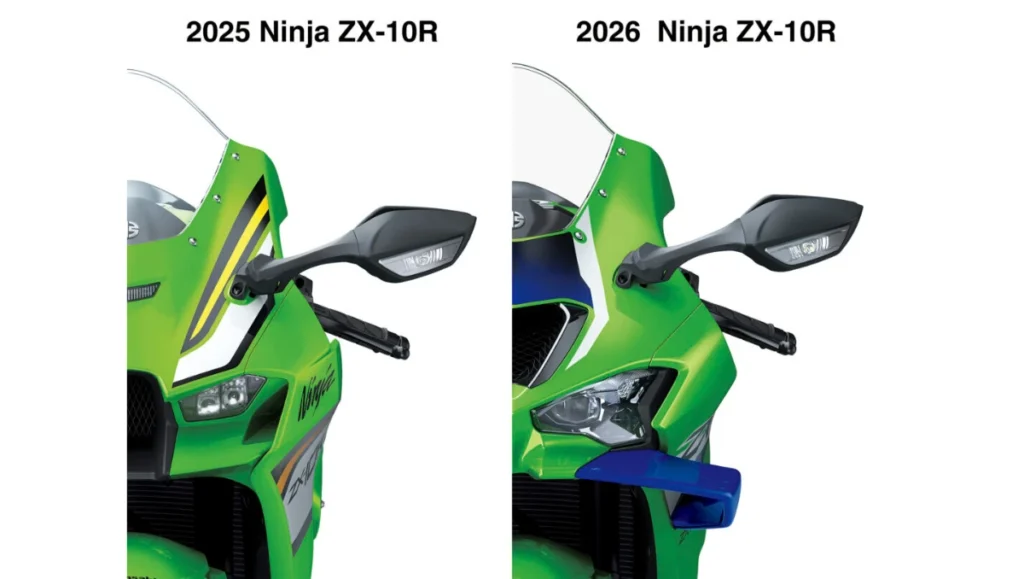
Hybrid projector-reflector headlights, deeper ducts, and a more compact tail section round out the ZX-10R’s new family face, visually aligning it with Kawasaki’s latest supersport lineup.
Engine: Clean, Refined, and Uncompromised
Both bikes continue to be propelled by Kawasaki’s 998cc inline-four engine-a master class in balance between brutal acceleration and smooth power delivery. Kawasaki says the 2026 Ninja ZX-10R and ZX-10RR still make 204 bhp, even though their engines have been updated to meet the even-stricter Euro 5+ emissions rules.
These updates include revised engine mapping and throttle response to ensure smoother mid-range performance and sharper corner exits. A second O2 sensor and a lighter catalytic converter have been fitted in order to meet emission regulations without additional weight or sacrificing throttle feel.
The performance edge on the ZX-10RR is further enhanced by Pankl titanium connecting rods and lightweight pistons, which allow the engine to rev quicker and better handle protracted high-speed track use. These give the ZX-10RR a genuine homologation-spec machine for racing enthusiasts.
Chassis and Suspension: Tuned for Precision
For 2026, the Ninja ZX-10R and ZX-10RR chassis geometries have been refined to cope with the additional aerodynamic load. The swingarm pivot is raised 2mm to further improve traction during acceleration and corner exits.
Up front, the fully adjustable 43 mm Showa Balance Free Fork now has recalibrated damping and a lower fork height to improve front-end accuracy. The back Balance Free Cushion (BFRC lite) monoshock has revised linkage ratios and slightly softer spring rates, increasing agility without sacrificing stability.
Taking it one step further, the ZX-10RR boasts a titanium-coated front fork for minimal friction, specially tuned damping settings for slick tires, and a highly tuned mechanical Ohlins steering damper for edge-cutting control. Collectively, these refinements give both bikes exceptional composure, whether attacking corners on a racetrack or navigating fast backroads.
Electronics: Smarter, Safer, and More Connected
For 2026, Kawasaki has revised the electronics suite on both the Ninja ZX-10R and ZX-10RR with a Bosch six-axis IMU providing real-time data to traction, cornering, and braking systems. The package includes:
- Kawasaki Cornering Management Function (KCMF)
- Sport-Kawasaki Traction Control (S-KTRC)
- Kawasaki Launch Control Mode (KLCM)
- Kawasaki Intelligent ABS (KIBS)
- Kawasaki Engine Brake Control (KEBC)
- Integrated Riding Modes: Sport, Road, Rain, plus four programmable modes
- Power Mode selection
- Kawasaki Quick Shifter (KQS)
- Cruise Control (Electronic)
All of these are available through a brand-new five-inch full-color TFT display, replacing the older 4.3-inch screen. The display now supports two layout modes—an analog-inspired view for the road and a track-oriented bar-tachometer with a lap timer.
The Kawasaki Rideology The App Motorcycle allows riders to wirelessly connect their smartphones for navigation, ride data, maintenance tracking, and real-time vehicle stats. In some markets, voice command support and turn-by-turn navigation are also available.
ZX-10RR: Limited Edition Racing Purity
For those who desire a genuine race-spec feel, the 2026 Kawasaki Ninja ZX-10RR continues to be a limited-production model, with only 500 examples produced worldwide. It arrives as a single-seat, track-only machine that sees lighter components, sharper suspension, and an even more responsive powerband.
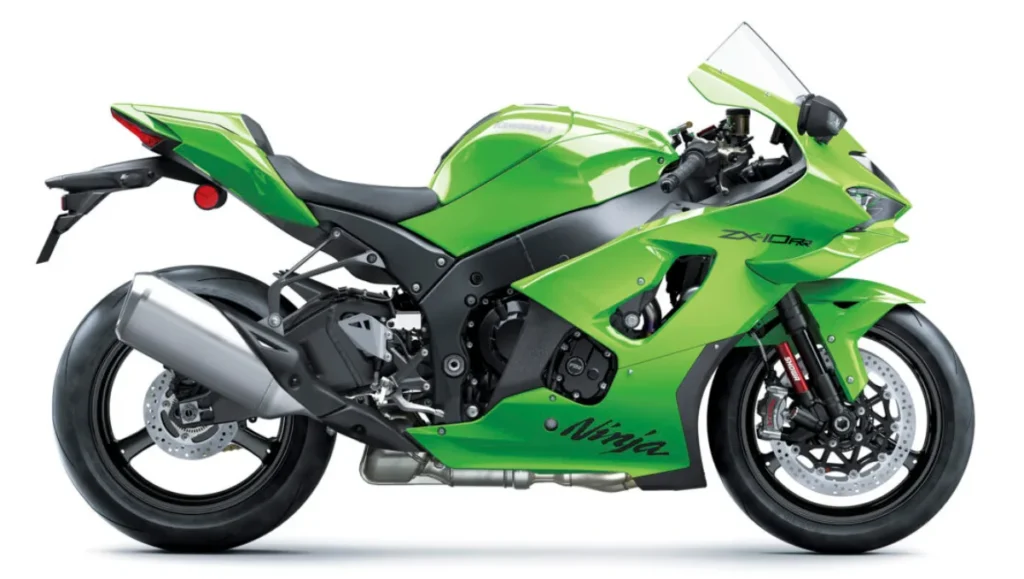
The key features that go beyond the engine and suspension upgrades on the ZX-10RR are steel-braided brake lines, Brembo M50 monobloc calipers, and Pirelli Diablo Supercorsa SP V3 tyres for uncompromising grip and feedback. It’s a machine built for serious riders who want a WorldSBK-ready platform straight from the factory.
Colors, Availability, and Expected Launch
The 2026 Kawasaki Ninja ZX-10R is available in colors such as Lime Green/Blue 24 and Metallic Matte Graphenesteel Gray/Metallic Spark Black, while the ZX-10RR comes only in Lime Green. As for the availability, both bikes are likely to reach international dealerships by mid-2026 and come to India shortly thereafter. Prices will be given at a later date, but expect the bikemaker to charge a slight premium over the current line-up.
Final Verdict
The 2026 Kawasaki Ninja ZX-10R and ZX-10RR represent far more than a cosmetic refresh but a refined evolution of Kawasaki’s championship-winning superbike formula, with improved aerodynamics, enhanced electronics, smarter chassis tuning, and full Euro 5+ compliance without sacrificing one ounce of power. These machines reaffirm Kawasaki’s commitment to precision engineering and racing performance.
Whether you’re a track-day enthusiast or a performance purist, the 2026 Kawasaki Ninja ZX-10R and ZX-10RR offer just the right blend of technology, aggression, and timeless Ninja spirit to attack the superbike world again.
FAQs – 2026 Kawasaki Ninja ZX-10R and ZX-10RR
1. What are the main highlights of the 2026 Kawasaki Ninja ZX-10R and ZX-10RR?
The 2026 Kawasaki Ninja ZX-10R and ZX-10RR boast a new aerodynamic design, full Euro 5+ compliant engines, leading-edge electronics, a five-inch TFT display, and improved chassis geometry offering more incisive handling.
2. Engine output for the 2026 Kawasaki Ninja ZX-10R and ZX-10RR is
The ZX-10R and ZX-10RR draw power from a 998cc inline-four engine producing 204 bhp, the same as the previous generation while conforming to Euro 5+ norms.
3. What are the primary aerodynamic enhancements in the 2026 Ninja ZX-10R?
The bikes boast a revised fairing with a relocated Ram Air intake, new ABS resin winglets that produce 25 percent more downforce, and improved airflow for better stability at speed.
4. What sets the ZX-10RR apart from the ZX-10R?
The ZX-10RR is a limited-edition, track-focused version featuring Pankl titanium connecting rods, lightweight pistons, titanium-coated forks, Ohlins steering damper, and Pirelli Diablo Supercorsa SP V3 tyres for improved racing performance.
5. New electronics on the 2026 Ninja ZX-10R?
Yes, the bikes come with Bosch six-axis IMU, Kawasaki Traction Control (S-KTRC), Cornering Management, Intelligent ABS, Launch Control, Engine Brake Control, Quick Shifter, and Electronic Cruise Control.
6. What are the updated features offered by the TFT display on the 2026 ZX-10R?
The new five-inch full-colour TFT display replaces the older 4.3-inch screen and offers two display modes—analogue-style for the road and a track-focused layout with lap timer and bar-style tachometer.
7. When will the 2026 Kawasaki Ninja ZX-10R and ZX-10RR be launched?
It is expected that both the bikes will reach international markets by mid-2026, with an India launch to follow within months.
8. What are the color options available for the 2026 Ninja ZX-10R and ZX-10RR?
The ZX-10R will be available in Lime Green/Blue 24 and Metallic Matte Graphenesteel Gray/Metallic Spark Black, and the ZX-10RR in Lime Green only.
9. How many units of the 2026 Ninja ZX-10RR will be produced?
Kawasaki will be building just 500 units of the ZX-10RR around the globe, making this one very exclusive and highly collectible superbike.
10. What’s different in the pricing of the 2026 Kawasaki Ninja ZX-10R and ZX-10RR?
Official pricing will be announced closer to the car’s launch, but both can be expected to cost a little more than the outgoing versions due to advanced technology and updated components.
—