2026 Suzuki Hayabusa Unveiled Full Breakdown of Engine and Features
2026 Suzuki Hayabusa Unveiled. The bike has always been this massive, strong machine. The bike is already well put together and known for mixing size with surprising smoothness. But after actually looking into what’s different this time, it all made more sense.
The usual crowd online tends to expect huge horsepower upgrades every time a new model surfaces, but Suzuki clearly took a different path. They kept the main heart of the bike exactly the same. The 1,340 cc inline four engine is still producing around 190 hp and 150 Nm of torque. These are high figures and they were already more than enough for what the bike is meant to do.
The Updates That Matter on the New Hayabusa
One of the major update is throttle setup is probably the first thing riders will pick up on. With Suzuki adjusting the power modes, the bike now delivers torque in a more linear and relaxed way through the low and mid-range. Riders who have experienced slight jerkiness at parking lot speeds or on tight roads should feel smoother and cleaner responses now. The intention clearly leans toward rideability rather than showing off speed numbers.
Another update that makes more difference than you might expect is the upgraded cruise control system. It stays active even when you shift through gears using the quickshifter. That means when cruising on long stretches of open road, you don’t have to disengage cruise every time you upshift or downshift. It sounds like a small thing but during actual riding it reduces fatigue and keeps the pace steady without fiddling around.
Launch control has also been tweaked for 2026, making takeoffs a bit more predictable. Most riders won’t use launch control daily, but it still adds a certain confidence when pulling away hard or under tricky road conditions. The lighter lithium battery is another change that many might overlook, but shedding some weight at the top of the bike usually helps handling feel a bit more responsive.
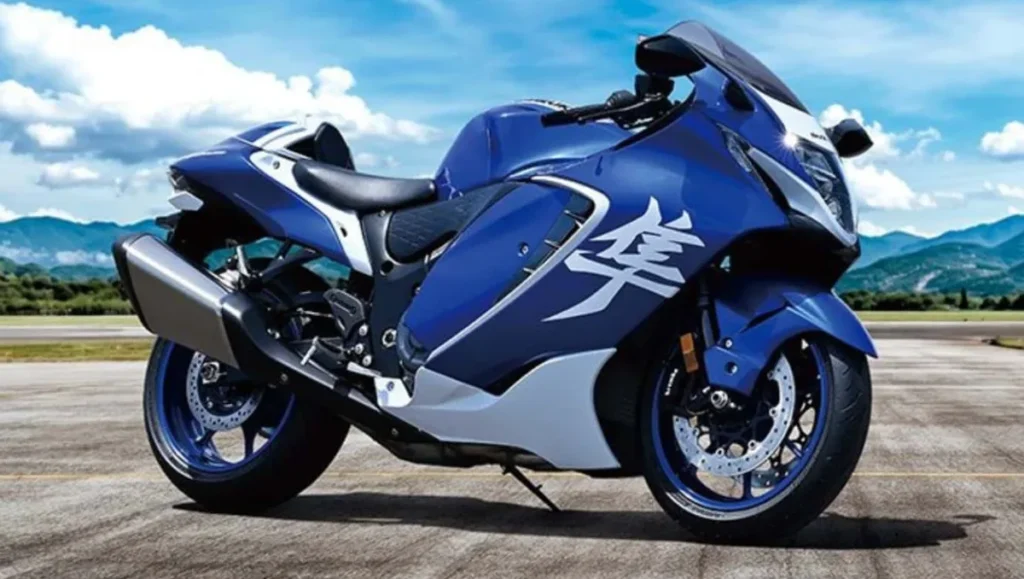
Visually, the styling hasn’t been altered drastically. The bike still has that familiar wind-slicing shape with its long stretched body, low stance and wide side fairings. A special edition version with unique colour and matching body accents is available, which should appeal to riders who like their machines to stand out. The overall appearance stays true to the Hayabusa image which has remained fairly consistent over decades now, and honestly, that is part of its charm.
Engine, Chassis and Feature Breakdown
The bike continues using a 1,340 cc four cylinder liquid cooled engine with bore and stroke figures of 81 mm and 65 mm, and a compression ratio of 12.5 to 1. Peak power sits at around 190 hp and torque stays at 150 Nm. It uses a six speed gearbox paired with a bi directional quickshifter, which is one of the most useful features on modern large capacity sport tourers.
The chassis keeps its twin spar aluminium frame. Wheelbase measures around 1,480 mm and the overall length is just under 2,200 mm. Width stays close to about 735 mm and the height around 1,165 mm. Seat height is set at 800 mm which keeps the centre of gravity manageable for most riders who are used to large bikes. The kerb weight remains on the heavier side at around 264 kg, but that is expected for a bike of this size and category. The tank capacity stands at 20 litres which suits long distance riding well.
Up front, the bike uses inverted KYB forks while the rear handles suspension through a link type system with a single KYB shock. Brakes include Brembo four piston calipers on twin discs at the front and a single disc at the rear. Tyres are sized 120 70 ZR17 at the front and 190 50 ZR17 at the rear.
Electronics include ride modes, traction control, cornering ABS, anti wheelie, engine brake control, quickshifter integration and launch control. The upgraded cruise control now works continuously during gear changes which is one of the small but meaningful highlights for daily riding.
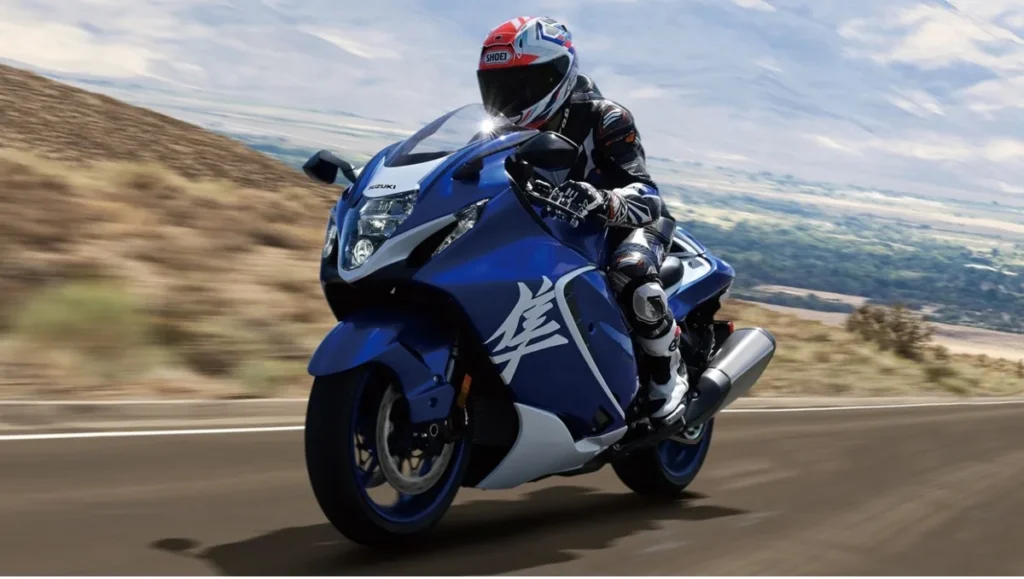
Aerodynamics remain strong with a body designed to maintain stability at high speeds while keeping wind around the rider controlled enough for long rides. The special edition gets a unique colour blend and some details that separate it visually.
Top speed stays around 299 kmph which is electronically limited and still more than enough for anything outside a track. The improved mid range response should make real world riding smoother and easier.
Why These Changes Matter in Real Use
The 2026 Suzuki Hayabusa Unveiled may not look different enough from a distance, but its behaviour changes once you actually move. A lot of riders ignore the mid range when thinking about performance, but that is the area where most real life riding happens.
The cruise control upgrade also helps more than it seems. On long highways, being able to shift without resetting your cruising speed keeps the rhythm steady and reduces those little irritations that slowly build up on long rides.
The lighter battery and refined launch control are more on the subtle side but together, they add up to a bike that feels slightly more modern and slightly less tiring.
Final Take
The best part about the 2026 Suzuki Hayabusa Unveiled is that Suzuki didn’t overdo it. They kept what already works and just fine tuned the areas riders actually talk about. They listened to riders and made practical improvements instead. The improvements show most during slow manoeuvring and long touring hours. It feels like a natural evolution, and that’s exactly what a bike with such a defined identity needs.
Faqs – 2026 Suzuki Hayabusa Unveiled
1. So what’s actually new in the 2026 Suzuki Hayabusa Unveiled?
It’s not a huge redesign or anything like that. The changes are more about how it rides. The throttle feels smoother, the torque comes in nicer, cruise control works better than before and they’ve made the battery lighter. Small stuff, but it adds up.
2. Did Suzuki change the engine or is it the same?
It’s the same engine really. Still the 1,340 cc inline four. Power and torque numbers are the same too. The difference is mainly how the power feels when you ride it.
3. Does it have cruise control now?
Yes, it has cruise control and it’s better than before. The good part is you don’t lose it when shifting gears. That actually helps a lot on long rides.
4. Is it faster than the older model?
No, not faster in terms of top speed. It’s still limited to around 299 kmph. It feels smoother though, especially in mid range riding.
5. Is the bike lighter for 2026?
Not much difference in total weight. It’s still a heavy bike. The battery is lighter, which helps in small ways, but it’s not a huge weight drop.
6. Can you actually use this bike daily or is it only for highways?
You can use it daily if you’re comfortable with big bikes. It’s mainly a highway machine, but the smoother throttle makes city riding less annoying than before.
7. Does it still get a quickshifter?
Yes, it still has a quickshifter for both up and down shifts. It also works nicely with the cruise control now.
8. Are the brakes and suspension different?
Not really. It still runs KYB suspension and Brembo brakes. Those parts were already good, so Suzuki didn’t change them.
9. Is there any special version of this model?
Yes, there is a special colour version. It mainly changes how it looks with small visual differences.
10. Is it worth upgrading to this version?
If you care about smoother riding and better comfort, then yes. If you just want more power, it might not feel very different from the older one.
—