Tata Motors Price Cut 2025: Up to ₹4.65 Lakh Savings After GST 2.0
The Indian automobile industry has received a significant boost with the rollout of GST 2.0 reforms. Tata Motors quickly shared these benefits with its customers. By cutting prices across its popular lineup, Tata Motors could reshape buyer sentiment, with reductions of up to ₹4.65 lakh on select models.
For car buyers who have been waiting, this might be the perfect time. So, what has changed under GST 2.0? How much cheaper are Tata cars now, and what does this mean for the future of India’s auto market? Let’s break it down.
What Is GST 2.0 and Why Does It Matter?
GST (Goods and Services Tax) has always impacted car prices in India. With GST 2.0, effective from September 22, 2025, the government has simplified and restructured the tax slabs for passenger vehicles.
Here are the key changes:
- GST reduced from 28% to 18% for most passenger cars.
- A uniform 40% slab introduced for SUVs over 4 meters, replacing the previous GST plus cess structure.
- Simplified taxation aims to make vehicles more affordable and boost demand.
This reform aims to increase car sales and encourage manufacturers to introduce more advanced and eco-friendly vehicles.
Tata Motors Responds with Aggressive Price Cuts
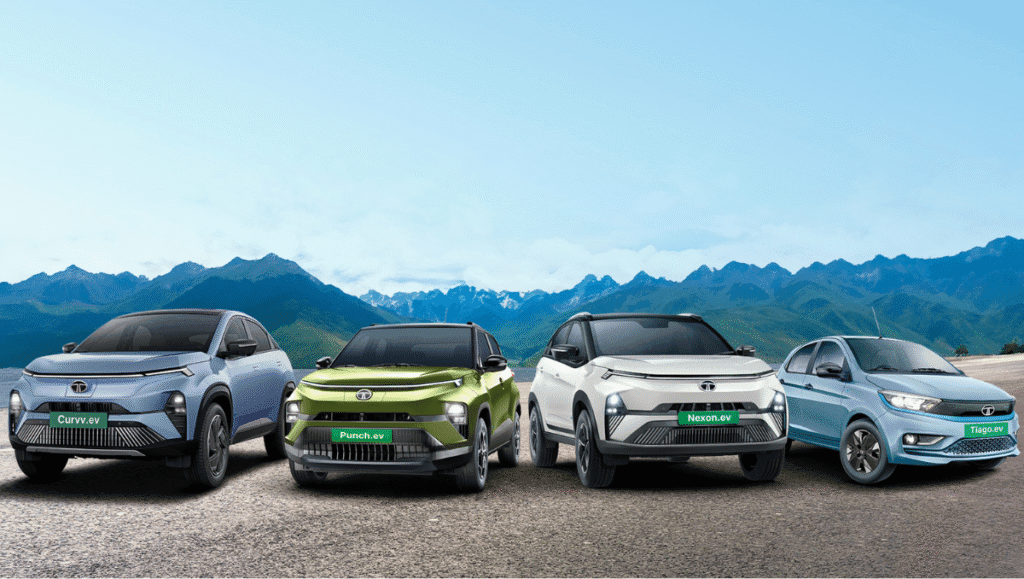
As one of India’s leading automakers, Tata Motors has fully embraced GST 2.0, announcing price cuts across its popular SUVs, sedans, and EVs. Depending on the model and variant, customers can save anywhere from a few thousand rupees to ₹4.65 lakh. The biggest reductions happen in the SUV and EV segments, where Tata Motors has been rapidly expanding its offerings.
How Much Cheaper Are Tata Cars Now?
Here’s a look at the approximate price reductions under GST 2.0 for Tata’s key models (ex-showroom prices):
- Tata Harrier & Safari – Up to ₹4.65 lakh reduction depending on variant
- Tata Nexon & Nexon EV – Price cuts between ₹75,000 and ₹1.25 lakh
- Tata Punch – Up to ₹60,000 cheaper
- Tata Altroz & Altroz iCNG – Around ₹40,000 to ₹70,000 savings
- Tata Tiago & Tiago EV – Reduced by ₹30,000 to ₹55,000 •
Tata Tigor & Tigor EV – Price drop of ₹40,000 to ₹80,000
This pricing overhaul makes Tata vehicles much more competitive against rivals like Hyundai, Maruti Suzuki, Mahindra, and Kia.
Why This Price Cut Matters for Buyers
For Indian buyers, price is always a critical factor, especially in the mid-size and SUV categories. With GST 2.0: Affordability improves – Cars that were once considered premium are now within reach of middle-class buyers. Upgrade potential increases – Customers may consider moving from hatchbacks to SUVs or from petrol cars to EVs thanks to reduced price gaps. Festive boost expected – With Navratri and Diwali around the corner, demand is set to surge. This could lead to one of the strongest festive seasons for Tata Motors in recent years.
Impact on Tata’s EV Lineup T
ata Motors has been a leader in India’s electric vehicle (EV) market, with models like the Nexon EV, Tiago EV, and Tigor EV dominating the segment. Under GST 2.0, EVs also benefit from clear tax guidelines and lower costs, making them more appealing.
With EV adoption steadily rising, a price cut of up to ₹1.25 lakh on the Nexon EV might encourage more buyers to choose electric. Industry experts believe this move will boost Tata’s EV sales, helping it maintain a strong lead as more competitors enter the market.
Competitor Pressure: What About Hyundai, Maruti, and Mahindra?
Tata’s bold strategy puts pressure on rival carmakers to follow suit. Hyundai, Maruti Suzuki, Mahindra, and Kia will likely announce their own price adjustments soon to remain competitive.
For example: Hyundai Creta and Kia Seltos – Expected to see GST-driven cuts in the mid-size SUV segment. Maruti Suzuki Grand Vitara and Toyota Hyryder – Hybrid SUVs that could see increased sales. Mahindra XUV700 and Scorpio-N – Direct competitors to the Harrier and Safari that will likely face tough price competition.
This pricing shift could lead to a price war in India’s SUV market, which is great news for customers.
GST 2.0: A Game-Changer for the Auto Industry
The government’s move with GST 2.0 goes beyond just lowering taxes; it acts as a stimulus for the auto sector.
Here’s why it matters:
- Boost in demand – Lower car prices may encourage hesitant buyers to make purchases.
- Make in India push – Manufacturers may increase local production to meet this demand.
- EV adoption – Price similarities between EVs and petrol cars become closer, supporting India’s clean mobility mission.
- Job creation – More demand leads to increased production, dealership expansions, and new opportunities in the auto supply chain.What Experts Are Saying
What Experts Are Saying Industry analysts think Tata Motors’ quick response will pay off. Market experts suggest:
- The Harrier and Safari could now attract buyers interested in premium SUVs like the Hyundai Tucson or Jeep Compass.
- The Nexon EV may become the top choice for first-time EV buyers due to its affordability.
- Hatchbacks like the Tiago and Altroz could see greater popularity in Tier-2 and Tier-3 cities. Put simply, Tata Motors’ decision could trigger a ripple effect in the industry.Should You Buy a Tata Car Now?
Should You Buy a Tata Car Now?
- If you’ve been thinking about buying a Tata vehicle, this might be the best time to act.
- Prices are currently very competitive.
- Festive offers from dealers will likely add even more value.
Waiting for competitors to respond could take weeks, but Tata’s lineup is already offering strong value.
Make sure to compare insurance costs and check waiting periods, as rising demand may lead to longer delivery times.
Final Word: Tata Motors Reshapes the Game.
The GST 2.0 reforms have brought much-needed excitement to the Indian auto market, and Tata Motors has taken a bold step to ensure customers benefit directly.
With price cuts of up to ₹4.65 lakh, Tata’s cars and SUVs are now more competitive than ever, setting the stage for tough competition in the mid-size and SUV segments. For buyers, it’s a win-win situation: more features, lower prices, and better choices. For Tata Motors, it’s an opportunity to strengthen its position across petrol, diesel, and electric vehicles. In short: GST 2.0 and Tata Motors’ price cuts lead to a new era of affordability for Indian car buyers.