Honda N-ONE e: Japan’s Low-Cost Mini EV with 295 km Range – Priced Below €16,000
Purchasing a brand-new electric vehicle for less than €16,000 in Europe or the U.S. seems almost out of the question. With new car prices averaging more than €44,000, affordability ranks as one of the largest impediments to drivers making the transition to electric motoring. Though global auto manufacturers often herald more affordable EVs on the horizon, they are largely concepts or plans, not yet productized. Honda, though, has followed through — at least, so far, just for Japan.
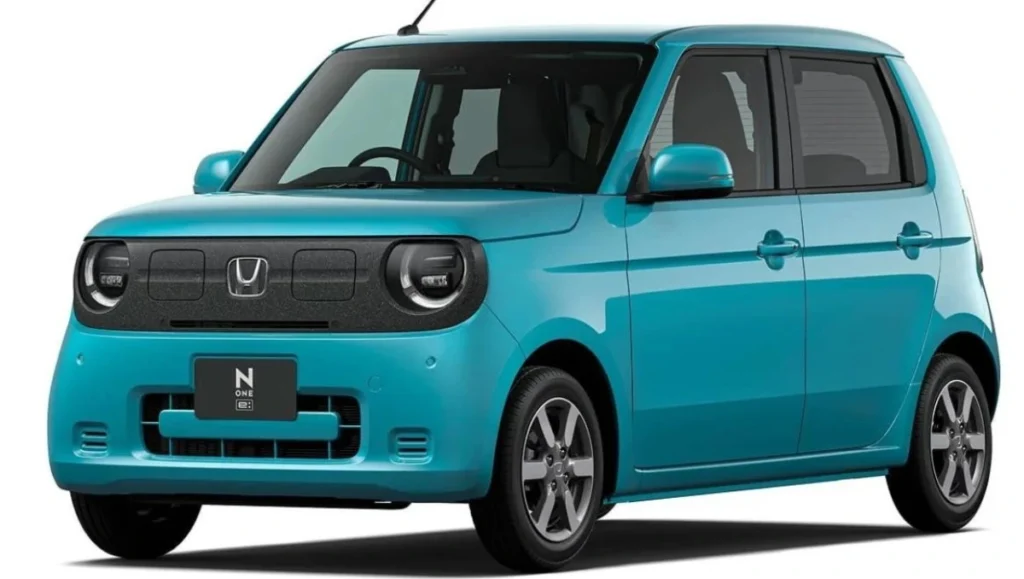
Honda officially unveiled the N-ONE e:, a fully electric, city-sized hatchback with a price tag of approximately €15,600. Not only is this one of the cheapest EVs on the market anywhere, but Honda has also matched it with a surprisingly high range, which is a new benchmark for mini-EVs.
Created for Urban Living
The N-ONE e: is part of Japan’s niche kei car market. Kei cars are very small cars built under strict parameters for size, engine power, and performance. They are very popular in Japan, accounting for around 40 percent of all new car purchases, due to benefits like lower purchase taxes, lower insurance rates, smaller parking charges, and the fact that they can slip through narrow Japanese streets with ease.
Kei cars have been the pragmatic choice for city driving for decades, but the electric shift has been slower in this segment. By introducing the N-ONE e:, Honda is bringing the advantages of electric motoring — zero tailpipe emissions, quieter operation, and lower running costs — to one of the UK’s favorite vehicle types.
Affordable Yet Competitive
At €15,600 (about ¥2.5 million), the Honda N-ONE e: is a game-changer as far as EV cost goes. That level of price is nonexistent in Europe or North America, where even base models of EVs like the Fiat 500e or Chevrolet Bolt EUV cost much more.
The move to introduce the EV under the kei car umbrella guarantees that it gets to reap the same economic benefits enjoyed by owners of conventional kei cars for years. Coupled with a low initial price, combined with fuel and maintenance savings in the long term, the N-ONE e: could be among the cheapest cars to own on Japanese roads.
A Long Range for Everyday Use
Among the strongest criticisms leveled at affordable EVs has been their limited range. Honda has addressed that head-on. The N-ONE e: is fitted with a 29.6 kWh battery pack, the same battery as in the just-launched N-VAN e:. It is good for a driving range of up to 295 kilometers on a single charge, as per Honda.
That’s impressive not only for a kei car but for any city EV. Japanese daily commutes are fairly short, and for city customers, 295 km translates to multiple days of use before refilling. The range also exceeds that of its chief competitor, the Nissan Sakura, which has about 180 km. By offering over 100 km more range, Honda has largely solved range anxiety for city motorists.
Engineering Around Space
Another challenge Honda faced was integrating electric components into such a small vehicle without compromising interior space. Kei cars are renowned for their clever use of compact dimensions, offering surprisingly roomy cabins despite small footprints.
Honda addressed this challenge by creating a slim, flat battery pack located under the floor. This design saves cabin space while also reducing the car’s center of gravity, which can enhance handling and ride quality. Thus, the N-ONE e: maintains the same passenger and cargo room as its gas-powered counterpart, but with the environmental and performance advantages of an EV.
Style Meets Practicality
The N-ONE e: borrows from the retro-flavored N-ONE hatchback, a car that combines vintage looks with contemporary practicality. The electric model retains this appeal but adds discreet EV-specific detailing. Simple lines, curvaceous headlights, and diminutive dimensions make it chic but not daunting — a styling that should suit young urban consumers as well as families seeking a second car.
Inside, however, the cabin is uncomplicated but contemporary, with digital screens, functional storage areas, and the same minimalist lines that Honda has become famous for. Buyers don’t need to sacrifice functionality for price, and that could be the N-ONE e:’s greatest selling feature.
Growing Competition in the Mini-EV Segment
Honda might be grabbing the headlines with the N-ONE e:, but it is not the only player in this segment. Nissan already has the Sakura, and other manufacturers such as BYD of China as well as domestic competitor Toyota are developing their own small EVs for the Japanese market.
This battle might fast-track the growth of EVs in Japan, where bigger, costlier electric vehicles have failed to take off. With several brands moving into subcompact EVs, consumers will soon have multiple low-cost choices available to them, forming one of the most vibrant new battlegrounds in the world’s EV shift.
Why It Matters Beyond Japan
While the N-ONE e: is only available in Japan at the moment, its release has wider significance. It demonstrates that low-cost EVs are commercially and technically viable. For European and North American buyers, who have much higher entry points for EVs, the vehicle shows what can be achieved when manufacturers put affordability as high as technology.
The market for small, cheap EVs is expanding internationally, especially among urban residents who don’t require high batteries or luxury options but merely a dependable, low-cost, environmentally friendly commuter vehicle. If Honda or its competitors opt to introduce models such as the N-ONE e: to other regions, they might introduce EV ownership to millions of new customers.
The Honda N-ONE e: is more than just another electric car; it’s a statement. At €15,600, it undercuts almost every other EV available in the world while delivering a range of nearly 300 kilometers — more than enough for everyday urban use. It manages to keep the practicality of a kei car, avoids compromises in space, and presents itself as a stylish yet functional option for the Japanese market.
—