UK Government Supports £1.5bn Loan Guarantee for Jaguar Land Rover Following Cyber attack
UK Govt Grants £1.5bn Loan Guarantee to Jaguar Land Rover (JLR) after a serious cyber-attack left Britain’s biggest motor maker forced to suspend production at its UK plants. The action is intended to safeguard thousands of jobs, shore up the supply chain, and steadify the automotive industry while the company seeks to recover from the disruption.
What Happened to JLR?
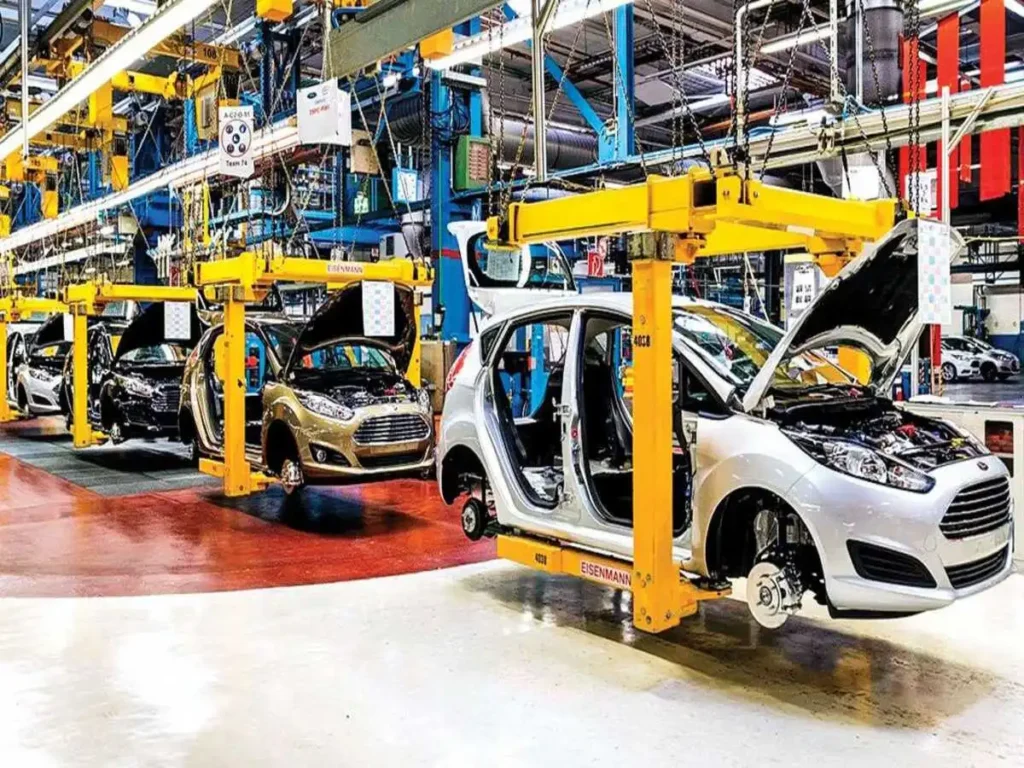
India’s Tata Motors-owned Jaguar Land Rover suffered a cyber-attack on 31 August 2025. The attack caused IT systems controlling everything from tooling and parts supply through to sales and distribution to be affected. Vehicle production at Jaguar Land Rover’s prime UK factories at Solihull, Wolver Hampton, and Halewood had to be suspended as a consequence, with factory production not likely to restart before at least 1 October.
The halt in production has been expensive. Industry figures put JLR in the position of losing over £50 million a week, while thousands of employees and suppliers are left hanging. With approximately 34,000 UK-based staff and over 120,000 jobs tied in through the supply chain, the cyber-attack has had a spillover effect on the broader automotive community.
Why the Government Stepped In
Concerns soon emerged that numerous smaller suppliers—some of which depend wholly on JLR contracts—were near collapse as a result of the extended shutdown. A parliamentary committee cautioned that some firms had “days of cash remaining” until they no longer had money.
In reaction, Business Secretary Peter Kyle declared that the government will guarantee a £1.5 billion loan offered by a commercial bank. The guarantee will be through the Export Development Guarantee (EDG), a system intended to facilitate UK exporters with foreign sales.
Kyle said: “This cyber attack was not only an assault on an iconic British brand, but also on our world-leading automotive sector and the livelihoods that depend on it. This loan guarantee will help support the supply chain and protect skilled jobs in the West Midlands, Merseyside and across the UK.”
How the Loan Works
The cash is not going to be handed over by the government to JLR directly. Rather, it is going to provide a guarantee against the loan, making the risk lower for lenders and allowing money to move in quickly. JLR will repay the loan within five years and is likely to provide the company with the liquidity to clear historic payables to its suppliers and restore cash balances.
JLR has already started reviving some of its IT infrastructure and is giving priority to paying back suppliers, delivering components to dealers, and delivering finished vehicles to showrooms. Nonetheless, complete recovery and the return to normal functioning are expected to take time.
Wider Industry and Political Reactions
The government’s intervention has been greeted with divided opinions.
- Chancellor Rachel Reeves called the move vital to protecting a “jewel in the crown of the British economy,” noting that thousands of jobs are being safeguarded with private finance.
- Shadow Business Secretary Andrew Griffith welcomed the backing but denounced the delay, calling on Labor to launch a cyber-reinsurance scheme to assist British businesses to fend off state-sponsored cyber attacks.
- Liberal Democrat business spokesperson Sarah Olney echoed concerns about the government’s slow response, suggesting a furlough scheme may be necessary for affected workers and calling for stronger cyber security measures.
- Unite the Union, representing thousands of JLR employees, described the support as “an important first step” but emphasized that the money must protect jobs, skills, and pay throughout the supply chain.
Impact on Workers and Suppliers
Since the beginning of September, numerous JLR staff have been instructed to remain at home, and there is no fixed date of return. Some suppliers also provide to other automotive companies, but numerous small and medium-sized businesses rely on JLR exclusively. They provide essential components, and the halt in production exposed them to vulnerability.
The guarantee on the loan is intended to give stability so that suppliers can keep operating while JLR restores its production lines step by step. Lacking that assistance, industry players cautioned of a domino effect in which failures among suppliers risk the entire UK car sector.
The Broader Cyber security Challenge
JLR’s cyber-attack is among a growing number of state-supported and criminal hacking groups attacking blue-chip companies. A hacking group identifying itself as Scattered Lapsus$ Hunters has claimed responsibility for the attack, the same group responsible for previous UK retailer hacks at Marks & Spencer and Co-op.
These events underscore vulnerabilities in key sectors and prompt concerns about whether additional widespread government assistance—such as cyber insurance or additional national cyber security standards—is needed to avoid future disruption.
JLR’s Recovery Roadmap
JLR has confirmed the return of some IT systems on line and that it is working “around the clock” with the National Cyber Security Centre (NCSC) and law enforcement agencies to assure a secure restart. The company is aiming for the 1 October restart of initial production, while its Wolver Hampton engine-manufacturing plant is reported to be in a position to re-open from 6 October, pending safety checks.
Meanwhile, JLR is concentrating on the restoration of confidence in its employees, suppliers, and customers. With demand for premium brands like the Range Rover, Discovery, and Defender running high internationally, the firm has to get back into production fast so it can clear backlog orders and maintain its place in the premium car market.
What This Means for the UK Automotive Industry
The UK car industry has faced multiple challenges in recent years—from Brexit and the COVID-19 pandemic to semiconductor shortages. Now, the cyber-attack on JLR has added another layer of pressure.
By intervening with a loan guarantee, the government is showing that it is serious about defending one of Britain’s most significant export industries. JLR is still the UK’s biggest carmaker and exporter, and keeping it healthy is crucial to ensuring Britain’s prestige in global car manufacturing.
Industry experts think that the loan guarantee will stabilize the industry in the near term, but they warn that cyber security has to be an increasingly important issue for automakers in the future.
Conclusion
The £1.5 billion Jaguar Land Rover loan guarantee is an unprecedented government response to a cyber-attack. As much as the immediate need is to save jobs and suppliers, the action also highlights the need to build resilience to against future cyber threats.
While JLR makes progress in the restart of production, the business—and the broader UK automotive sector—has the double task of getting over the short-term financial shock and constructing better defense barriers to protect the future.
—