Maruti Suzuki September 2025 Sales Report – Record Exports and Festive Lift Power Performance
Maruti Suzuki India Limited posted an outstanding performance in September 2025 by selling a total of 1,89,665 units in both domestic and international markets. This figure includes 1,35,711 units sold in India, 11,750 units shipped to other OEMs, and an all-time high of 42,204 units exported. The success of the automaker has come on the heels of robust festive demand, prudent production planning, and beneficial GST reforms that place Maruti Suzuki as India’s number one passenger vehicle manufacturer once more.
Domestic Market Performance
In the home market, Maruti Suzuki retailed 1,35,711 units in September 2025, down 8.38 percent from 1,44,962 units in September 2024. Passenger vehicles accounted for 1,32,820 units of this number, and the Light Commercial Vehicle segment, comprising mostly the Super Carry, retailed 2,891 units, down a year-on-year 6.71 percent.
While this drop, however, presented challenges to the brand, it made the most during the festive period, selling over 1,65,000 cars in the first eight days of Navratri alone. This early momentum speaks volumes about GST reforms having instilled consumer confidence and spurred festive buying.
Segment-Wise Insights
Breaking down the performance further, Maruti Suzuki’s mini and compact car segment, which includes models like Alto, S-Presso, Baleno, Dzire, Ignis, Swift, and WagonR, recorded sales of 74,090 units in September 2025. This represents a modest increase over the 70,843 units sold in the same period last year, indicating steady demand for small, fuel-efficient vehicles among Indian consumers.
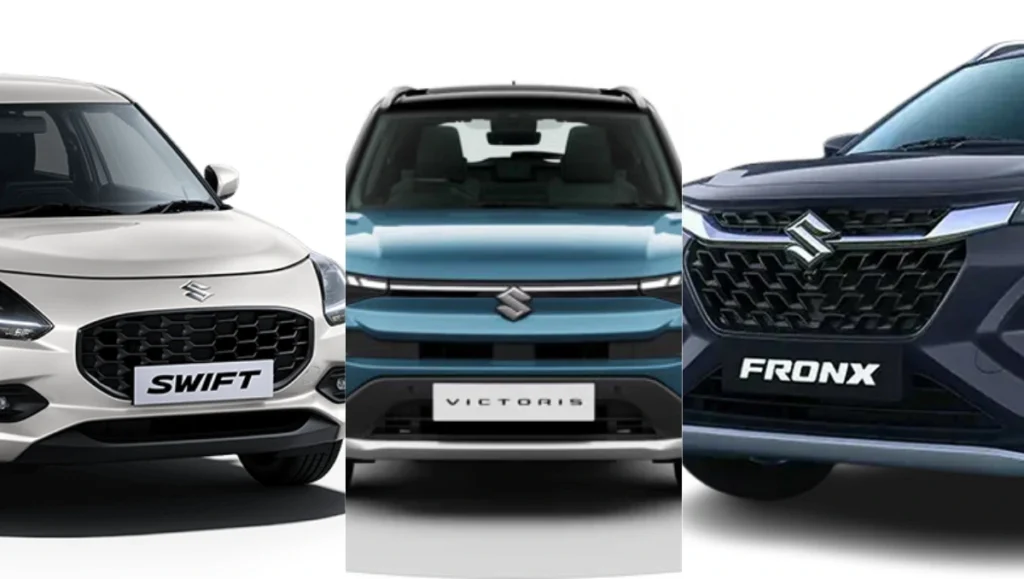
The utility vehicle space, including Brezza, Ertiga, Fronx, Grand Vitara, XL6, Jimny, Invicto, and newly launched Victoris, saw sales decline to 48,695 units from 61,549 units in September 2024. Sedans of the mid-size category, led by the Ciaz, did not register any sales in the month, while Eeco vans retailed 10,035 units, just short of last year’s 11,908 units. These trends point to a movement of preference by consumers towards smaller cars and SUVs, coupled with the effects of logistical difficulties faced towards the end of the month.
| Segment / Category | Units Sold (September 2025) | Units Sold (September 2024) | Year-on-Year Change |
|---|---|---|---|
| Domestic Sales (PV + LCV) | 1,35,711 | 1,44,962 | -8.38% |
| Passenger Vehicles | 1,32,820 | 1,44,962 | -8.38% |
| Light Commercial Vehicles (Super Carry) | 2,891 | 3,099 | -6.71% |
| Sales to Toyota (Badge-engineered) | 11,750 | 8,936 | +31.46% |
| Exports | 42,204 | 27,728 | +52.21% |
| Mini + Compact Cars (Alto, S-Presso, Baleno, Dzire, Ignis, Swift, WagonR) | 74,090 | 70,843 | +4.57% |
| Utility Vehicles (Brezza, Ertiga, Fronx, Grand Vitara, Invicto, Jimny, Victoris, XL6) | 48,695 | 61,549 | -20.85% |
| Vans (Eeco) | 10,035 | 11,908 | -15.72% |
| Mid-size Sedan (Ciaz) | 0 | 662 | -100% |
| Total Sales | 1,89,665 | 1,84,727 | +2.67% |
Exports and International Growth
One of the strongest points to highlight for Maruti Suzuki in September 2025 was the company’s export performance. Maruti Suzuki exported 42,204 vehicles outside the country in September 2025, its best-ever monthly exports. This record high is up 52.21 percent over 27,728 units it had exported during September 2024. The export expansion by Maruti Suzuki testifies to good overseas demand for its passenger cars and indicates improved global presence by the company.
Maruti Suzuki exports now represent almost 22 percent of monthly total sales, with sales to other foreign markets playing a substantial role in overall income. The company’s initiative to increase its global footprint can be seen in its strong production planning, with production increasing to 2.01 lakh units in September 2025, a rise of 26 percent from 1.59 lakh units a year ago. Passenger vehicle output alone rose 27 percent to 1.98 lakh units, leaving adequate supply to serve both domestic and foreign markets.
Partnering with Other OEMs
In addition to exports, Maruti Suzuki’s partnership with Toyota has also strengthened its overall sales performance. The company supplied 11,750 units to Toyota in September 2025, up 31.46 percent compared to 8,940 units in the same period last year. These badge-engineered models, such as the Toyota Urban Cruiser, continue to be a reliable revenue stream and help maintain Maruti Suzuki’s competitive edge in the Indian automotive market.
Quarterly Performance Highlights
For Q2 FY26 (July-September 2025), Maruti Suzuki registered cumulative sales of 5,50,874 units, an increase of 1.72 percent over 5,41,550 units in Q2 FY25. Domestic sales stood at 4,01,874 units, down 5.55 percent from last year’s corresponding quarter with 4,25,500 units, while exports saw a growth to 1,10,487 units, up a strong 42.17 percent year-over-year. Sales to Toyota rose marginally to 30,056 units, indicating consistent cooperation.
Impact of GST Reform and Festive Season
The recent GST reforms played a crucial role in stimulating consumer demand during September 2025. With reduced tax burdens on passenger vehicles, buyers were encouraged to make early festive purchases, contributing to the highest-ever Navratri deliveries in the first week of the festival. The GST changes, coupled with promotional campaigns and limited-time offers, drove customer confidence and reinforced Maruti Suzuki’s market leadership.
Strategic Logistics and Production Management
Maruti Suzuki was able to overcome logistic issues well. Though domestic wholesale quantities were marginally impacted in the latter half of the month because of supply chain and transportation limitations, good export performance and festival sales made up for these interruptions. The company’s powerful production capability to produce more than 2 lakh units per month insulates it from short-term domestic market fluctuations.
Global Recognition and Position in the Market
Maruti Suzuki’s consistent performance has also enhanced its global standing. The company recently climbed into the top tier of global automakers by market capitalization, valued at approximately $57.6 billion. This ranking places Maruti ahead of well-established brands like Ford, General Motors, and Volkswagen, highlighting its growing influence on the global automotive stage.
Looking Ahead
With recent launches like the Victoris and sustained growth in exports, Maruti Suzuki is expected to register a robust performance for the coming months. The company’s strategic mix of small cars, SUVs, and joint venture models, abetted by positive tax reforms and increasing festive demand, is likely to hold its top position in India. The long-term revenue growth and robustness from domestic market volatility are also provided for with the strengthening global presence.
Conclusion
September 2025 was a month of triumphs and challenges for Maruti Suzuki India Limited. While domestic sales experienced a slight decline in certain segments because of logistical bottlenecks and shifts in consumer preference, record export numbers, robust festive pace, and synergy with Toyota ensured overall favorable performance. With more than 42,000 units exported, healthy Navratri sales, and resilient quarterly figures, Maruti Suzuki is reaffirming itself as India’s leading automaker while gradually increasing its global presence.
Frequently Asked Questions (FAQs) – Maruti Suzuki September 2025 Sales
Q1. How many units did Maruti Suzuki retail in September 2025?
Maruti Suzuki retailed a total of 1,89,665 units during September 2025, including domestic sales, exports, and sales to other OEMs.
Q2. How many domestic sales were there in September 2025?
The company retailed 1,35,711 units in India, consisting of 1,32,820 passenger vehicles and 2,891 units in the Light Commercial Vehicle segment.
Q3. How did Maruti Suzuki perform in exports during September 2025?
Maruti Suzuki achieved record exports of 42,204 units, marking a 52.21 percent increase over September 2024. Exports now represent nearly 22 percent of total monthly sales.
Q4. Which vehicle segments contributed most to Maruti Suzuki’s sales in September 2025?
The mini and compact cars, including Alto, S-Presso, Baleno, Dzire, Ignis, Swift, and WagonR, sold 74,090 units. Utility vehicles including Brezza, Ertiga, Fronx, Grand Vitara, XL6, Jimny, Invicto, and Victoris sold 48,695 units. Eeco vans sold 10,035 units.
Q5. How did Maruti Suzuki’s partnership with Toyota affect sales?
Maruti Suzuki sold 11,750 units to Toyota in September 2025, up by 31.46 percent year on year. This tie-up helped the company achieve its overall good performance.
Q6. How did GST reforms affect the sales of Maruti Suzuki?
GST reforms lifted consumer sentiment by easing tax rates, leading to advance festivities buying, and helping make record deliveries in the first eight days of Navratri.
Q7. Was there any logistical difficulty for Maruti Suzuki in September 2025?
Yes, domestic wholesale volumes were partially impacted by transportation and supply chain constraints in the second half of September. Nevertheless, strong export performance and festive season sales offset these difficulties.
Q8. How was the Q2 FY26 (July–September 2025) performance of Maruti Suzuki?
Maruti Suzuki registered overall sales of 5,50,874 units in Q2 FY26, 1.72 percent higher than the corresponding period of the previous year. Domestic sales were 4,01,874 units, and exports increased to 1,10,487 units.
Q9. In September 2025, what production milestones did Maruti Suzuki reach?
Total production increased to 2.01 lakh units, a 26 percent YoY increase, with production of passenger vehicles alone at 1.98 lakh units.
Q10. What is Maruti Suzuki’s global standing following September 2025 performance?
Maruti Suzuki’s market capitalization reached approximately $57.6 billion, placing it among the top global automakers and ahead of brands like Ford, GM, and Volkswagen.
—