EV Sales September 2025: India’s Electric Vehicle Market Hits a New High
EV sales September 2025 in India marked a major milestone, with electric passenger vehicle sales more than doubling compared to the same month last year. The surge reflects how quickly the country’s electric mobility story is accelerating, driven by festive demand, stronger model availability, and a growing comfort among consumers toward EV ownership.
Record-Breaking Growth in India’s EV Market
In September 2025, electric passenger vehicle retail sales soared to about 15,329 units, a massive increase from more than 6,000 units in September 2024. This is a 148 percent annual growth, demonstrating how EVs are no longer a niche option. Tata Motors again topped the lists, recording 6,216 units, a 62 percent increase from last year.
Close on their heels were MG Motor at 3,912 units and Mahindra at 3,243 units — both firms recording impressive growth as they each added to their EV line-ups. BYD, Kia, Hyundai, BMW, and Mercedes-Benz contributed significantly to the tally. Even Tesla made a token foray with 64 units of its Model Y SUV sold in India last month.
This show is especially impressive given the rollout of the new GST 2.0 reform, which cut taxes on internal combustion engine (ICE) vehicles. Though that lessened the gap in costs between EVs and conventional petrol or diesel vehicles, demand for EVs rose nevertheless — demonstrating that customers are now being driven by more than price offers.
Drivers of the EV Surge
1. Festive Season and Buyer Sentiment
September overlapped with Navratri and the prelude to Diwali, historically favorable months to purchase cars in India. Most customers had delayed purchases until the new GST regime commenced towards the end of the month. After the new tax rates were activated, dealerships witnessed an overnight surge in footfalls as well as conversions. The festive period created the ideal environment for buyers to make the transition to electric at long last.
2. Broader Product Options and Better Availability
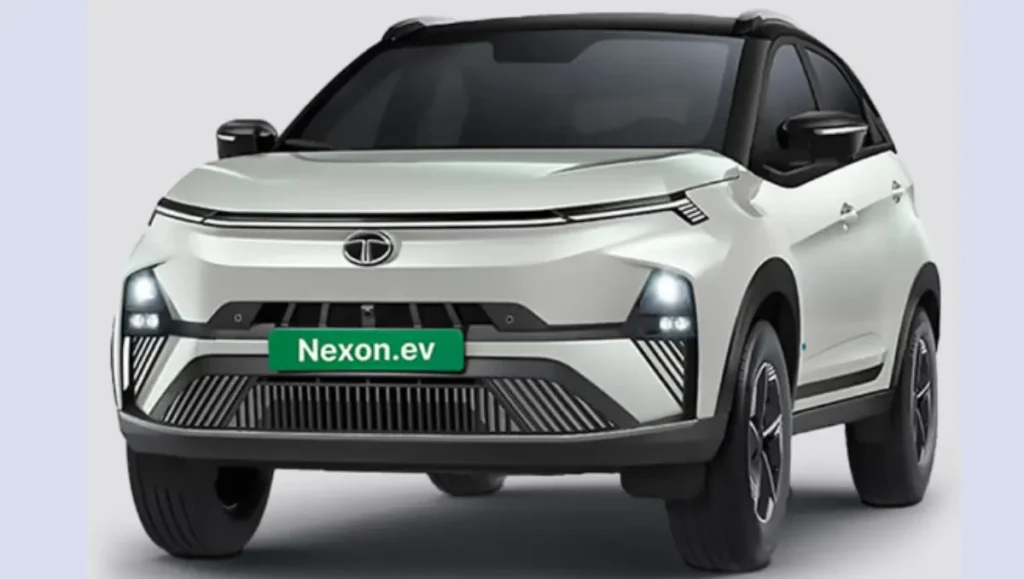
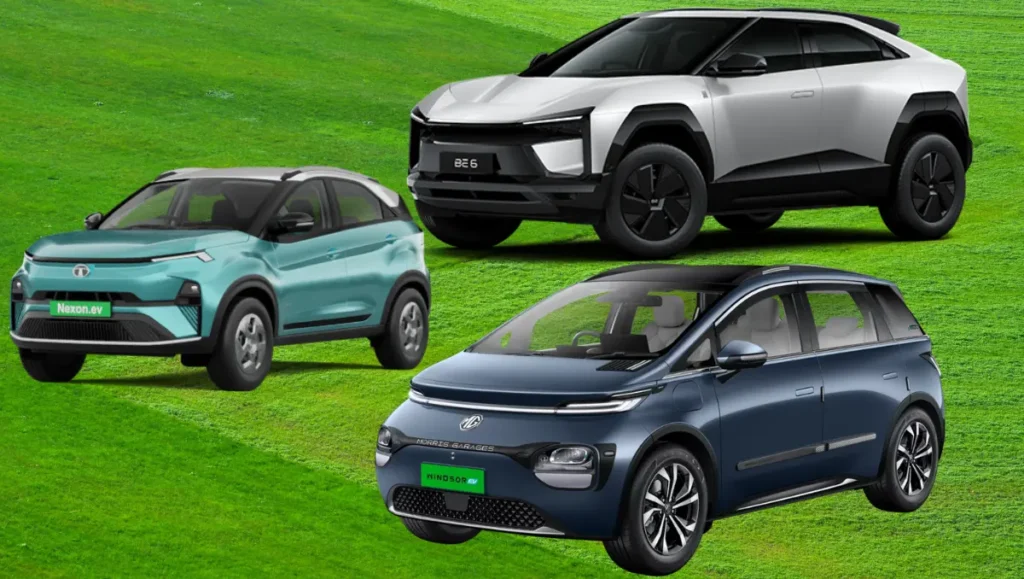
Manufacturers have invested heavily in broadening their EV ranges and manufacturing capacity. Tata Motors’ success with the Nexon EV, Punch EV, and Tiago EV continues to raise the bar for price and reliability. MG’s ZS EV and Mahindra’s XUV400 and Born Electric range have widened consumer choice.
Improved supply chains, shorter delivery times, and increased public charging networks have made owning an EV much more convenient than it was even a year ago. Such improvements are aiding to overcome the stereotype that EVs are only for metro cities or high-end consumers.
3. Shifts in Consumer Preferences
There is a change occurring in the psychology of buyers. Buyers are increasingly thinking in terms of total cost of ownership, technology, safety, and environmental advantage rather than simply brand heritage. Tier-2 and Tier-3 cities have begun to contribute heavily to EV sales as awareness and finance options grow. This broader geographic penetration is central to India’s long-term EV adoption.
Company-Wise EV Sales Performance
| Brand | EV Sales (Sept 2025) | Year-on-Year Growth |
|---|---|---|
| Tata Motors | 6,216 | +62% |
| MG Motor | 3,912 | +284% |
| Mahindra | 3,243 | +581% |
| BYD | 547 | +211% |
| Kia | 506 | Strong growth |
| Hyundai | 349 | +1103% |
| BMW | 310 | +167% |
| Mercedes-Benz | 97 | +120% |
| Tesla | 64 | New entrant |
Tata Motors remains India’s undisputed EV leader, leveraging its early-mover advantage and a wide range of products. MG and Mahindra are the big gainers of the year, showing how quick product innovation can shift market dynamics. BYD and Kia continue to grow steadily, while Hyundai’s upcoming EVs promise to add scale.
High-end players such as BMW and Mercedes-Benz are gaining traction in the premium space, aided by the growing charging infrastructure in large metros. Tesla’s humble beginnings also represent a significant psychological turning point — international EV brands are now formally experimenting with India’s possibilities.
Two-Wheeler EVs Also on the Upward March
Electric two-wheelers went on to dominate again, with retail sales breaching 1,04,000 units in September 2025 — a growth of 15 percent year-on-year. TVS Motor topped the list with more than 22,000 units, followed by Bajaj Auto, Ather Energy, and Ola Electric. Hero MotoCorp, too, registered a strong increase with more than 12,000 registrations, indicating that EV acceptance in the two-wheeler segment is widespread and gaining momentum.
This expansion in both passenger and two-wheeler EVs proves that electric mobility is fast becoming a mainstream alternative from a trend.
Market Outlook and Industry Challenges
Though the September 2025 sales figures are reassuring, the subsequent quarters will put the resilience of the EV market to the test. The GST 2.0 change cut ICE car prices by as much as ₹2 lakh in certain segments, potentially luring price-conscious buyers back into petrol or diesel alternatives. Yet, with growing charging infrastructure, declining battery prices, and rising public knowledge, EVs still have a robust long-term advantage.
Key Challenges to Watch:
* Charging Infrastructure: Still not available in significant numbers outside large cities, particularly on highways and in small towns.
* Battery Supply and Costs: India continues to be import-dependent for key battery materials.
* Residual Value Concerns: Some consumers are still reluctant to take a chance on resale value and long-term battery performance.
* Price Competition from ICE Cars: Tax parity could squeeze margins for manufacturers and dampen short-term uptake.
Despite these challenges, the structural direction is clear. Most major automakers are investing heavily in local EV production, new models, and energy-efficient technologies. Government support through FAME and state incentives continues to encourage both consumers and manufacturers.
What to Expect in the Coming Months
The sales momentum of EVs September 2025 will continue throughout the festive quarter. With Diwali and Dussehra in October and November, OEMs anticipate historic retail volumes. Launches of new electric SUVs are on the anvil by Hyundai, Mahindra, and Tata, while global players such as Tesla and BYD are looking at increasing local operations.
The long-term future of EVs in India is highly optimistic. With costs of technology coming down, range getting better, and charging infrastructure growing, electric vehicles are predicted to capture nearly 10 percent of the passenger vehicle market over the next three years.
Final Thoughts
The EV sales narrative September 2025 captures a wider revolution in India’s mobility landscape. Electric vehicles are no longer experimental or niche — they are on the cusp of becoming mainstream. Coupled with robust government policy, keen consumer adoption, and sustained investment from manufacturers, India’s mobility future is unequivocally electric.
September 2025 could be the month that the EV revolution became truly mainstream.
FAQs on EV Sales September 2025
1. India sold how many electric passenger vehicles in September 2025?
India sold approximately 15,329 electric passenger vehicles in September 2025, an increase of 148 percent from the previous year.
2. Which brand performed best in the sales of EVs in September 2025?
Tata Motors was the leader with 6,216 units, followed by MG Motor and Mahindra.
3. What was the number of electric two-wheelers sold in September 2025?
More than 1,04,000 electric two-wheelers were retailed, dominated by TVS, Bajaj, Ather, and Ola Electric.
4. What are the primary challenges for India’s EV market?
The primary challenges include few charging points, the cost of batteries being high, and competition from prices of ICE vehicles.
5. What is the future forecast for India’s EV market?
EV adoption will increase significantly, touching almost 10 percent of passenger vehicle sales within a few years.
—