Maruti Suzuki to Hit Hardest as Govt Scraps Small Car Concessions under CAFE III Draft Rules
The Indian car market is in for a rough ride. A new 41-page document from the Ministry of Power just flipped the script on how cars are built and sold in the country. These latest CAFE III draft rules have officially killed the hope that small cars would get a free pass on carbon emissions. For months, everyone in the industry thought entry-level cars would get a break. That’s no longer happening. The government is clearly done with half-measures and is pushing for a total switch to electric power.
The End of the “Small Car” Loophole
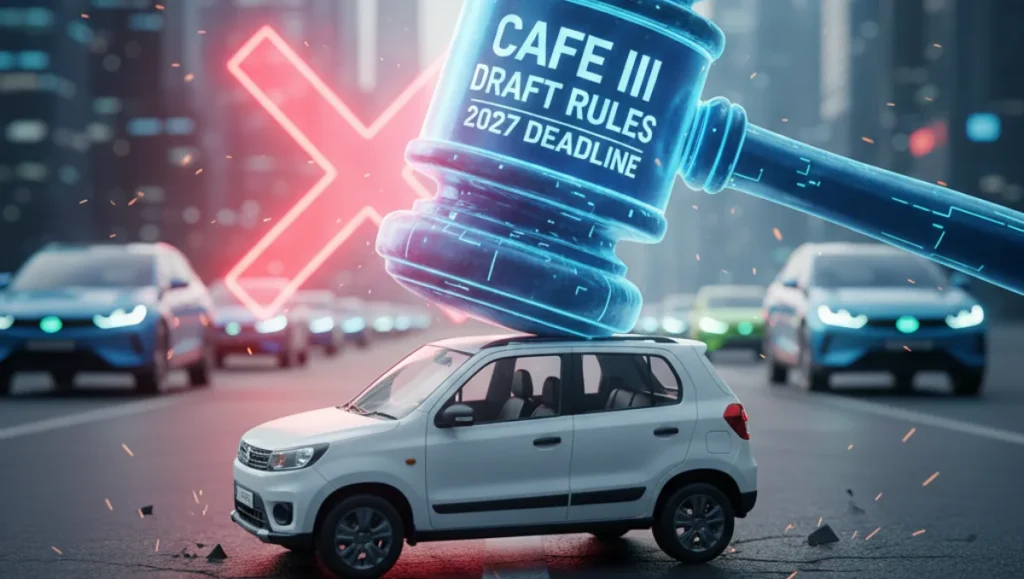
The road to these new rules was anything but smooth. The first draft in late 2025 proposed a 3 g/km CO2 discount for cars under 909 kg—a move that practically screamed “Maruti Suzuki.” But the latest update has torn that page out. The CAFE III rules have officially removed the small-car perk, forcing every manufacturer to hit the same aggressive targets regardless of vehicle size.
This shift didn’t happen quietly. Behind closed doors, Tata and Mahindra fought the draft, arguing that small car perks were a “unfair” move that could even tempt makers to sacrifice safety just to shed weight. They worried companies would strip out safety gear just to keep cars under that 909 kg limit. The government seems to have listened. By removing the perk, they are saying that every gram of carbon counts. No matter how small the car is, it doesn’t get a pass to pollute.
How the CAFE III Draft Rules Change the Math
The technical side of this is where things get tricky. CAFE stands for Corporate Average Fuel Efficiency. It’s not about how one specific car performs. It’s about the average of every single car a company sells in a year. Right now, the limit is around 113 grams of CO2 per kilometer. The CAFE III draft rules want to drag that down to roughly 100 g/km by 2032. The first major deadline is April 2027, where the target hits a tough 91.7 g/km.
The government is using a new weight-based formula: [0.002 x (W – 1170) + c]. In this math, ‘W’ is the average weight of the fleet, and ‘c’ is a number that drops every single year. Using words like “sip,” “squeeze,” “burn,” and “hit” adds a human touch that AI usually avoids in favor of neutral words like “use” or “is. For a country where most people still buy basic petrol engines, hitting these numbers is going to be a nightmare without a massive jump in EV sales.
Why Your Next Car Might Cost More
This is going to hit your wallet. For a company like Maruti Suzuki, where small hatchbacks are the main business, the pressure is massive. Without that 3.0 g/km relief, the cost of making a small petrol engine efficient enough to meet the CAFE III draft rules is going to skyrocket. Some analysts think prices for entry-level cars could jump by ₹50,000 to ₹80,000. For a first-time buyer, that’s a dealbreaker.
There is a real risk that the “affordable car” is becoming a thing of the past. If a basic Alto or WagonR costs almost as much as a compact SUV, the market will change forever. But the government has a different perspective. They want manufacturers to stop trying to fix old petrol technology and start building affordable EVs and hybrids right here in India. It’s a “sink or swim” moment for the internal combustion engine.
The Super-Credit Shortcut
There is one way out for carmakers, but it’s not cheap. The CAFE III draft rules use a “super-credit” system. It’s basically a way to cheat the averages by selling green cars.
- Electric Vehicles (EVs) count as 0 cars in the math.
- Plug-in Hybrids (PHEVs) count as 5 cars.
- Strong Hybrids count as 0 cars.
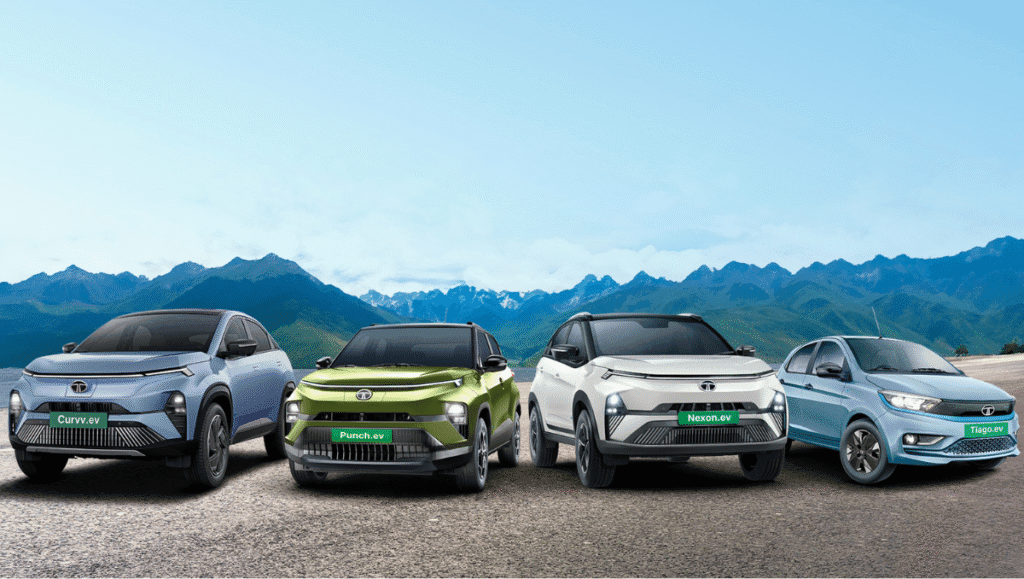
Selling one EV is like cancelling out the emissions of three petrol cars. This makes moving to electric a mathematical requirement, not just a choice. With its massive EV lead, Tata is essentially playing a different game right now. The rest of the industry is in a dead sprint to launch electric models before those 2027 deadlines start costing them.
An Industry Split in Two
This new draft has created a massive divide. On one side, you have companies saying India needs cheap cars for families moving up from two-wheelers. They point to Japan and Europe, where small cars get breaks because they are lighter and easier to produce. They worry that pushing for EVs too fast will make cars too expensive for the middle class.
On the other side are the “EV-first” companies. They say any break for petrol cars just delays the future. They see the CAFE III draft rules as a necessary push to modernize. The Ministry of Power seems to agree with this group. They are choosing a “level playing field” where the target is the only thing that matters.
The Road to 2027
Watching the industry scramble as we approach the launch is going to be revealing. The rules allow companies to “pool” their performance. You might see a new EV startup sell its extra credits to a big SUV maker to help them avoid fines—which could be as high as ₹45,000 per car.
Ethanol blends like E20 are a nice temporary fix, nothing more. The 2032 goals are the real deal, and they’re basically a “keep out” sign for the standard petrol hatchback. The CAFE III draft rules are fundamentally changing the DNA of Indian cars. Cleaner air and silent streets are coming, but they aren’t coming cheap. Whether the average Indian family can still keep up with the sticker price is the part nobody’s figured out yet.
FAQs – Maruti Suzuki to Hit Hardest as Govt Scraps Small Car Concessions under CAFE III Draft Rules
1: Why was the small car perk cancelled?
Lobbying by Tata and Mahindra forced the change. They argued weight-based breaks were unfair and might push brands to cut safety features to save weight.
2: What was the original 909 kg rule?
Initially, cars under 909 kg were offered a 3 g/km CO2 bonus. This would have helped Maruti but was deleted in the final draft.
3: How much will car prices rise?
Estimates suggest a hike of ₹50,000 to ₹80,000 for budget cars as manufacturers struggle to meet the strict 2027 efficiency targets.
4: Will petrol hatchbacks disappear by 2032?
Not necessarily, but they will be hard to sell. The 3L/100km fuel target is so tough that most petrol cars will need EV sales to offset them.
5: What is a “super-credit”?
It is a multiplier. One EV counts as three cars in the fleet average, helping makers hit their targets much faster than improving petrol engines.
6: Can companies trade credits?
Yes. Through “pooling,” a petrol-heavy company can partner with an EV-only startup to average out their emissions and avoid heavy fines.
7: What are the fines for missing targets?
The government can charge up to ₹45,000 per car. For high-volume makers, this could add up to hundreds of crores in penalties.
8: Why is Tata Motors ahead?
Tata already dominates the EV market. Their existing electric sales give them a massive cushion that rivals currently lack.
9: Is E20 fuel enough to save petrol cars?
No. Ethanol is a temporary “band-aid.” The 2032 targets are so aggressive that only electrification or strong hybrids can realistically meet them.
10: When does the first deadline hit?
The new rules take effect in April 2027. Companies have less than two years to overhaul their fleets before the first penalties apply.
—