A Legend Reborn in Steel and Speed
For decades, mentioning a Jawa meant talking about a charming, slightly slow, 350cc nostalgia trip. That era just ended. It ended with a loud, parallel-twin bang that no one really saw coming quite like this. The Jawa 730 Twin Finally Revealed its presence this week, and honestly? It’s a total shock to the system for anyone who thought this brand was content playing with its own history. We aren’t looking at some “retro-styled” commuter here. This is a 730cc, liquid-cooled monster that looks ready to pick a fight with every naked bike in Europe.
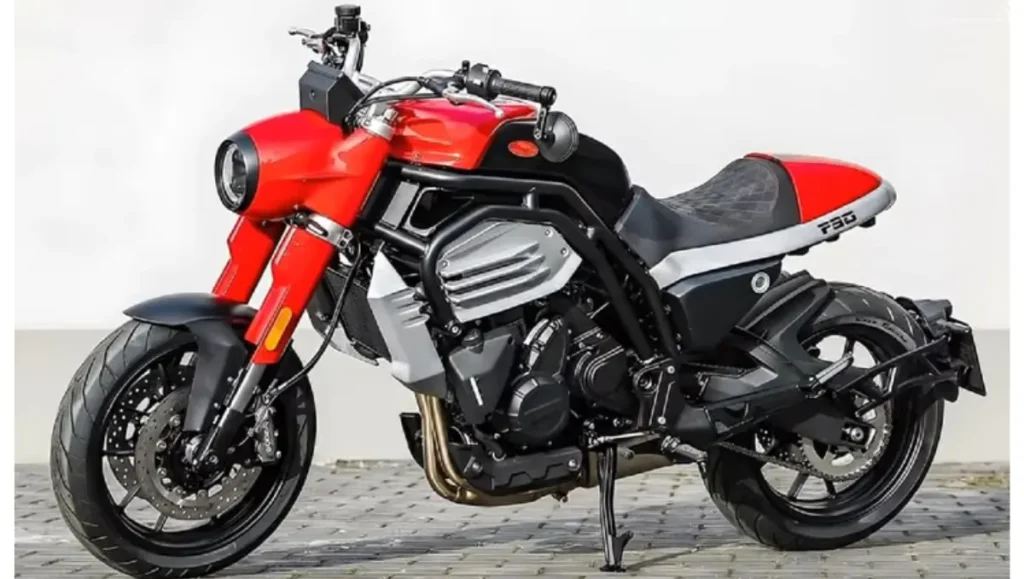
Let’s get to the power, the real talking point. This engine is the centerpiece, co-developed with Suter Racing Technology. Forget about repurposed 90s tech or bored-out 500s; this is a clean-sheet build through and through. It pumps out 75 hp at 8,200 rpm, which is a wild departure for a company that’s been playing in the 20-30 hp sandbox for so long. It’s a massive leap into the performance deep end. The sheer audacity of the Czech factory to go from 350cc singles to a Suter-tuned twin tells you exactly what their 2026 ambitions are. They aren’t here to participate; they are here to take over.
Why the Jawa 730 Twin Finally Revealed is a Game Changer
Let’s be real: this bike looks fantastic. It balances that “Neo-Retro” tag by keeping the vintage round headlight while the tubular steel trellis frame does the heavy lifting. The result is a look that’s industrial and rugged, avoiding that over-sanitized feeling you get with most modern nakeds. It’s unpolished in the best possible way. There’s a certain mechanical honesty to it that you just don’t get with the plastic-heavy Japanese Nakeds.
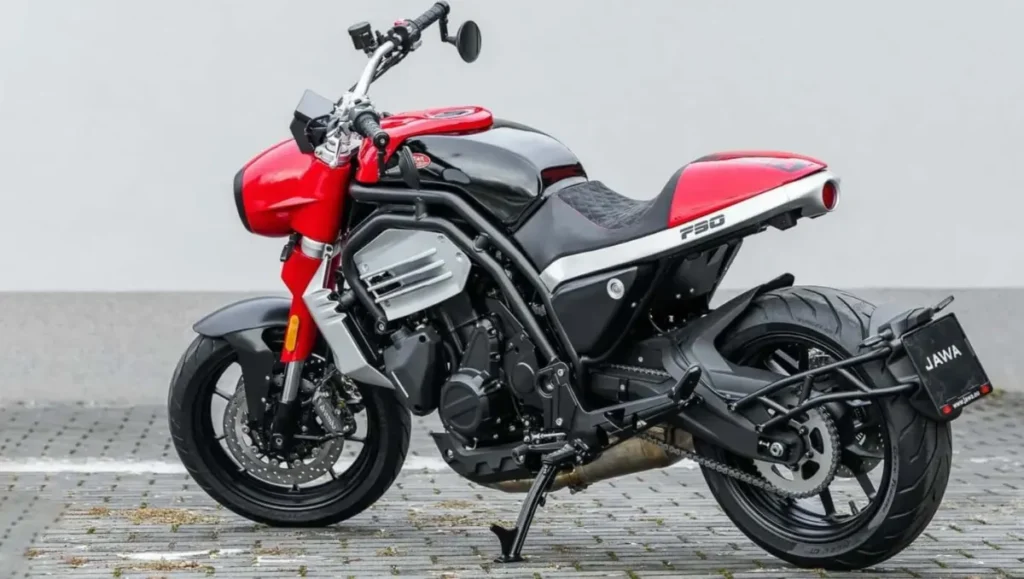
There’s no plastic clutter here; just the exposed engine, a tight 16-liter fuel tank, and a stubby tail. When the Jawa 730 Twin Finally Revealed its spec sheet, enthusiasts noticed the hardware immediately. We are talking KYB upside-down forks, a matching rear monoshock, and Brembo brakes that actually look capable of stopping a 213 kg machine at full tilt. This isn’t a budget bike dressed up in fancy clothes. It’s a performance roadster built with parts that usually belong on bikes twice its price.
The Technical Breakdown: Power Meets Precision
The math on this bike is interesting because it doesn’t follow the “lightweight at all costs” trend. While most modern middleweights try to shave every gram, Jawa focused on making this bike feel “planted.” At 213 kg (dry), it has some heft. You feel that weight when you pull it off the side stand. Having 68 Nm of torque at 7,100 rpm means you’ve always got a safety net of power. This bike was made for the long haul, favoring stability over the light, “flighty” feel of city-bound nakeds. It gives you the physical presence of a tank without sacrificing that high-speed jet energy.
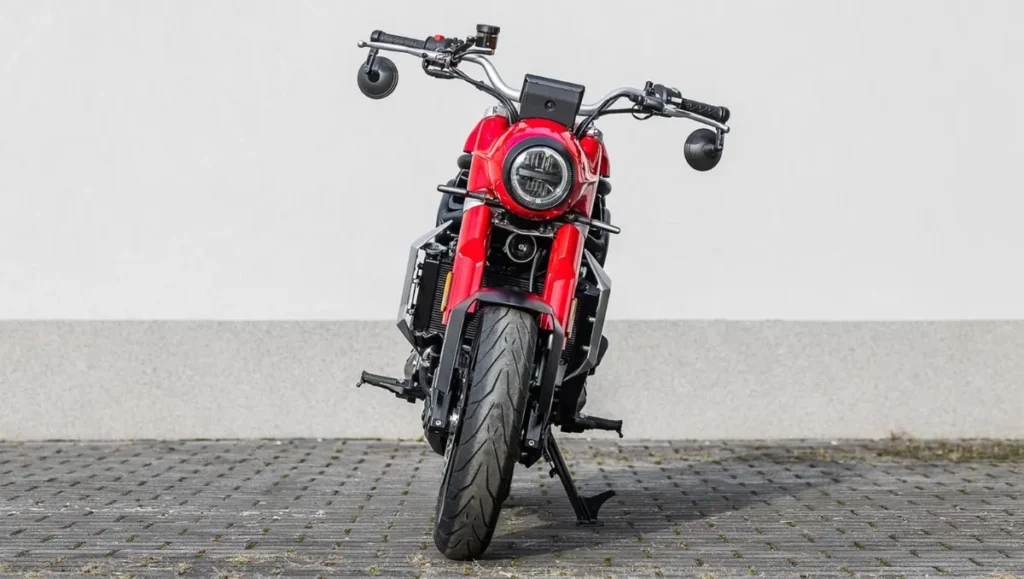
One thing that might surprise modern riders is the lack of “digital nannies.” In an era where bikes have ten levels of wheelie control and cornering ABS for your grocery runs, Jawa opted for simplicity. You get a TFT display with smartphone connectivity for your maps and music, sure. But the actual riding experience? That’s raw. No digital nannies here—just you and a 270-degree crank that gives this twin a V-twin soul and sound. It’s exactly the kind of “raw” we’ve been missing. It’s dangerous. It’s exactly what the market needs right now.
The Suter Connection: Swiss DNA in a Czech Heart
To understand why this bike is making waves, look at the name “Suter.” In Moto2 racing, Suter Racing is a name that commands respect. They don’t do “average.” Their involvement in the 730cc engine development ensures this isn’t some generic twin. The power delivery is expected to be linear but aggressive in the mid-range—precisely where most road riders spend their time.
The cooling system, the fuel mapping, and the internal friction reductions were all handled with a racing mindset. Jawa Moto is playing the long game by building their own soul instead of buying one off a shelf. This Suter-backed engine is nearly ready for the assembly line—95% by most accounts—and it has been put through the wringer on European roads. It’s a delicate balancing act: meeting the “fun-killing” Euro 5+ regulations while keeping that punchy, parallel-twin personality alive. It’s about performance, pure and simple. If you’ve ever ridden a bike that felt “anemic,” this Suter-tuned heart is the cure.
The Global Split: Who is This Bike For?
It’s vital to clear up one thing: this isn’t the “India-spec” Jawa. While the bikes we see in Mumbai or Delhi are built by Classic Legends (owned by Mahindra), the Jawa 730 Twin Finally Revealed is the work of the original Czech parent company, Jawa Moto.
This is their “return to the world stage” bike. It’s aimed squarely at European riders who want something with more character than a Honda or a Yamaha. They’ve even confirmed an A2-license version with the power dialed down to 47 hp. This positions Jawa not as a budget brand, but as a premium, “handcrafted” European alternative for 2026. It’s a bold move, but with the middleweight segment currently exploding, the timing is perfect.
Comparison: Jawa 730 Twin vs the Middleweight Giants
| Specification | Jawa 730 Twin | Yamaha MT-07 | Royal Enfield INT 650 |
| Engine | 730cc Parallel Twin | 689cc Parallel Twin | 648cc Parallel Twin |
| Power | 75 hp | 73.4 hp | 47 hp |
| Torque | 68 Nm | 67 Nm | 52 Nm |
| Brakes | Brembo / Bosch ABS | Yamaha / ABS | ByBre / ABS |
| Suspension | KYB USD Forks | Telescopic | Telescopic |
| Weight (Dry) | 213 kg | 184 kg | 202 kg |
Jawa clearly didn’t come to play. This new Jawa is a powerhouse. It makes the Royal Enfield look slow and technically edges out the MT-07 for top-end speed. Yes, it’s heavier than the competition, but that’s the price of a more “substantial” feel. If you find lightweight nakeds a bit too twitchy on the highway, the 730 Twin’s KYB-supported stability is going to be a breath of fresh air.
The Road Ahead for 2026
The 730 Twin is effectively “done” but still in its final pre-production testing. We’ve seen the mechanical core already, but the full production bike is the headliner for Brno’s Motosalon in March 2026. Once that show wraps up, the European rollout begins in earnest.
The rollout is basically a two-part act. Director Jiří Krafta confirmed a “Zero Series” will hit the streets first, capped at just 150 units for collectors. Once those are gone, the assembly line starts moving for full production in Autumn 2026. They are using that limited-run hype to back up the €8,500 price tag—a bold move, but if anyone has the history to make it work, it’s Jawa.
Jawa 730 Twin Finally Revealed: Full Specs
- Engine Type: 730cc Parallel-Twin, Liquid-Cooled
- Valve Train: DOHC, 4 valves per cylinder
- Fueling: Bosch Electronic Fuel Injection (Euro 5+)
- Transmission: 6-speed with slipper clutch
- Frame: Steel bridge trellis frame
- Front Tire: 120/70 R17
- Rear Tire: 180/55 R17
- Seat Height: 785 mm
- Top Speed: 205 km/h (claimed)
FAQs – The Legend Returns: Jawa 730 Twin Finally Revealed
1: When does the Jawa 730 Twin actually hit the market?
The finished street version headlines the Motosalon Brno show in March 2026. After that, it starts rolling into European showrooms.
2: Is this the same Jawa you see in India?
Not at all. This is a Czech-built project from the original Jawa Moto factory, totally separate from the Indian Classic Legends bikes.
3: How much grunt does the Suter engine have?
It’s a clean-sheet 730cc twin that kicks out 75 hp. That is way more muscle than anything Jawa has built in decades.
4: Can A2 license holders ride one?
Yes. A 47 hp restricted version is coming, so newer riders won’t be left out of the mix.
5: What is the damage to the wallet?
Word is the price tag will sit near €8,500. It’s definitely being positioned as a premium European alternative.
6: Does it have traction control or ride modes?
Nope. Jawa skipped the “digital nannies.” You get ABS and a TFT dash, but the actual riding is purely mechanical and raw.
7: Why is it so much heavier than the MT-07?
At 213 kg, it’s a bit of a tank. But that extra weight and the KYB forks make it way more stable when you’re pinned on the highway.
8: What’s the deal with the Brembo and KYB parts?
Jawa didn’t cheap out. They used upside-down KYB forks and Brembo calipers so the bike handles and stops like a proper modern roadster.
9: Does it actually sound like a V-Twin?
Pretty much. That 270-degree crank gives it a rumbly, aggressive bark instead of the usual “drone” you get from parallel twins.
10: How do I get my hands on the Zero Series?
You’ll have to be fast. Only 150 of these collector-grade units are being made before the full production line opens in late 2026.
—