Chinese Automakers Gain Market Share in India: What’s Driving the Rapid Rise?
The Indian automotive landscape is changing faster than ever, and one of the biggest shifts in recent years is how Chinese automakers gain market share in India far more quickly than traditional industry watchers expected. What began as a cautious entry has turned into a confident climb—powered by aggressive pricing, tech-heavy features, and a strong push toward electric mobility.
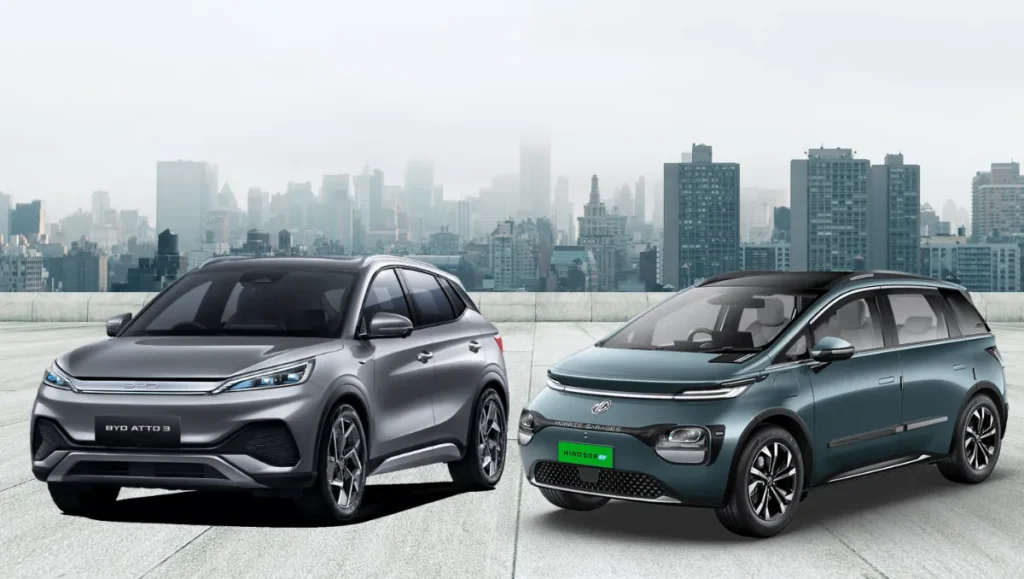
Brands like MG Motor, BYD, and SAIC-affiliated manufacturers have successfully entered the Indian market and are now reshaping buyer expectations. From EV innovation to value-driven SUVs, Chinese companies are proving that India is one of their most important global markets.
In this detailed breakdown, we explore the reasons behind this rise, the unique strategies being used, and how these brands are influencing India’s future automotive direction.
Chinese Automakers Gain Market Share in India: The Shift Begins
For decades, India’s automobile industry was dominated by homegrown and Japanese companies. However, over the past few years, Chinese automakers gained market share in India by offering something the competition wasn’t focusing on—feature-rich vehicles at highly competitive prices.
The key Chinese players making a strong impact include:
MG Motor India (owned by SAIC Motor) : Known for the Hector, Astor, and ZS EV, MG has become a popular premium SUV and EV brand.
BYD (Build Your Dreams) : Now India’s fastest-growing EV manufacturer, offering the BYD Atto 3 and e6 MPV, with plans for expansion.
Haima Automobile (in collaboration plans) : Known for showcasing EV models and potential entry into budget-friendly electric segments.
Great Wall Motors (GWM) : Paused entry, but still relevant in industry discussions due to huge global EV growth.
While not all brands operate fully in India, MG and BYD are the biggest Chinese success stories and are responsible for the rise in Chinese presence across dealerships, EV sales, and urban markets.
Why Chinese Automakers Gain Market Share in India Faster Than Others
Strong Focus on EV Technology
The biggest reason Chinese automakers gain market share in India is their leadership in electric mobility.
- BYD e6 became India’s first e-MPV with exceptional range.
- BYD Atto 3 is considered one of the most technology-rich electric SUVs in its segment.
- MG ZS EV is one of India’s top-selling premium electric SUVs.
While legacy manufacturers were still testing EV strategies, Chinese brands were already delivering practical, long-range electric vehicles.
Feature-Loaded Cars That Appeal to Indian Buyers
Indian buyers love features, and Chinese brands deliver them aggressively:
- Large touchscreens
- Advanced connected-car tech
- Panoramic sunroofs
- ADAS safety systems
- AI assistants
- Best-in-segment infotainment
MG Motor in particular uses a “tech-first” strategy, making their SUVs feel more premium than competitors at similar prices.
Pricing Strategy That Works for the Indian Market
One major reason Chinese automakers gain market share in India is competitive pricing.
Chinese companies operate massive manufacturing plants worldwide, helping them:
- Reduce production cost
- Import parts more affordably
- Offer feature-rich vehicles without huge markups
MG Hector, for example, disrupted the SUV segment with premium features at a mid-segment price, forcing rivals to upgrade their offerings.
Building Trust Through Local Operations
Chinese automakers have invested heavily in India:
- MG Motor manufactures vehicles at its Halol plant (Gujarat).
- BYD operates assembly units and supports fleet-level EV expansion.
- Local sourcing is increasing year after year.
By localizing operations, they reduced dependency on imports while improving service networks and after-sales confidence.
A Strong Push Toward Sustainability
As the world shifts toward greener mobility, Chinese companies already have the technology India needs.
EV-friendly initiatives by the Indian government—FAME II, lower GST on EVs, and better charging infrastructure—have boosted companies like:
- BYD (global EV leader)
- MG Motor (strong EV lineup)
This aligns perfectly with China’s advanced EV research, giving their brands a massive advantage.
Appealing to the New-Age Urban Buyer
Young Indian car buyers want:
- Modern design
- Smart features
- Bold interiors
- Connected, digital experiences
Chinese automakers deliver all of this effortlessly. Their cars feel futuristic without being overpriced.
This helps them win customers in major cities like Delhi, Mumbai, Bengaluru, Chennai and Pune.
A Reputation for Quick Innovation
Chinese manufacturers innovate quicker than traditional global automakers.
- Fast model updates
- Frequent tech upgrades
- Rapid EV improvements
- Use of lightweight materials
- AI-driven driving features
This speed keeps their products fresh and competitive, helping Chinese automakers gain market share in India year after year.
Challenges Ahead for Chinese Automakers
While the rise is impressive, challenges still exist:
- Growing geopolitical concerns
- Increasing competition from Indian EV brands like Tata and Mahindra
- Price sensitivity in lower-segment markets
- Need for stronger dealer networks
- Trust-building among traditional buyers
Still, despite these obstacles, their growth trajectory remains upward.
What the Future Looks Like
Chinese automakers will play a major role in India’s EV future. Expect:
- More BYD models
- An expanded MG EV portfolio
- Additional partnerships or new brand entries
- Faster charging tech
- Affordable EV SUVs under ₹15 lakh
- More locally manufactured Chinese-origin models
With EV adoption increasing every year, Chinese automakers gain market share in India will become a bigger and more frequent headline.
Final Thoughts
The rise of Chinese automakers gain market share in India is not a temporary trend—it’s a fundamental shift driven by technology, affordability, and smart positioning. MG Motor and BYD have already proven that Indian buyers appreciate value-packed, futuristic vehicles.
As India moves toward an electric and tech-driven automotive future, the role of Chinese automakers will only grow stronger.
FAQs – Chinese Automakers Gain Market Share in India
1. Why are Chinese automakers gaining market share in India so quickly?
Chinese automakers gain market share in India because they offer feature-loaded vehicles, aggressive pricing, and strong EV technology that appeal to modern Indian buyers.
2. Which Chinese brands are growing the fastest in India?
The fastest-growing Chinese-origin brands in India are MG Motor and BYD, both of which have expanded rapidly due to their electric models and tech-rich SUVs.
3. How has BYD contributed to the rise of Chinese automakers in India?
BYD has boosted the rise of Chinese automakers in India by offering long-range electric models like the e6 and Atto 3, which outperform many rivals in efficiency and battery tech.
4. What role does MG Motor play as Chinese automakers gain market share in India?
MG Motor, backed by SAIC, has become a major player by offering premium features, connected-car tech, and competitive pricing with models like the Hector, Astor and ZS EV.
5. Is the increase in Chinese automaker sales driven mainly by EV demand?
Yes. A large part of why Chinese automakers gain market share in India is their leadership in EV technology, where they provide affordable models with superior battery range and charging efficiency.
6. Are Chinese automakers offering better features than traditional brands?
In many cases, yes. Chinese brands often introduce panoramic sunroofs, ADAS, AI assistants and big touchscreens in segments where competitors still lack these features.
7. Do Indian consumers trust Chinese automakers as much as other brands?
Trust is growing. As Chinese automakers gain market share in India, their investment in local manufacturing, service centers and consistent product quality has strengthened buyer confidence.
8. How do Chinese automakers keep prices competitive in the Indian market?
They rely on high-volume global production, localized assembly, cost-efficient supply chains and aggressive pricing strategies, helping them stay ahead of rivals.
9. Will Chinese automakers continue to grow in India in the coming years?
Yes. With India pushing for wider EV adoption and improved charging infrastructure, Chinese automakers are expected to expand even more due to their EV leadership.
10. Are Chinese automakers affecting the strategies of Indian brands?
Absolutely. As Chinese automakers gain market share in India, local companies like Tata, Mahindra and Maruti Suzuki are adding more tech features, redesigning SUVs and accelerating EV projects to stay competitive.
—