Ferrari Luce Interior Revealed: A Tactile Masterpiece by Jony Ive
So, the wait is finally over. After years of rumors about an “Apple Car,” we’ve basically just seen the next best thing. On February 9, 2026, the Ferrari Luce Interior Revealed a cabin that feels more like a luxury watch or a vintage cockpit than a modern electric vehicle. Ferrari’s first-ever EV, officially named “Luce” (which means ‘light’ in Italian), isn’t just a car; it’s a statement against the giant, soul-less touchscreens that have taken over every other EV on the market.
This project has been a secret for five years. Ferrari’s chairman John Elkann and CEO Benedetto Vigna teamed up with Jony Ive and Marc Newson’s design firm, LoveFrom. The result? A interior that actually feels expensive. Most EVs today feel like a giant iPad on wheels, but the Luce goes the opposite direction. It’s all about the physical, the mechanical, and the “click” of a well-made switch.
Defying the “Glass Slab” Trend
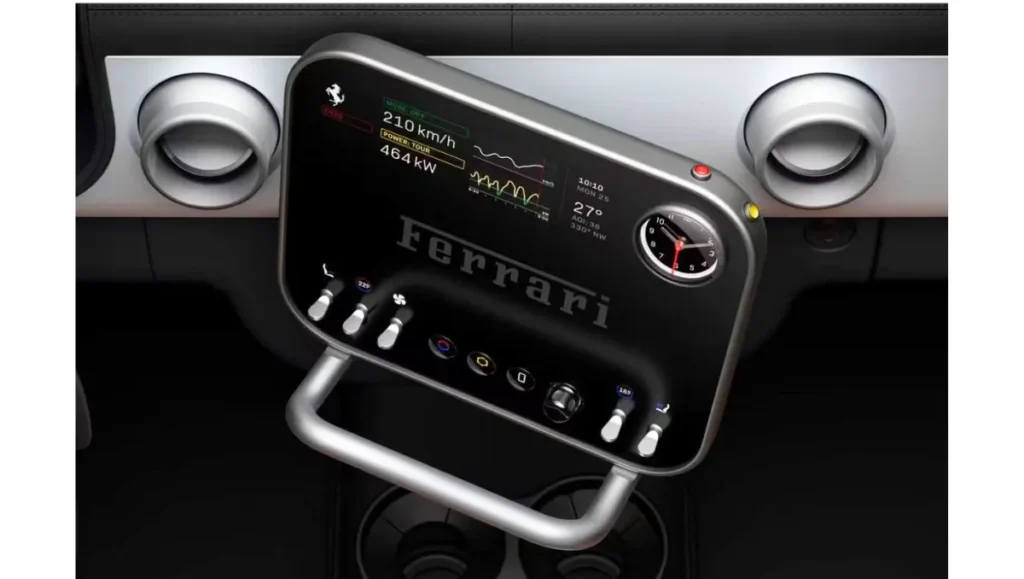
It’s a huge relief to see Ferrari actually kept the buttons. Ferrari and LoveFrom basically decided that just because a car is powered by electricity doesn’t mean it should look like a smartphone. In the press briefing, they mentioned “defying the convention” of massive screens. When the Ferrari Luce Interior Revealed its dashboard, the first thing people noticed was the lack of a dominant center display. There is a 10.2-inch screen, sure, but it’s mounted on a ball-and-socket joint. You can swivel it toward the passenger or hide it away.
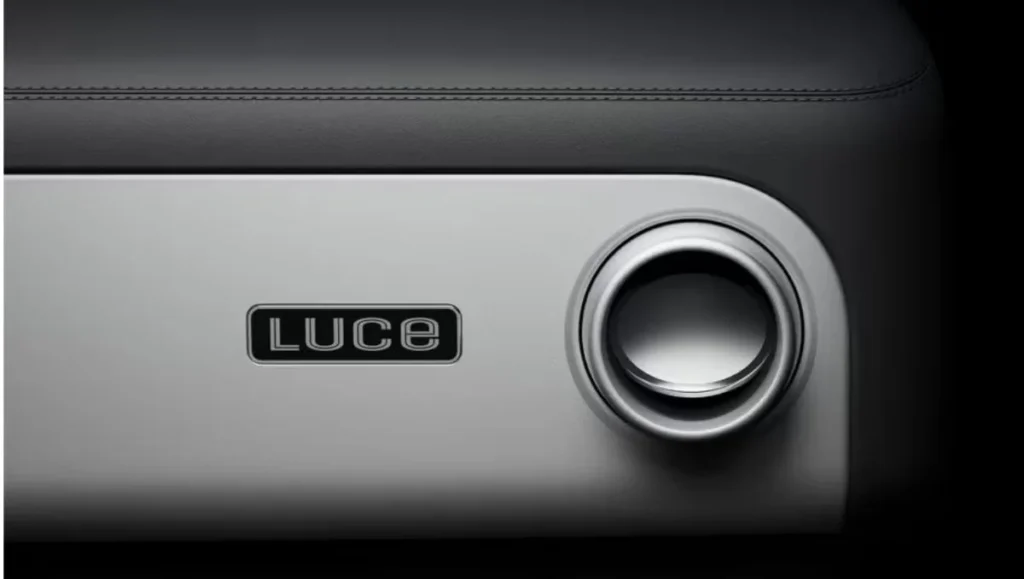
Instead of buried menus, you get rows of machined aluminum toggles. These are used for things you actually need while driving—climate, seat heating, and volume. Ferrari even ran over 20 different “tactile tests” with their pro drivers just to make sure the acoustic feedback—the sound the button makes—was satisfying. It’s that level of obsession that you only get when Jony Ive is involved.
The Magic of the E-Ink Glass Key
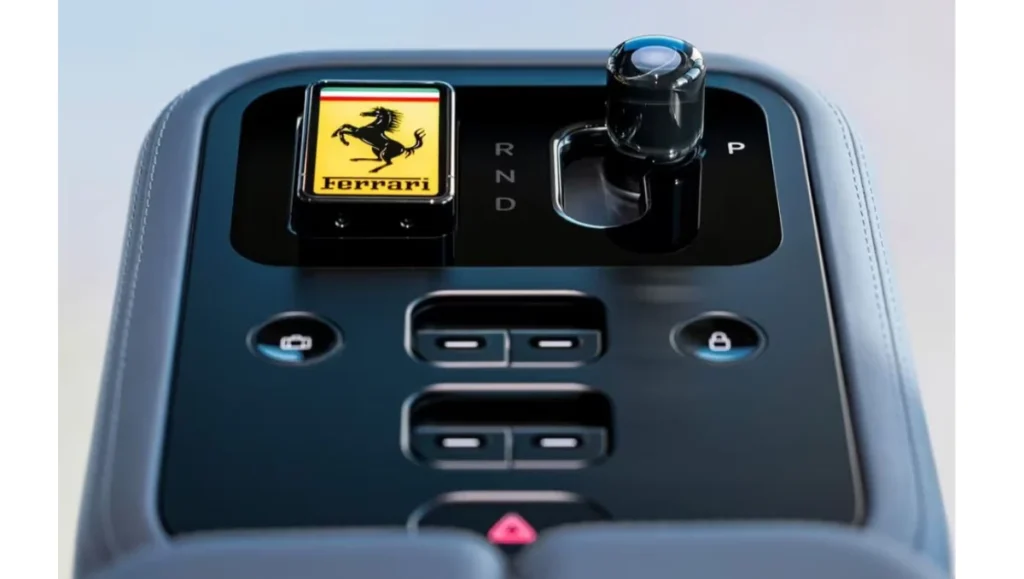
Now, let’s talk about the key, because this is probably the most “Apple” thing about the whole car. This little glass slab is carved from Corning Fusion5. Ferrari ditched the buttons for a bi-stable E-Ink screen—the same tech in an e-reader—to show the logo. When you aren’t in the car, the key shows a black Ferrari shield.
But here’s the cool part: when you get in and slot that glass key into the center console dock, the yellow “drains” from the key and lights up the entire car. The gear selector, which is also made of glass, starts to glow yellow. It’s a startup ritual that replaces the roar of a V12. The whole point is to make it feel like you’re “injecting life” into the car. Sure, it’s a bit over the top, but this is a Ferrari—drama is literally part of the job description.
Samsung OLEDs and 3D Gauges
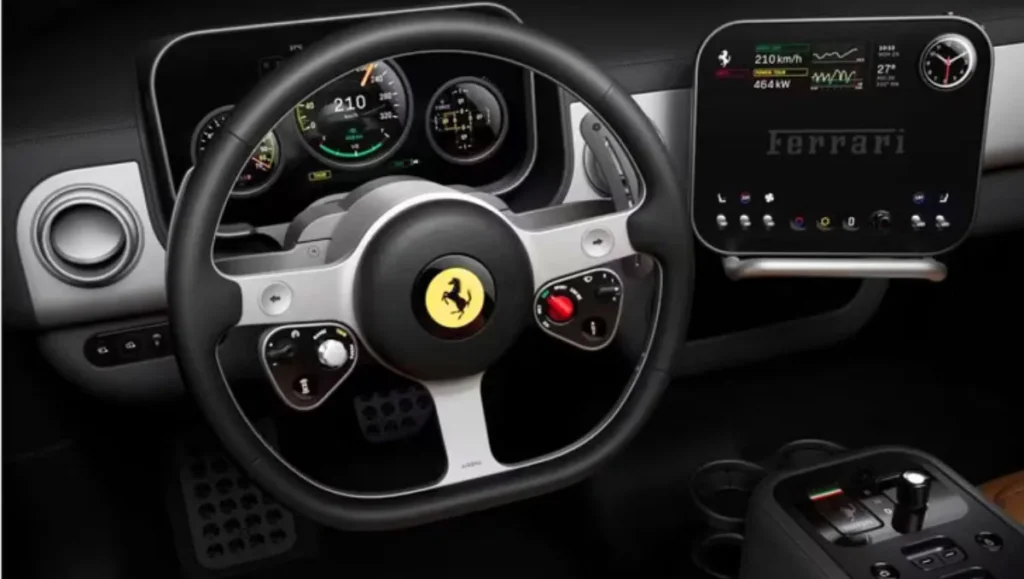
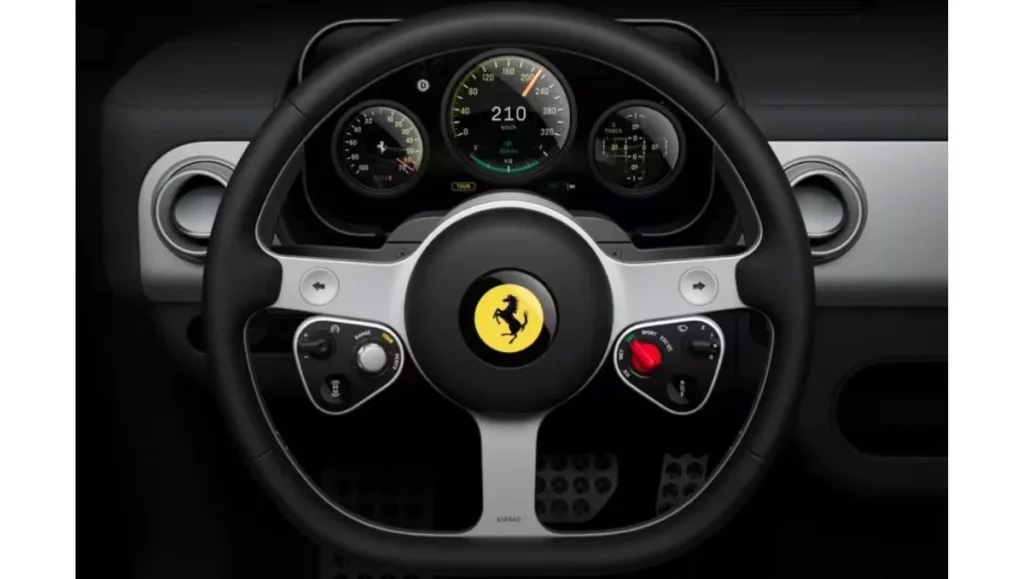
The instrument cluster is another wild piece of engineering. Perched on the steering column is a 12.5-inch binnacle that actually moves with the wheel as you adjust it. It’s genius because your view of the gauges is never blocked. This whole setup uses a “layered” OLED system that Ferrari cooked up with the engineers over at Samsung Display.
You’re essentially looking at two separate screens sandwiched together, one right behind the other. The top screen has three physical holes cut into it. A second screen behind it shows the information through those holes. Since there’s a real gap between the two OLED panels, it creates this wild parallax effect that basically tricks your brain into seeing 3D depth. When you move your head, the dials look 3D and deep. There’s even a physical, anodized aluminum needle for the speedometer that sits between the layers. It’s the best way anyone has ever made a digital screen look like a classic 1960s Veglia gauge.
The “Fighter Jet” Overhead Console
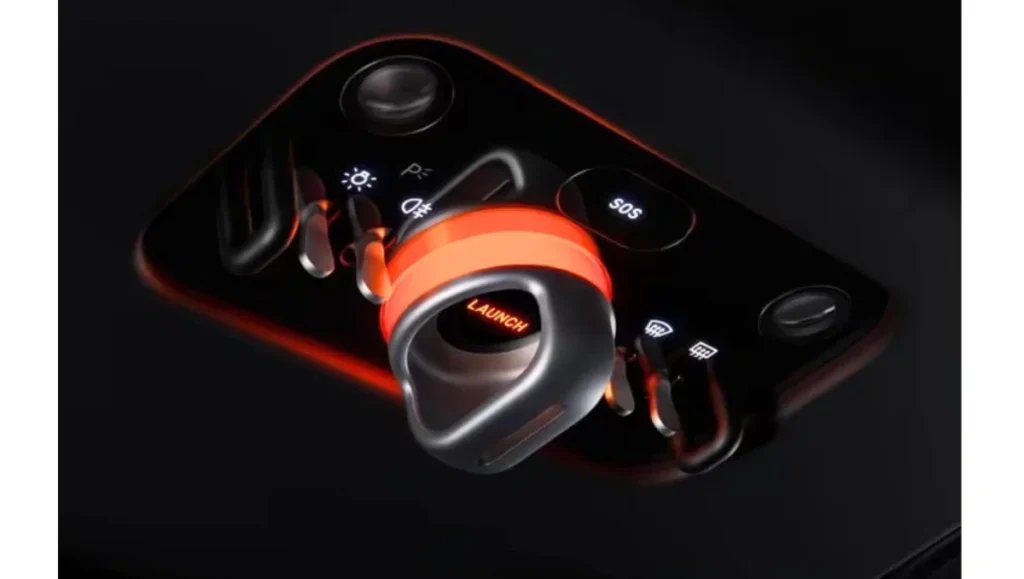
If you look up, the Luce continues the tactile theme. There is an overhead console that looks like it came straight out of a helicopter. This is where they put the toggles for the lights and the demisters. But the main event is a big aluminum handle. You pull it down to engage “Launch Control.” When you do, the handle glows orange, and a “multigraph” unit on the dash starts a five-second countdown.
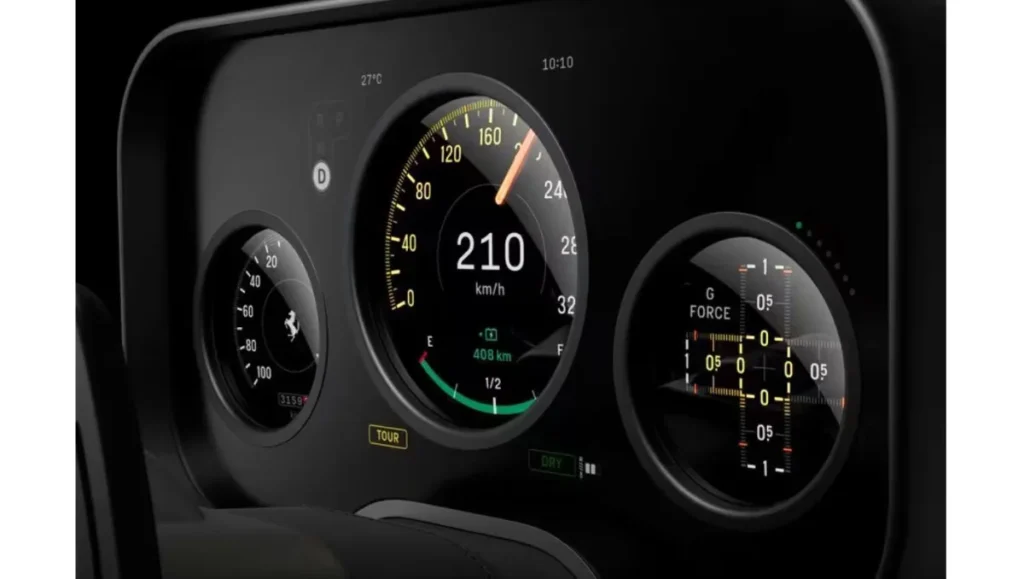
The multigraph itself is a piece of art. It’s a unit with three independent motors that can switch between being a clock, a compass, or a lap timer. It uses physical hands that glide over a digital face. It’s exactly the kind of over-engineered madness that makes a $500,000 price tag actually feel justified.
Sustainable Luxury Without the Plastic
One thing the Ferrari Luce Interior Revealed was a total lack of that cheap, shiny “piano black” plastic. Ferrari made it a point to use 100% recycled aluminum and a massive amount of Corning Gorilla Glass. There are over 40 individual glass parts in this interior. Normally, a luxury car has maybe three or four.
The seats are these skinny, leather-bound buckets that look like they weigh next to nothing. Then there’s the wheel—a direct tribute to the old-school Nardi wood rims from the 50s, but carved out of a solid block of aluminum instead. It actually shaves 400 grams off the standard Ferrari wheel weight. The spokes are super thin, and the best part? The turn signals are real, physical buttons that actually “click.” No more fighting with those glitchy touch pads when your hands get sweaty.
Why the Luce Matters in 2026
This car is heavy. Ferrari’s first EV is a 5,100-lb beast, surpassing even their SUV in weight. Quad motors pushing 1,000 HP ensure this 5,100-lb tank still manages to dust supercars in a 2.5-second dash to 60.
But the real story isn’t the speed. It’s the fact that Ferrari is trying to save the “feeling” of driving. They’ve even added a sound system that doesn’t fake engine noise. Instead, it uses an accelerometer on the motor to capture the real, raw vibrations and amplifies them through the car’s structure. It’s supposed to sound like a “power chord on an electric guitar.”
Final Take
The Ferrari Luce Interior Revealed a future where we don’t have to give up buttons for batteries. Ive actually did it. He made an EV feel analog. It’s 1950s elegance smashed into 2026 innovation. The full body doesn’t drop until May in Italy, but the hype is real. If that exterior matches the cabin’s energy, we’re looking at the most important car of the 2020s. Period.
FAQs – Ferrari Luce Interior Revealed: A Tactile Masterpiece by Jony Ive
1: What is the Ferrari Luce?
It’s Maranello’s first full-electric car. The name means “light,” and it was designed with Jony Ive to prove EVs don’t have to be boring tech-slabs.
2: Does it actually have a touchscreen?
Yes, a 10.2-inch one on a swivel joint. But it’s not the main event. Most of your time is spent clicking real, machined aluminum toggles and switches.
3: What’s up with the glass key?
It’s a button-free slab of Corning glass with an E-Ink screen. You slide it into a magnetized dock to “hand over” power and wake the car up.
4: How much power are we talking about?
Four motors, over 1,000 HP. It’ll rip to 60 mph in under 2.5 seconds, which is frankly insane for something this heavy.
5: Is it really heavier than their SUV?
Yeah, it’s a tank. At 5,100 lbs, the Luce is officially the heaviest car Ferrari has ever built, beating the Purosangue by a noticeable margin.
6: How do the 3D gauges work?
Samsung layered two OLED panels on top of each other. The physical gap between them tricks your eyes into seeing genuine depth, like an expensive watch.
7: Does it sound like a vacuum cleaner?
No. Ferrari uses an accelerometer to grab raw motor vibrations and blast them through the chassis. It’s supposed to sound like a “power chord.”
8: What’s that handle on the ceiling?
It’s an aluminum “fighter jet” lever. You pull it down to prime Launch Control, and a physical clock on the dash starts the countdown.
9: Did they fix the steering wheel buttons?
Thankfully. They killed the touch-pads and brought back real, physical indicator buttons. They actually click now, even if your hands are sweaty.
10: When can I see the exterior?
The interior reveal happened in SF this February. For the full body, you’ve got to wait until the big Italian launch in May 2026.
—