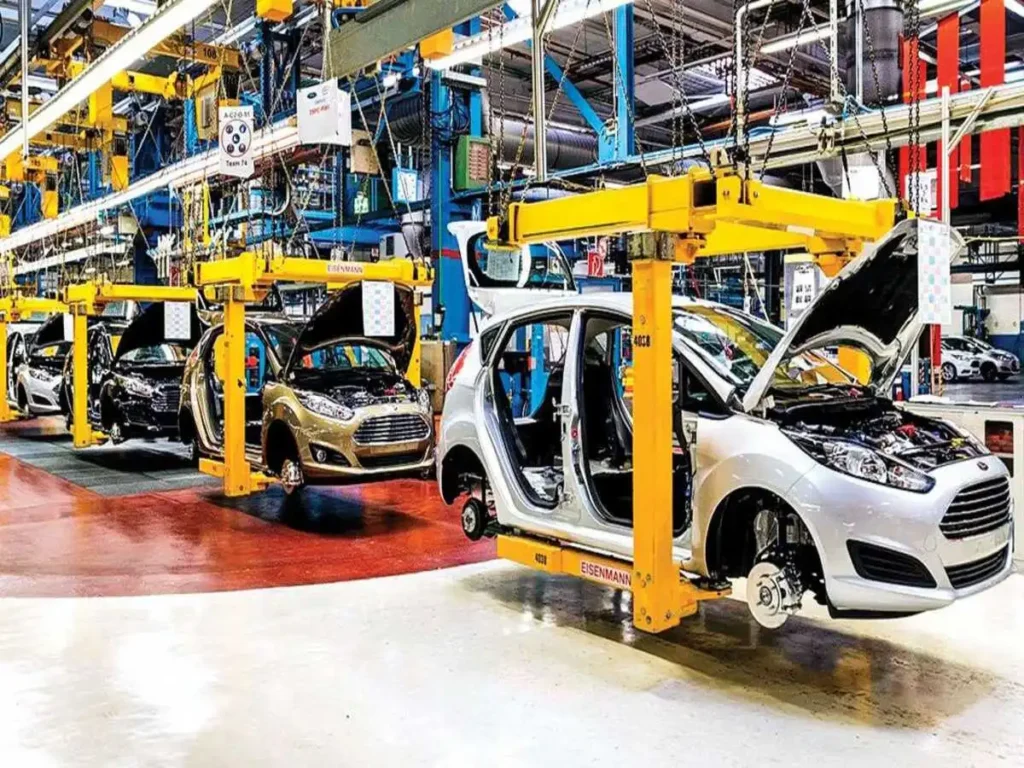
Ford to Revive Chennai Plant – A Major Comeback in India
Ford to revive Chennai plant is one of the most important developments in India’s automobile industry. After halting local manufacturing operations in 2021, Ford Motor Company has decided to return with a strong production plan and a renewed strategy. The company has confirmed a massive investment of Rs 3,250 crore to restart operations at its Maraimalai Nagar facility near Chennai, Tamil Nadu. This strategic revival shows Ford’s long-term commitment to the Indian market and its intention to make India a central part of its global manufacturing network.
The decision to revive the Chennai plant is not just about reopening a factory for Ford; it is a revival of faith in India’s potential as a manufacturing and export hub. The skilled workforce, automotive supply chain, and policy incentives have created an enabling environment for Ford to get its business foundation right in this country.
Why Ford’s decision to revive Chennai plant is strategic
The main reason for Ford to revive the Chennai plant is related to the company’s global strategy of optimizing its manufacturing network. India offers cost-effective production and proximity to export markets such as Southeast Asia, Africa, and the Middle East. The Chennai plant would be upgraded to make next-generation internal combustion engines, hybrid systems, and possibly components for electric vehicles.
Ford’s exit from India in 2021 was largely based on the financial losses the carmaker had been incurring, combined with underperforming sales. The manufacturing infrastructure in Chennai did, however, hold significant value. Rather than lying idle, the company decided to reuse it for global production of engines and vehicles. In this way, the revival has repositioned itself from purely domestic operations into an export-oriented, technology-enabled model.
Investment, Employment, and Local Benefits
The revival of the Chennai plant with an investment of Rs 3,250 crore by Ford will have a ripple effect on the local employment and regional development. Several thousands of skilled professionals, technicians, and engineers will benefit from the direct and indirect creation of jobs. The amount of investment will also trigger ancillary industries like logistics, auto components, and maintenance services.
The Tamil Nadu government has played an important role in extending support to Ford to revive Chennai plant. With attractive policy incentives, infrastructural assistances, and environmental clearances all in place, the state has emerged as a friendly and reliable partner for global automakers. This cooperation proves that strong government-industry partnerships can bring long-term industrial growth.
Infrastructure and Technological Upgrades
The revival of the Chennai plant will entail the complete modernization of production systems. The company plans to introduce digital manufacturing technologies, precision robotics, and energy-efficient operations. Advanced automation and artificial intelligence for quality control at the plant will result in higher productivity, reduced waste, and better quality.
The revival plan by Ford is aimed at redeveloping the existing Chennai facility into a smart factory model, aligned with global standards. It will be operated on the principle of sustainable operations, using renewable sources of energy, optimizing resource consumption, and maintaining carbon neutrality.
Export-oriented manufacturing strategy
The Ford plans to revive the Chennai plant primarily for exports to international markets. An export-oriented model enables Ford to sustain regular production volumes with minimal risks in the domestic market. Location near major ports gives the Chennai plant excellent connectivity for global distribution.
Ford’s plan is to use the revived facility to consolidate its leading position in key markets across Africa, the Middle East, and Latin America. Similarly, it will supply engines and components internationally from Chennai, while opening up a window for Ford’s re-entry into India’s domestic car market.
Re-Entry Possibility of Ford in the Indian Market
Though Ford has decided to revive the Chennai plant, mainly for exports, this could be the first concrete step toward Ford returning to the Indian passenger vehicle market. According to reports, the company is considering the feasibility of launching new hybrid and electric vehicles suited to Indian driving conditions.
A combination of affordability with global safety and performance standards could see Ford’s re-entry reshape the competitive landscape of India’s SUV and crossover segments. The revived Chennai plant would form the backbone of such a re-launch.
Partnership Between Ford and Tamil Nadu Government
The Tamil Nadu government has welcomed this decision to revive the Chennai plant of Ford as a positive sign for industrial growth. With proactive industrial policies, an investment-friendly environment, and a pool of skilled labour, the state is one of the best destinations for automobile manufacturing in India.
The move will also benefit local suppliers and vendors who used to do business with the company. The return of Ford ensures business continuity for many small and medium enterprises, thereby strengthening the economic ecosystem in the region.
Boost to Make in India and Atmanirbhar Bharat
Ford’s revival of the Chennai plant falls in line perfectly with the national vision: “Make in India” and “Atmanirbhar Bharat.” With the restart of local manufacturing, Ford is contributing to the national aspiration of positioning India as a global automotive export hub. The production of advanced engines and hybrid systems within the country reduces import dependency and promotes technological self-reliance.
This revival sends a powerful message to other multinational automakers that India remains a lucrative and stable manufacturing destination.
Environmental Commitment and Sustainable Production
Ford to revive Chennai plant also emphasizes environmental sustainability. It will adopt renewable sources, eco-friendly methods of production, and optimization of resources. The Chennai plant will include solar power facilities, energy-saving technologies, and efficient management of wastes.
In the long term, Ford plans to be aligned with global carbon neutrality goals by 2040. The revival of the Chennai facility is crucial for achieving that while fostering responsible industrial growth.
Impact on Indian Auto Industry and Global Outlook
The Ford move to revive the Chennai plant has generated excitement across the Indian automotive sector. It signifies renewed trust from global automakers in India’s manufacturing strength. The move is expected to encourage other foreign carmakers that previously exited India to reconsider their decisions.
This revival is also beneficial to the greater ecosystem, from component manufacturers to research centers, as Ford’s global standards will elevate quality benchmarks. The decision proves that India remains a strategic hub for global automobile production and innovation.
Future Timeline and Production Goals
In this context, Ford will start the pilot production in Chennai by the middle of 2026. While phase one encompasses engine production for exports, hybrid or electric vehicle assembly may occur in later phases. This follows a multi-year revival plan to ensure the company’s sustainable and step-by-step growth.
If successful, Ford to revive Chennai plant will set an example to other global brands on how to rebuild operations in India with long-term vision and sustainability at the core.
Conclusion
Ford’s revival of the Chennai plant is something more than a corporate revival; it is a symbol of resilience, innovation, and renewed confidence in the potential of India. The Rs 3,250 crore investment assures job creation, export promotion, and a boost in the local economy. By mixing advanced manufacturing with green technology, Ford gets ready to redefine automotive production in India.
The Chennai plant’s revival by Ford, in the process, will reinforce India’s status in the world’s automotive landscape and position it as a dependable, future-ready global manufacturing hub. The move marks a major comeback of sorts by Ford, and at the same time opens newer vista for the Indian auto industry.
FAQs – Ford to Revive Chennai Plant
1. What is the main reason for Ford to revive Chennai plant?
The main reason that Ford would revive the Chennai plant is to optimize its global manufacturing network by utilizing India’s cost-efficient production capability. It would produce next-generation engines and powertrain systems for export markets, making the country a strategic base in Ford’s global operations.
2. How much is Ford investing to revive the Chennai plant?
Ford to revive Chennai plant with an investment of Rs 3,250 crore. The major investment will be utilised for setting up advanced manufacturing infrastructure, sustainable operations, and production of next-generation engines at the Maraimalai Nagar facility near Chennai.
3. When will production begin at the revived Chennai plant?
Under Ford’s plans, production from the rejuvenated Chennai plant is expected to start by 2029. Site preparation and new equipment installation will begin at the end of 2025, with pilot production runs scheduled to begin in mid-2026.
4. Will Ford start selling cars again in India after reviving the Chennai plant?
Although Ford aims to revive the Chennai plant mainly for export production, the company may re-enter India’s passenger vehicle market later. Reports are that Ford is considering new hybrid and electric models designed specifically for Indian consumers.
5. How many jobs will Ford’s revival of the Chennai plant create?
The revival of the Chennai plant by Ford will create more than 600 direct jobs and hundreds of indirect opportunities through supply chains, logistics, and component manufacturing. The move will also revive employment for vendors and small-scale suppliers previously linked to Ford’s operations.
6. What types of engines will be manufactured at the revived Ford Chennai plant? Ford is set to revive the Chennai plant for the production of next-generation internal combustion engines, hybrid powertrains, and possibly components for electric vehicles. These will be exported to a number of international markets, strengthening Ford’s global production base.
7. What role is the Tamil Nadu government playing in Ford’s revival plan?
The government in Tamil Nadu has been a strong supporter of Ford’s revival of the Chennai plant, and has signed a MoU with the company, providing policy incentives, infrastructure support, and environmental clearances, all in an effort to ensure smooth industrial operations.
8. How does Ford’s plan to revive the Chennai plant align with Make in India and Atmanirbhar Bharat?
The revival of the Chennai plant by Ford perfectly aligns with India’s Make in India and Atmanirbhar Bharat initiatives. The proposed project encourages local manufacturing, job creation, and export-driven growth while reducing dependence on imported components.
9. Will the revived Ford Chennai plant follow sustainable practices?
Yes, Ford to revive Chennai plant includes a strong focus on environmental sustainability. The facility will adopt renewable energy sources, implement solar power systems, and follow eco-friendly production processes to minimize carbon emissions.
10. Ford to revive Chennai plant: How will this impact India’s auto industry?
Ford’s revival of the Chennai plant will give a fillip to India’s status as a global manufacturing hub for automobiles. It will encourage other foreign automakers to reinvest in the country, enhance technology transfer, and strengthen India’s role in the international automotive supply chain.
—