Government E-Drive Scheme: Operational Guidelines for EV Charging Infrastructure Unveiled
The Indian government has made a major move towards the bolstering of the country’s electric vehicle (EV) ecosystem with the introduction of operational guidelines under the PM E-Drive scheme. In a bid to fuel the growth of EV adoption, the Ministry of Heavy Industries (MHI) has clearly demarcated a framework to enhance public charging infrastructure through subsidies and methodical deployment.
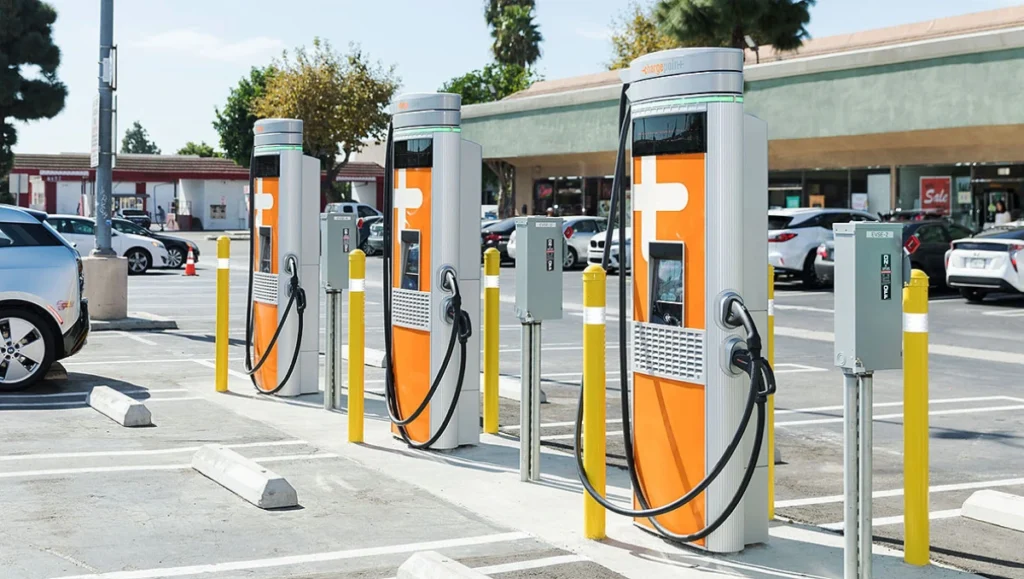
India has already achieved notable advancements in electric mobility, and top automobile manufacturers have begun providing fully electric cars, buses, and two-wheelers. But poor charging infrastructure is a significant challenge to mass market adoption. The PM E-Drive program, supported by a huge financial investment, addresses this deficit directly by providing for the setting up of thousands of EV charging and battery-swapping points throughout the nation.
Here, we deconstruct the scheme’s key points, subsidy structure, benchmark prices, and its overall effect on the EV ecosystem.
Scheme Overview
The total outlay of the PM E-Drive scheme is about ₹10,000 crore, where ₹2,000 crore is specifically allocated for the establishment of charging infrastructure. More than 72,000 public EV charging points, including fast chargers, battery-swapping stations, and exclusive two-wheeler, three-wheeler, car, and bus charging points, are to be supported by the scheme.
This program not only seeks to increase the number of charging points but also place them strategically in EV-concentrated areas like metro towns, state capitals, highways, and transport nodes.
Who Is Eligible to Receive Subsidies?
The following will be eligible for subsidies:
- Ministries and their associated organizations of the central government
- Governments and institutions of states and Union Territories
- Central Public Sector Enterprises (CPSEs)
- Autonomous government-controlled institutions
These organizations can either establish and manage the charging stations themselves or engage private entities, commonly known as Charge Point Operators (CPOs).
Subsidy Structure: Location-Based Incentives
The regulations establish a sliding subsidy structure based on the location where the charging stations are established.
- Government Premises (100 percent Subsidy)
- Offices, residential complexes, hospitals, and educational institutes
- Upfront costs of upstream infrastructure as well as EV Supply Equipment (EVSE) are met
- Term: Chargers should be kept available for public use
- Transport Hubs and PSU-Governed Locations (80–70 percent Subsidy)
- Wherever there are railway stations, airports, outlets of oil marketing companies, bus stands, metro stations, ports, and NHAI toll plazas
- Subsidy on 80 percent of the cost of upstream infrastructure and 70 percent of EVSE
- Other Public Places (80 percent Subsidy on Infrastructure)
- Malls, shopping centers, marketplaces, and city roads
- Battery-swap or battery-charging points at any place are also subsidized on upstream infrastructure by 80 percent
What Constitutes Infrastructure and EVSE?
The scheme distinguishes between upstream infrastructure and EVSE (Electric Vehicle Supply Equipment) clearly:
- Upstream Infrastructure
- Distribution transformer
- LT/HT cables
- AC distribution boxes
- Circuit breakers or isolators
- Protection equipment
- Mounting structures, fencing, and civil works
EVSE
- The charging unit itself
- Charging guns and connectors
Benchmark Costs and Subsidy Calculation
Subsidies will be determined on the basis of either the benchmark price as determined by the Bureau of Energy Efficiency (BEE) or the actual cost incurred, whichever is lesser.
For upstream infrastructure:
- ₹6.04 lakh for chargers up to 50 kW
- ₹24 lakh for chargers above 150 kW
For EVSE:
- ₹7.25 lakh for a 50 kW CCS-II charger
- ₹11.68 lakh for a 100 kW CCS-II charger
These uniform costs will avoid overbudgeted project cost and promote consistency.
Focus Areas for Roll-Out
The PM E-Drive plan focuses on strategic charging point roll-out in a manner to have the greatest impact. Top priority will be accorded to:
- Urban agglomerations with more than one million population
- Smart cities and metro-linked satellite cities
- State capitals and national highways
- Public transport stations such as airports, bus stands, and railway stations
Experts have long pointed out that installing charging points in low EV penetration areas may prove to be inefficient. Instead, funds are being allocated to those areas where EV uptake is already increasing.
Technology Standards for Chargers
For reliability and compatibility, the guidelines require stringent compliance with the Ministry of Power’s EV charging standards:
Two- and Three-Wheelers:
- Light EV DC (IS-17017-2-6)
- Light EV AC/DC Combo (IS-17017-2-7), up to 12 kW
- Four-Wheelers, Buses, Trucks:
- CCS-II (IS-17017-2-3) standard, between 50 kW and 250 kW
- Heavy Duty Buses and Trucks:
- Chargers of higher power CCS-II between 250 kW and 500 kW
- All charging guns will have to provide at least 120 kW for higher-speed charging
Implementation and Monitoring
The government has also nominated Bharat Heavy Electricals Limited (BHEL) as the Project Implementation Agency. BHEL will oversee disbursals of subsidies in two stages, subject to milestones of compliance and performance.
In addition, new charging points will be connected to the National Unified EV Charging Hub, which will:
- Offer real-time availability of stations
- Allow slot reservation
- Support digital payment
- Monitor usage and consumption patterns
This unified system will increase user comfort and streamline resource utilization.
Industry Significance
India currently has approximately 30,000 public charging points, lagging behind EV market leaders such as China, the US, and some regions in Europe. The PM E-Drive target of introducing over 72,000 new charging points is touted by experts to be a game-changer.
More operators will find installation and maintenance of charging stations affordable with subsidies cutting setup expenses. For buyers, this means less range anxiety and quicker uptake of EVs.
Final Thoughts
PM E-Drive program is amongst the boldest EV charging infrastructure projects India has ever taken. By providing organized subsidies, technology standardization, and requiring interconnectivity with an integrated digital hub, the government has established a robust foundation for an affordable, dependable, and future-proof charging network.
If effectively implemented, the scheme will not only expedite India’s shift towards sustainable mobility but also make the country a competitive player within the world EV ecosystem.
—