Tata Harrier.ev Outsells Nexon.ev to Claim Sales Crown — Big Shakeup in Tata EV Lineup
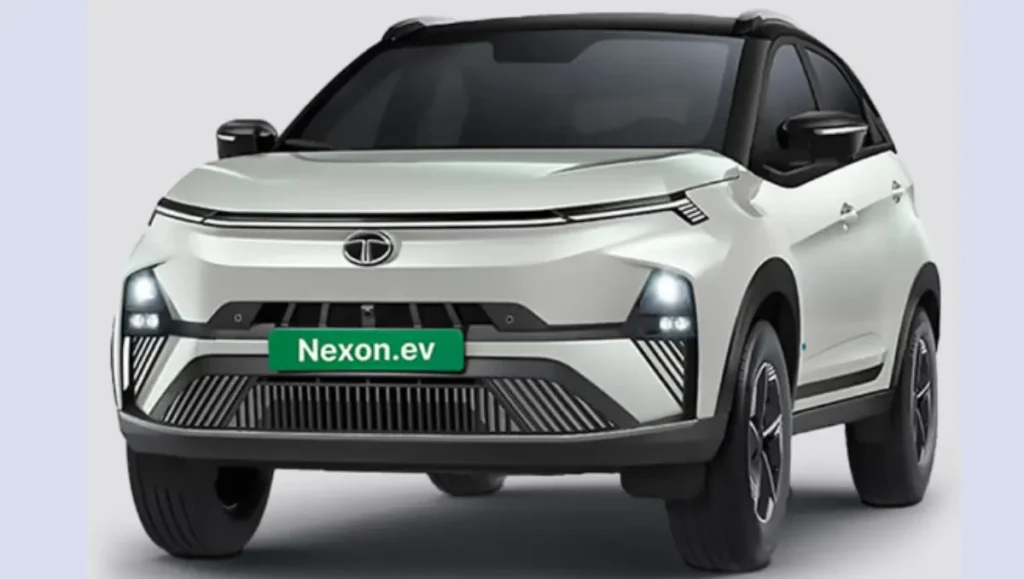
The moment is here: Tata Harrier.ev Outsells Nexon.ev to Claim Sales Crown, and for many, it’s a surprising — yet telling — milestone. For years, the Tata Nexon.ev reigned supreme among Tata’s electric-vehicle stable. But a recent sales push by the Tata Harrier.ev is rewriting the script.
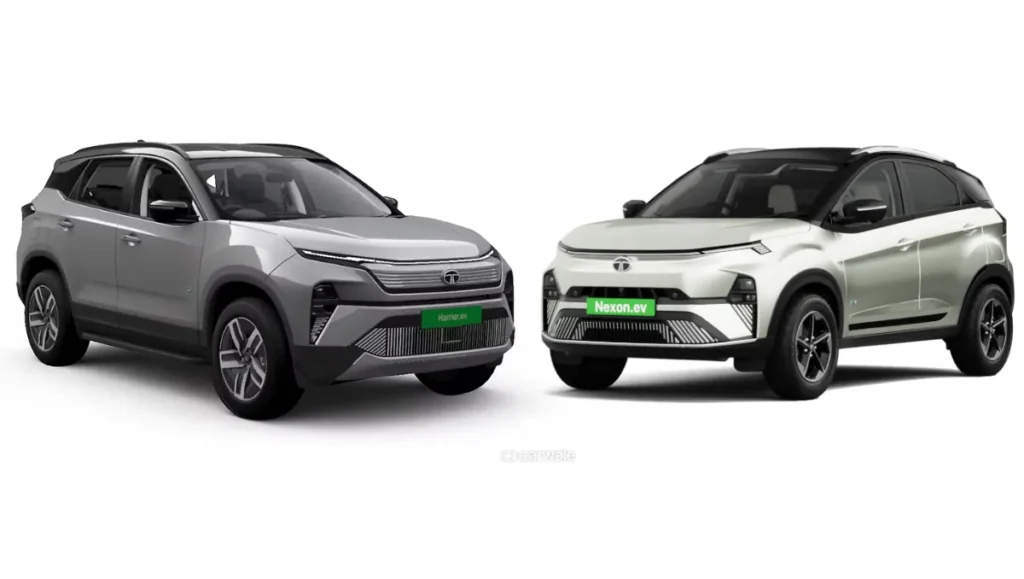
In November 2025, data from auto-industry trackers showed that Harrier.ev racked up 2,458 units sold, while Nexon.ev stood at 2,230 units for the same month. This marks the first time a Tata EV other than Nexon.ev has taken the top spot — and maybe signals a shift in what EV buyers are looking for in 2025.
In this article, we dig into what changed: why Harrier.ev surged, what exactly buyers might now find appealing, and whether this is a one-month spike or the start of a longer trend.
Tata Harrier.ev Outsells Nexon.ev to Claim Sales Crown
Tata Motors has long counted on the compact-SUV Nexon.ev as its EV workhorse — compact enough to suit city driving, priced modestly, and familiar to many. In contrast, Harrier.ev is a larger vehicle, more premium-priced, more ambitious — an electric SUV that’s trying to move beyond everyday commuting.
Yet in November 2025, Harrier.ev outsold the Nexon.ev. The numbers (2,458 vs 2,230) might not look huge at first glance — but in the tightly contested EV segment, it’s big.
Industry watchers note that this isn’t just luck: Harrier.ev’s overall demand has been climbing over recent months, often leading Tata’s broader EV-sales growth.
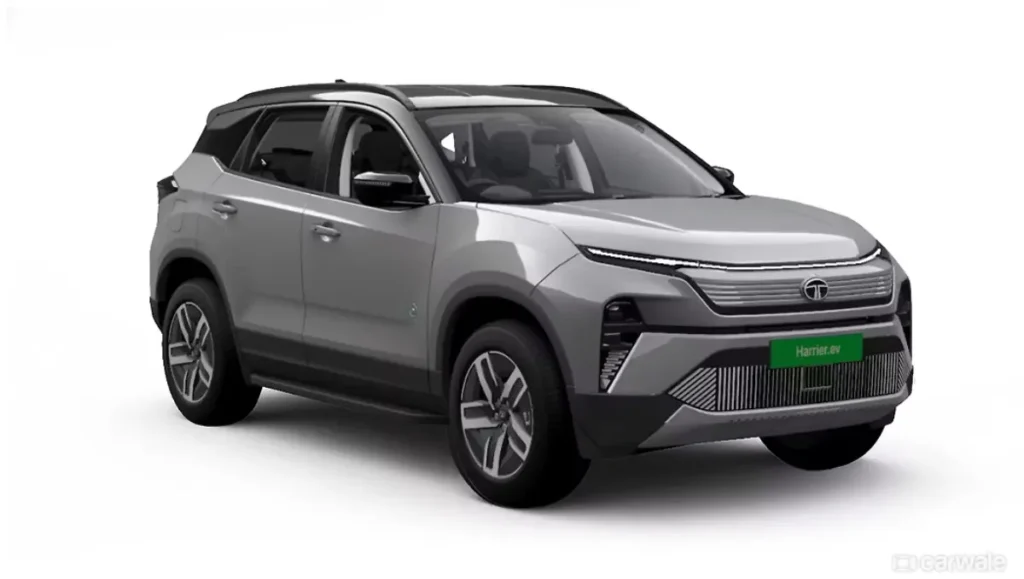
Why the Harrier.ev Is Winning Hearts (and Orders)
Bigger, more SUV-like — more room, more comfort
Harrier.ev is not a small city-EV — it’s a full-size SUV for those who want space, stability, and a sense of presence. For buyers used to diesel Harriers or Safaris, it’s probably the first time an electric SUV from Tata feels like a “real” full-length car.
This broader, more premium positioning seems to be resonating. For many buyers, particularly families and long-distance drivers, Harrier.ev offers a convincing alternative to smaller EVs.
Tata’s improved EV architecture — a step up
Harrier.ev sits on Tata’s more advanced Acti.ev Gen 2 platform — a newer architecture than what earlier EVs used.
Plus, it offers a dual-motor all-wheel-drive setup on certain trims — a rare feature for an Indian-made EV SUV — giving better traction, ride stability, and overall driving feel.
That step-up in hardware gives buyers confidence the car isn’t just a green sticker — it’s a worthy SUV for varied driving conditions.
Growing EV maturity — not just for city commutes
As India’s EV adoption grows, people seem to be willing to go beyond small, entry-level EVs. The fact that Harrier.ev is doing well suggests more buyers now want EVs capable of highway driving, longer trips, and all-weather performance — qualities traditionally associated with combustion-engine SUVs.
For some, Harrier.ev seems to mark that transition — EVs are not just for city runabouts anymore.
Harrier.ev bolstering Tata’s overall EV surge
It’s worth noting that Tata’s surge in overall electric-vehicle sales through 2025 has often had Harrier.ev as a major driver. In several months, EV monthly sales figures hit record highs — partly because Harrier.ev added a fresh, attractive option for buyers.
This momentum has no doubt helped boost Harrier.ev’s visibility, availability, and buyer confidence — a virtuous cycle.
What It Means for Nexon.ev (and Tata’s EV Strategy)
For Nexon.ev, this isn’t a knockout blow — but it is a wake-up call.
Nexon.ev remains a core EV offering, especially for urban buyers, budget-conscious families, and first-time EV buyers. Its smaller size, lower price, and proven track record still make it appealing.
But the rise of Harrier.ev suggests that a growing segment of buyers wants more: more space, more comfort, more SUV-like practicality — still with zero-emission efficiency. For Tata, that means their EV strategy may need to accommodate not just entry-level EVs but also more premium, capable models. And given Harrier.ev’s success, it seems like a direction many Indian buyers are ready to follow.
Is This a One-Time Spike or the Start of a Trend?
Hard to say definitively — but several signs point to a lasting shift:
- Harrier.ev hasn’t just had one good month; its demand has been rising over several months, helping Tata’s broader EV numbers.
- Its price and size suggest it’s not an impulse buy — it’s a considered choice for people looking for a long-term EV investment.
- Indian EV infrastructure continues improving slowly but steadily, making larger EVs more viable than before.
So while there may be short-term fluctuations, it seems likely Harrier.ev will remain a serious contender in Tata’s EV portfolio for the foreseeable future.
What Buyers Should Know (Before Choosing Harrier.ev or Nexon.ev)
If you’re in the market for a Tata EV — here are a few quick takeaways based on the recent shake-up:
- Harrier.ev — good if you want more room, better SUV feel, possibly AWD, and a more premium driving experience. Great for families, long drives, or highway travel.
- Nexon.ev — better suited if you prioritize budget, easier city driving, smaller footprint, lower cost of entry. Ideal for urban commutes, tight parking, city traffic.
- Consider your use case: daily city commute vs. frequent longer trips. The Harrier.ev’s strengths shine more on longer journeys and family practicality.
- Expect higher price & waiting period for Harrier.ev compared to Nexon.ev, given demand and relative novelty.
Final Thoughts — A New Phase in India’s EV Story
The fact that Tata Harrier.ev Outsells Nexon.ev to Claim Sales Crown isn’t just a monthly blip. It feels significant. It suggests Indian EV buyers may be evolving — from entry-level city-focused EVs to larger, more capable electric SUVs that balance comfort, practicality, and electric efficiency.
For Tata Motors, this could mark the beginning of a broader shift: designing EVs not just for affordability, but for ambition. For buyers, it means more choices, better value, and the chance to go electric without compromising on what they expect from a full-sized SUV.
We don’t know yet if Harrier.ev will maintain this lead for long — but for now, it’s making a statement. And if this continues, 2025 may well be remembered as the year India’s EV market grew up.
FAQs- Tata Harrier.ev Outsells Nexon.ev to Claim Sales Crown
FAQ 1: So what actually changed between Harrier.ev and Nexon.ev this month?
Honestly, it looks like buyer preference shifted more than anything dramatic happening. Harrier.ev just seems to have clicked with more people at the right time.
FAQ 2: Is Nexon.ev suddenly doing badly?
No, not really. Nexon.ev is still selling fine. It just didn’t top the chart this time, which feels unusual because it almost always does.
FAQ 3: Why are people suddenly okay spending more on Harrier.ev?
Probably because EV buyers are maturing a bit. Earlier it was about saving money. Now it’s also about space, comfort, and long-term ownership.
FAQ 4: Are these numbers big enough to matter?
In EV terms, yes. A few hundred units can completely change rankings. The segment is still small, so even small gaps are noticeable.
FAQ 5: Could this just be a one-month thing?
It could be, but Harrier.ev sales have been creeping up for a while now. That makes it harder to dismiss as a one-off.
FAQ 6: Who is Harrier.ev really for?
It seems aimed at families or people upgrading from diesel SUVs. Basically, buyers who don’t want an EV that feels small or city-only.
FAQ 7: Does Nexon.ev still make sense to buy?
Absolutely. If most of your driving is in the city and budget matters, Nexon.ev still feels like the easier choice.
FAQ 8: Is charging a big SUV like Harrier.ev practical in India?
It depends where you live and drive. Infrastructure isn’t perfect, but it has improved enough for some buyers to feel comfortable going bigger.
FAQ 9: Will Tata focus more on premium EVs now?
Possibly. When sales talk, brands usually listen. Harrier.ev doing well might push Tata in that direction.
FAQ 10: What does this say about the EV market overall?
It feels like a step forward. People aren’t just buying EVs because they’re cheaper to run anymore. They want proper cars, just electric.
—