Hero Vida Sales Cross 1 Lakh Units in a Year — A Milestone for Hero MotoCorp’s EV Push
When you hear that Hero Vida sales cross 1 lakh units in a year, it might sound like just another corporate milestone. But for Hero MotoCorp and its EV sub-brand Vida, this is more than a statistic — it marks a significant inflection point in India’s electric two-wheeler market. According to recent retail registration data from the national Vahan database, Vida delivered 100,383 units between January 1 and December 5 of 2025.
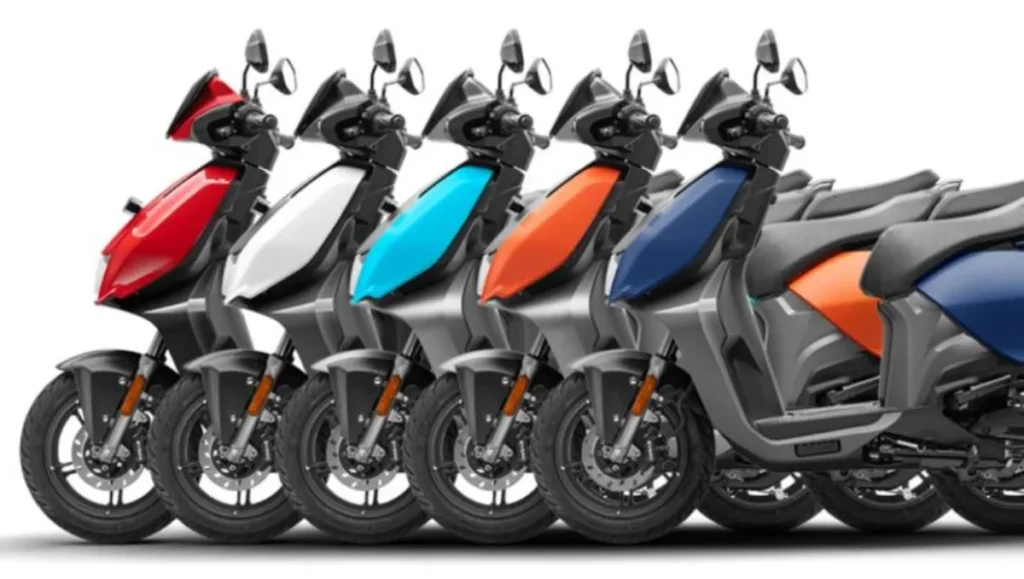
This achievement — Vida’s first ever annual sales crossing the 100,000 mark — shows that EV scooters are no longer niche, but steadily becoming mainstream.
What the Numbers Say: Growth, Momentum and Market Share
In the first few months of 2025, sales of Vida were modest: January saw just 1,626 units sold. Yet by mid-year things began to pick up strongly. From March through June, monthly sales consistently crossed 6,000 units; July was a turning point, with Vida surpassing the 10,000 monthly-unit mark for the first time (10,548 units).
The momentum held — October 2025 stands out with 16,017 Vida scooters sold in a single month — the highest monthly tally so far.
Cumulatively, since Vida launched in October 2022, total e-scooter deliveries have now exceeded 150,000 units. That gives Vida a noticeable presence in the electric two-wheeler (e2W) market. As of late 2025, Vida’s market share among e-scooters hovers around 8%.
This climb from a few thousand units per month to becoming a consistent 5-figure seller speaks volumes — about consumer acceptance, trust in the brand, and growing appetite for electric mobility in India.
What Helped Vida Hit This Milestone
Several factors appear to have contributed to Vida’s success.
- Battery-as-a-Service (BaaS): One of the biggest enablers has been Vida’s “Battery-as-a-Service” option — a leasing model that significantly lowers the upfront purchase cost for buyers. As a result, many EV-hesitant consumers found a more affordable entry point into e-scooters.
- Affordable pricing: With BaaS and multiple variants (including the VX2), Vida positioned itself among the most affordable electric scooters in India — which helped it appeal to price-sensitive buyers, first-time scooter owners, and urban commuters.
- Improved monthly run-rate and consistency: The surge was not a one-off. Vida’s monthly sales crossed 10,000 units for multiple months in succession, indicating consistent demand rather than sporadic interest.
- Shifting consumer sentiment and EV acceptance: As India’s EV ecosystem evolves — with better charging availability, awareness of climate and cost benefits, and growing trust in after-sales support — more buyers are comfortable switching from ICE scooters to electric ones. Vida seems to be reaping the benefits of this broader shift.
What This Means for India’s E-2W Market
When a legacy two-wheeler maker like Hero crosses 100,000 annual sales with its EV brand, it sends a strong signal — electric mobility is moving beyond early adopters.
Firstly, Vida’s success adds credibility to the larger ambition of electrifying last-mile mobility in India. An established name carrying decent volumes helps counter common concerns around reliability, maintenance, resale value, and after-sales service.
Secondly, with an 8% share of the e-scooter market, Vida is now among the prominent players. That sets the stage for further competition, more innovation, and potentially more affordability — because demand begets supply, and supply improves competition.
Thirdly, this shift could push other legacy manufacturers and startups to double down on EV offerings — meaning customers may soon get more options, better features, and faster roll-out of charging/ battery-swap infrastructure.
Finally, for policymakers and urban-mobility planners, such numbers reinforce that EV adoption — especially in the 2-wheeler segment — is feasible at scale. That may encourage supportive policies, incentives, and infrastructure investment.
What to Watch Going Ahead
While Hero Vida Sales Cross 1 Lakh Units in a Year is a headline worth celebrating, a few things will decide if this is a temporary milestone — or the start of a long-term trend.
- Sustaining Growth Momentum: It’ll be critical to see if Vida can maintain or grow monthly sales in 2026 and beyond, rather than plateau or drop. EV demand often depends on incentives, fuel prices, and consumer confidence — which can ebb and flow.
- After-sales support & charging/battery swap network: As the customer base grows, Hero needs to scale charging/battery-swap infrastructure, spares and services across cities, towns, and semi-urban areas. If support lags, customer experience may suffer, hurting long-term reputation.
- Competition heating up: As other EV 2-wheeler makers — both legacy and startups — intensify competition, price wars, features, and distribution reach will dictate who stays ahead.
- Regulatory environment, subsidies and cost parity with ICE scooters: Government policies, subsidies, or incentives will influence adoption. Also, reducing the cost gap between EV and internal-combustion scooters will be important.
Final Thoughts
The fact that Hero Vida sales cross 1 lakh units in a year is no small feat — it marks the moment when an EV brand from India’s largest two-wheeler maker stepped into the mainstream. It reflects changing consumer preferences, rising acceptance of electric mobility, and a maturing market.
For many first-time buyers or urban commuters, Vida may have become the first viable, affordable, and trusted way to switch to green mobility. For the industry, it signals that the electric two-wheeler revolution is no longer experimental — it’s underway.
If Hero manages to build on this momentum — improving infrastructure, expanding variants, sustaining quality and service — Vida could become a benchmark in the electric scooter segment.
Whether you are an enthusiast, a buyer considering an EV, or someone watching India’s transition to clean mobility — Vida’s 1-lakh-plus annual sales is a milestone worth noting.
FAQs – Hero Vida Sales Cross 1 Lakh Units in a Year
FAQ 1: So when did Vida actually cross the 1 lakh sales mark?
It happened during 2025 itself. Registrations counted from January to early December show Vida edging past the 1-lakh mark sometime before the year wrapped up.
FAQ 2: Has Vida ever done numbers like this before?
No, not at this scale. Earlier years were far quieter. This is the first time Vida has managed to sell this many scooters within a single year.
FAQ 3: Why are people even paying attention to this milestone?
Because Hero isn’t a startup experimenting with EVs. When a traditional brand starts pushing five-figure monthly EV numbers, it tells you something real is changing.
FAQ 4: Were sales strong right from the start of the year?
Not really. The year actually began on a slow note. Volumes only started looking healthy once things picked up around the middle of the year.
FAQ 5: Which month really moved the needle for Vida?
October stood out. Sales crossed 16,000 units that month alone, which is the best monthly number Vida has posted so far.
FAQ 6: Is price the main reason behind Vida’s higher sales?
Price played a role, yes. The lower entry point, especially with flexible battery plans, made the scooter easier to justify for everyday users.
FAQ 7: Who seems to be buying Vida scooters the most?
Mostly city commuters and people replacing old petrol scooters. A lot of first-time buyers are also coming in, judging by registration trends.
FAQ 8: Where does Vida stand compared to other electric scooters now?
It’s no longer sitting quietly in the background. With roughly an 8 percent market share, Vida is clearly visible among the bigger EV scooter brands.
FAQ 9: Does crossing 1 lakh sales mean EV scooters are fully mainstream now?
Not fully, but they’re getting there. Numbers like this suggest EVs are moving beyond early adopters and into regular daily use.
FAQ 10: What could slow Vida down from here?
Service reach, charging access, and rising competition could all matter. If those areas lag, growth might flatten. If they don’t, sales could climb further.
—