Hyundai Grand i10 Gets Zero Star in Global NCAP Rating – Real Impact for Buyers
Hyundai Grand i10 Gets Zero Star in Global NCAP, a lot of owners and potential buyers felt that classic sinking feeling. This is a popular hatchback, built in India and exported to several markets. Suddenly seeing it linked to a zero star safety rating sounds scary, and honestly, it should make everyone sit up and pay attention.
But like always with safety ratings, the details matter. Which version was tested? For which market? What exactly went wrong in the crash test? And what can a normal buyer actually do with all this information? Let’s walk through the verified facts and clear the confusion a bit.
Hyundai Grand i10 Gets Zero Star in Global NCAP – The Test And The Headline
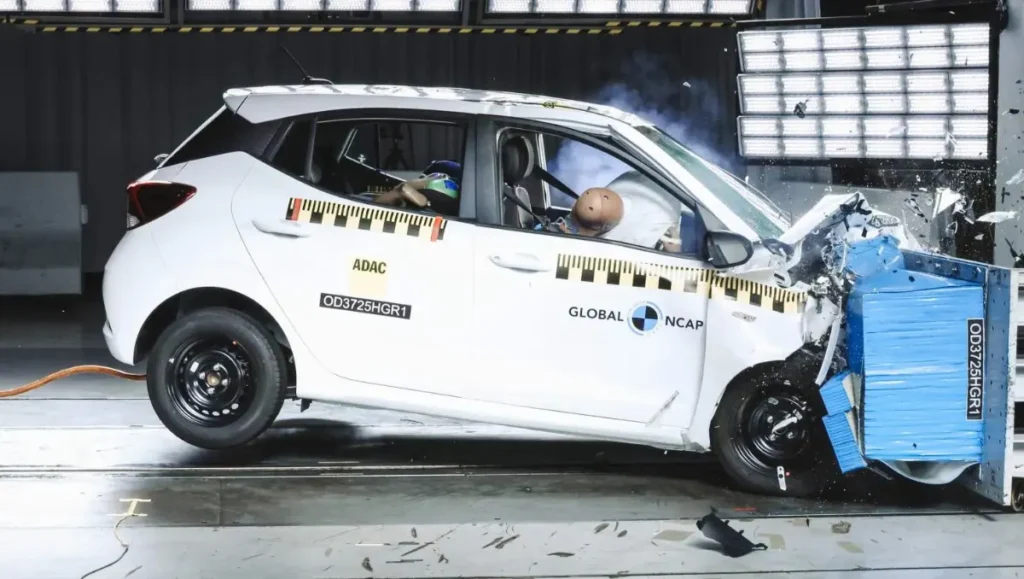
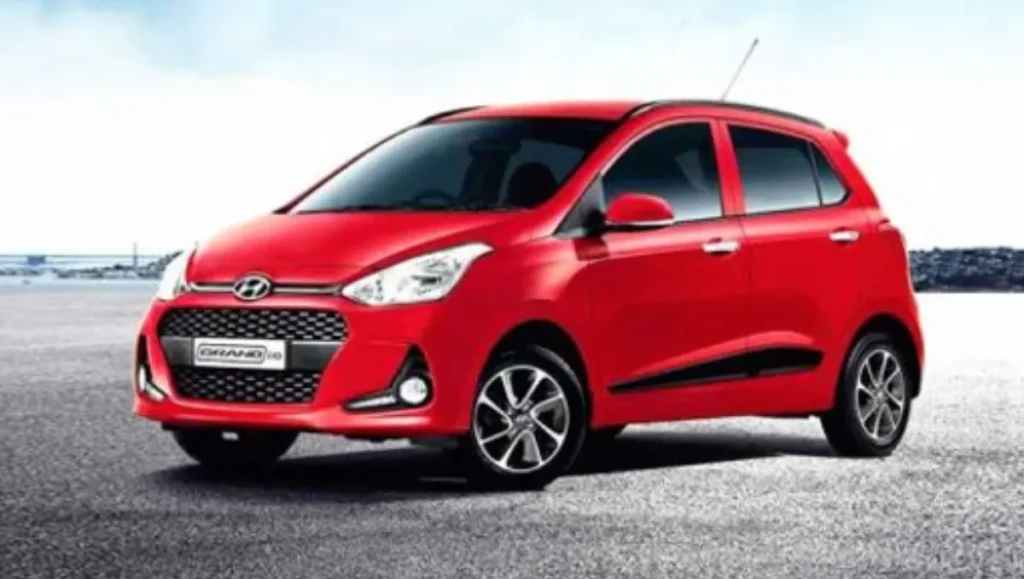
The latest test that triggered the “Hyundai Grand i10 Gets Zero Star in Global NCAP” buzz was part of Global NCAP’s Safer Cars for Africa campaign. The car tested was a made-in-India Hyundai Grand i10, but it was the Africa-spec version sold in South Africa, not the exact same configuration that you see in Indian showrooms.
In this test:
- The Grand i10 scored zero stars for adult occupant protection.
- It managed 3 stars for child occupant protection.
On the points side, the Africa-spec Grand i10 scored 0 out of 34 for adult safety and about 28.5 out of 49 for child safety.
That zero is not a rounding error. It reflects serious weaknesses in how the car protects adults in a crash under the latest protocol used for this Africa campaign.
Global NCAP’s own summary highlights:
- Weak protection for the driver’s chest in the frontal offset test.
- High risk of severe injury in the side impact test.
- Bodyshell and footwell area rated “unstable” and not capable of withstanding further load.
This is why the Hyundai Grand i10 gets zero star in Global NCAP for adult protection in this specific test, even though the child score looks much better on paper.
What Safety Equipment Did This Grand i10 Actually Have?
A big part of the story is the equipment fitted to the tested car. According to the Global NCAP report and multiple published summaries, the Africa-spec Grand i10 that went into the barrier had:
- Two frontal airbags (driver and front passenger).
- Seatbelt reminder only for the driver.
- No side body airbags.
- No head-protection (curtain) airbags.
- No electronic stability control (ESC).
- No three-point seatbelts for all seating positions.
- No proper child seat attachment for the rear center position.
Because of this limited safety kit, several advanced tests either could not be performed or simply went badly for the car. Global NCAP called out the lack of ESC and side head protection as important reasons behind the poor adult rating.
So, the shocking part is not just that Hyundai Grand i10 gets zero star in Global NCAP for adults, but that this is happening in 2025 to a car that is still being sold in a major market with basic kit and an unstable structure.
Adult vs Child Safety – Why The Scores Are So Different
The contrast between the zero star adult rating and the 3 star child rating can be confusing. If it is so unsafe for adults, how is it reasonably okay for kids?
Here is how the child score came together, based on Global NCAP figures and summaries:
- The child occupant score was around 28.3–28.6 points out of 49, enough for 3 stars.
- Rearward-facing child seats for an 18-month-old and a 3-year-old dummy performed well in frontal and side impact tests, with no head exposure recorded.
So, when proper child restraints are installed correctly, the Grand i10 can do a decent job protecting young occupants in those specific scenarios. That is the positive part.
But the structure of the car and the lack of ESC and full three-point belts mean the overall crash environment is still not ideal. If the body deforms badly or the car is harder to control before a crash, everybody in the cabin is at more risk, no matter what the dummy score says. That is exactly why adult protection and structural integrity carry so much weight in the star rating.
Is This The Same As The Grand i10 Nios Sold In India?
This is where things get a bit subtle, and it is important not to mix two different stories.
- The car that just got zero stars for adult safety is the made-in-India Grand i10 for the South African market, tested under the Safer Cars for Africa programme with the latest, tougher protocol.
- For India, Global NCAP had earlier tested the Hyundai Grand i10 Nios under its Safer Cars for India campaign. That car, in its India-spec form with two airbags, received 2 stars for both adult and child occupant protection under an older protocol.
So, when you read that Hyundai Grand i10 gets zero star in Global NCAP, you are mostly looking at the Africa-spec story, not a fresh retest of the Indian Nios under the same conditions. The platforms and basic body shell are closely related, but the equipment mix, regulations and testing protocol are not identical.
On top of that, Hyundai India now offers six airbags across all its models and variants as standard from late 2023, including the Grand i10 Nios, as part of a larger focus on safety features in the market.
That means a current-spec, fully loaded Indian Nios with six airbags and newer regulations around fitment is not exactly the same car as the two-airbag Africa-spec Grand i10 that scored zero stars in this recent Africa campaign test. Still, the result is a loud reminder that structure and restraint systems must be strong everywhere, not just in a few variants or a few markets.
What This Result Really Tells Buyers
For a normal buyer, the headline “Hyundai Grand i10 Gets Zero Star in Global NCAP” feels like a verdict: good car or bad car. Real life is more nuanced, but you should absolutely take a few strong lessons from it.
First, do not assume that a big, familiar brand automatically means top-tier safety. Global NCAP’s Africa programme has repeatedly shown how some models sold in low and middle income countries get weaker structures or fewer safety systems than versions sold in Europe or other developed markets. The Grand i10 result fits that wider pattern.
Second, the spec sheet is not just marketing fluff. Before buying, check very consciously:
- How many airbags does the exact variant have?
- Is ESC standard on this trim, or missing entirely?
- Are all seating positions equipped with three-point seatbelts?
- Is ISOFIX provided for child seats, and on which seats?
Third, treat independent crash test results as a real buying factor, not an afterthought. A couple of extra features, a bigger screen or slightly better mileage will not help much in a nasty crash, while a stronger structure, more airbags and ESC can literally decide who walks away.
So, Should You Avoid The Grand i10 Completely?
It is tempting to say “zero stars, so just stay away.” The reality is a bit more practical and personal.
If you are in a market where the Hyundai Grand i10 is sold in a configuration similar to the tested Africa-spec car, with only two airbags, no ESC and limited safety gear, then yes, this rating should be a serious red flag. In that situation, you should at least cross-shop rival models with stronger recent ratings and better standard equipment, even if that means stretching the budget slightly.
If you are in India looking at a current Grand i10 Nios with six airbags and newer equipment, the picture is more mixed. The older 2-star India result shows that, structurally, the car was not among the safest hatchbacks even then, but the added airbags and updated rules definitely make the top variants safer than the export base version that just failed in Africa. Still, if crash safety is your top priority, there are other hatchbacks and compact SUVs with stronger Global NCAP ratings to consider alongside it.
In simple terms:
- The Africa-spec Grand i10 result is a wake-up call about how uneven safety still is across markets.
- Buyers should use this as leverage to demand safer equipment and transparent information, not just shrug and move on.
- Carmakers, including Hyundai, clearly can offer better protection when regulations or consumer pressure force their hand.
The bottom line is that the “Hyundai Grand i10 Gets Zero Star in Global NCAP” should not just scare people for a few days on social media and then vanish. It should push everyone – manufacturers, regulators and buyers – to treat safety ratings with the same seriousness as fuel efficiency or features.
If you are shortlisting a car right now, make safety your first filter. Once you have shortlisted the safest options you can afford, then talk about touchscreens, alloys and everything else. Your future self will thank you for that slightly less glamorous, but far smarter, decision.
FAQs – Hyundai Grand i10 Gets Zero Star in Global NCAP
FAQ 1: Why is everyone suddenly talking about Hyundai Grand i10 getting zero star in Global NCAP?
Because zero stars immediately grab attention. The Hyundai Grand i10 gets zero star in Global NCAP after the Africa-spec version failed to protect adult occupants properly in crash tests. Once people saw the details about body structure and injury risk, the concern spread quickly.
FAQ 2: Did the car really score zero, or is this being exaggerated online?
The zero-star adult rating is real. It is not social media exaggeration. The tested Africa-spec Grand i10 scored zero out of 34 points for adult occupant protection, which is why Global NCAP gave it the lowest possible rating in that category.
FAQ 3: Why is child safety rated better if adult safety is so poor?
It sounds strange at first, but child tests focus more on child seat performance. When proper rear-facing child seats were used, the dummies stayed protected. That helped the car reach 3 stars for child safety, even though the car itself lacks strong adult protection.
FAQ 4: Is the Hyundai Grand i10 sold in India exactly the same car?
Not exactly. The test involved an Africa-spec model. The Indian Grand i10 Nios is built on a similar base, but equipment levels and safety regulations are different. That difference matters more than most people realize.
FAQ 5: Should Indian buyers panic after this Global NCAP result?
Panic is probably not the right reaction. Awareness is. Indian buyers should understand that older crash test results already showed the Grand i10 Nios was not a safety benchmark. Newer features like six airbags improve safety, but structure still plays a big role.
FAQ 6: What were the biggest safety gaps in the tested Grand i10?
The main issues were the unstable bodyshell, weak chest protection for the driver and lack of electronic stability control. Side and curtain airbags were also missing, which seriously hurt its performance in side impact testing.
FAQ 7: Does brand reputation still matter for safety anymore?
Brand helps, but it is not a guarantee. The Hyundai Grand i10 zero star result proves that even well-known manufacturers sometimes sell cars with minimal safety equipment in certain markets. Checking crash test data is now more important than trusting the logo.
FAQ 8: If I already own a Grand i10, is driving it unsafe every day?
Driving it does not suddenly become dangerous overnight. Many people use similar cars daily without issues. The key is understanding limits, driving carefully, wearing seatbelts properly and making sure children are seated in correct child restraints.
FAQ 9: Why do cars sold in Africa or other markets get weaker safety specs?
It usually comes down to regulations and cost pressures. In markets where safety rules are less strict, manufacturers often remove features like ESC or extra airbags to keep prices competitive.
FAQ 10: What is the real takeaway for someone planning to buy a car now?
The main lesson is simple but important. Look beyond mileage, screen size and features. Check how the car performs when things go wrong. The Hyundai Grand i10 gets zero star in Global NCAP story shows why safety should be the first filter, not the last one.
—