India EV Sales Jump Over 77 Percent in 2025: A Deep Dive into the Electric Shift
The Indian automotive landscape just went through a massive electric shock, and the numbers are finally in. According to the latest retail data from the Federation of Automobile Dealers Associations (FADA), India EV Sales Jump Over 77 Percent in 2025 specifically within the passenger vehicle segment. This isn’t just a minor blip on the radar anymore; it is a full-blown transformation of how Indians are choosing to commute. Even though India’s broader electric vehicle market saw steady 16.37% growth—hitting a massive 2.27 million units—private cars really stole the spotlight, basically doubling their entire sales volume in just a single twelve-month span.

For those watching the market, “India EV Sales Jump Over 77 Percent in 2025” is way more than some statistic. Electric cars basically stopped being “niche experiments” for the wealthy and became legitimate options for typical middle-class families. Total passenger EV registrations hit 1,76,817 units in 2025, making a massive leap from the 99,875 units logged in 2024.
The Drivers of Growth: Why India EV Sales Jump Over 77 Percent in 2025
Honestly, what actually happened on the ground to make people swap their petrol nozzles for charging cables? It wasn’t just a single factor. It was a perfect storm of better car models, expanded charger networks, and a changing mindset regarding the “total cost of ownership” math.
A Flood of New Models
In previous years, if you wanted an electric car, you basically had two or three choices. In 2025, that changed completely. 2025 delivered heavy hitters such as the Hyundai Creta EV, Mahindra BE6, and Tata’s Curvv.ev. These are not merely tiny hatchbacks; they are the exact SUVs that Indian drivers truly desire. Once you offer people an electric variant of their favorite ride, the usual hesitation starts to melt away. It is a total market shift.
The 4% Penetration Milestone
Electric vehicles recently touched approximately 4% of every passenger car sold within India. While this figure feels small beside Norway or China, it is actually a significant climb from the 2.4% share in 2024. Effectively “crossing the chasm,” this shift proves the early adopter stage is wrapping up as the early majority finally enters the scene today.
Infrastructure Catching Up
You can’t sell an EV if there is nowhere to plug it in. During 2025, the better availability of fast-charging points along major highways like the Delhi-Jaipur or Mumbai-Pune expressways made “range anxiety” much less of a nightmare. People are starting to see that for 90% of their driving, charging at home overnight is actually more convenient than visiting a petrol pump. This mindset shift is driving the market.
The Competitive Landscape: Winners and Disruptors
India’s EV market standings are currently being totally overhauled. As established brands struggle to stay on top, fresh competitors are crashing the party with disruptive price tags and some seriously wild, futuristic looking designs.
Tata Motors: The Reigning King under Pressure
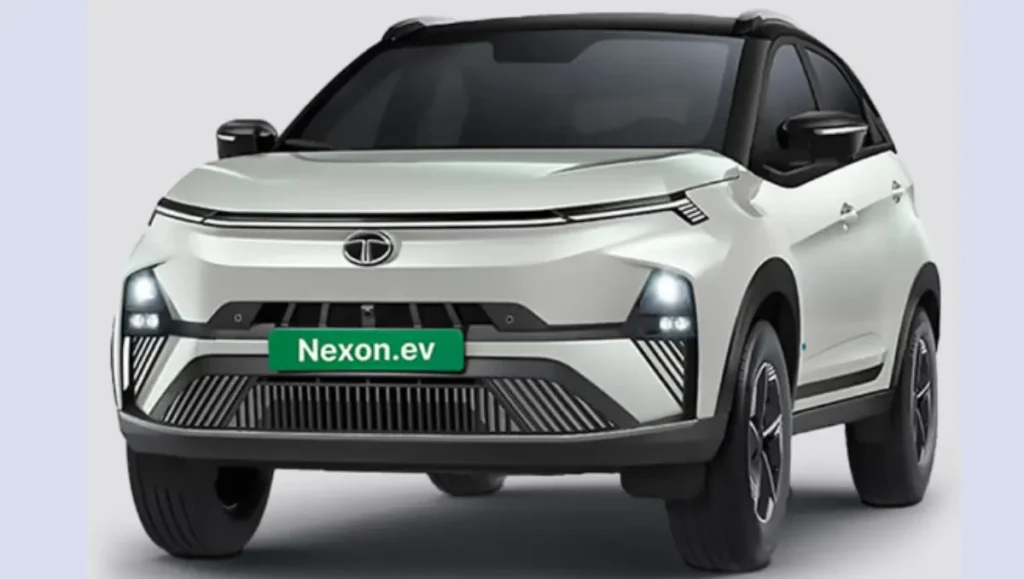
Tata Motors basically remains the top dog here, selling 70,004 electric cars throughout 2025. That’s a 13% jump from last year, mainly thanks to hits like the Nexon EV and their fresh Punch EV. That said, competition is surging and the market is getting extremely crowded lately. Tata’s market share, which used to be over 60%, has now settled around 40%. They aren’t losing sales, but the “pie” is growing so fast that other companies are grabbing bigger slices.
JSW MG Motor: The New Challenger
Without doubt, JSW MG Motor India provided the year’s biggest surprise. Their sales essentially doubled this time, peaking at 51,387 registered units. The star of their show? The MG Windsor EV. By using a clever “Battery-as-a-Service” (BaaS) model, they managed to lower the upfront cost of the car, making it much more accessible to the average buyer. MG now holds nearly 29% of the market share, firmly placing them as the primary rival to Tata.
Mahindra’s Five-Fold Surge
In terms of “Most Improved” players, Mahindra takes the lead. After years of being somewhat quiet recently, they suddenly exploded in 2025, showing a remarkable five-fold increase in their passenger electric vehicle sales. They retailed 33,513 units, thanks to the launch of their ground-up electric SUVs like the XEV 9e and BE6. These aren’t just converted petrol cars; they are built as EVs from day one, and the market has responded with massive enthusiasm.
Beyond Cars: The Two-Wheeler and Three-Wheeler Story
While our focus is often on the cars, the real “silent revolution” is happening on three wheels. In 2025, electric three-wheelers commanded a dominant 60.9% market share in their segment. For rickshaw drivers and last-mile delivery fleets, the math is simple: electric is just cheaper to run. It’s no longer a matter of being “eco-friendly”; it’s a matter of daily profit.
Over in the two-wheeler world, the rivalry has basically become a dogfight. TVS Motor Company snatched the 2025 crown, selling nearly 3 lakh units and finally pushing past old leader Ola Electric. The TVS iQube and newly launched models have resonated with buyers who value reliability and build quality over just tech features.
Luxury EVs: The Best Year Yet
It wasn’t just the mass market that saw a boost. The luxury EV segment grew by 78%, reaching over 5,100 units. BMW India led the pack, proving that even at the ₹1 crore+ price point, buyers are looking for the refinement and instant torque that only an electric motor can provide. Even Tesla made its official entry in mid-2025, though with only 225 units of the Model Y sold through November, it’s clear they are still finding their footing in the Indian regulatory and tax environment.
Challenges Remaining: Why the Road Ahead Isn’t All Smooth
Even though India EV Sales Jump Over 77 Percent in 2025, we shouldn’t celebrate prematurely. Huge roadblocks still exist that might easily derail this current electric momentum.
- Grid Stability: As more people plug in, the demand on local transformers is rising. We saw reports in 2025 of local grids struggling in high-density urban pockets during peak summer months.
- Funding Issues: Financing an EV is still a tad more complex and sometimes more expensive than for standard combustion cars. Bankers are still sweating over battery resale values five years from now.
- Regulation Risks: Manufacturers rely heavily on state subsidies like the FAME initiative and low GST rates. Any abrupt change to these existing legal frameworks could easily send the 2026 growth numbers into a sudden and very painful downward tailspin.
Final Thoughts: A Point of No Return
As we look back, the fact that India EV Sales Jump Over 77 Percent in 2025 isn’t just a win for the manufacturers; it’s a win for the Indian consumer who now has more choice and better technology than ever before. We are moving toward a “diversified mobility mix” where petrol, CNG, and electric all coexist, but the trend line for electric is clearly the steepest.
The year 2025 was basically the bridge between “trial runs” and “massive growth.” Now that Maruti’s eVX is dropping in 2026, the market will explode. For most buyers, it isn’t a matter of if you go electric, but simply when.
Quick Data Snapshot (Calendar Year 2025)
| Segment | Sales (Units) | YoY Growth | EV Share |
| Electric Passenger Vehicles | 1,76,817 | 77.04% | ~4.0% |
| Electric Two-Wheelers | 12,79,951 | 11.36% | 6.3% |
| Electric Three-Wheelers | 7,97,733 | 15.39% | 60.9% |
| Electric Commercial Vehicles | 15,606 | 54.2% | 1.55% |
| Total EV Retail | 22,70,107 | 16.37% | ~8.0% |
FAQs – India EV Sales Jump Over 77 Percent in 2025
1: Well, how much did India’s EV sales grow?
Well, passenger EV sales jumped 77% overall. It’s a huge leap from roughly 99,000 units in 2024 to over 1.76 lakh, really.
2: Who’s actually currently leading the market?
Tata Motors is the king, selling nearly 70,000 cars. Consequently, their market share dropped to 40% since various rivals stepped up their game recently.
3: What made MG’s sales double so fast?
The Windsor EV was the star. Their “Battery-as-a-Service” model essentially lowered upfront costs, making electric cars much more affordable right now.
4: Is range anxiety still a major issue?
Think again. Better chargers on the Delhi-Jaipur and Mumbai-Pune routes helped quite bit. Most people now just charge at home overnight.
5: Are EVs basically just for rich people?
Not really. 2025 was the specific year middle-class families started buying. New, affordable SUVs finally made EVs a legitimate family option.
6: What does the “4% milestone” signify?
It means 4% of all cars sold were electric. This suggests the “early adopter” phase is ending and mainstream buyers are arriving.
7: How exactly did Mahindra’s sales grow five-fold?
They launched ground-up EVs like the BE6. These aren’t just converted petrol cars; they are fresh, futuristic designs that people actually want.
8: Are luxury EVs doing well too?
Yes, the luxury segment grew 78%. BMW led the pack, and even Tesla finally made its official entry mid-year.
9: What could stop this momentum?
Grid stability is a worry. Also, some banks are still sweating over battery resale values, making financing a bit more complex.
10: What happens next in 2026?
Expect a massive price war. With Maruti’s eVX launching soon, the competition for middle-class buyers will get absolutely brutal.
—