Kia Sonet Price Reduction After GST 2.0: A Big Advantage for Customers
Kia Sonet Price cut After GST 2.0: A Big Advantage for Customers. Kia India has updated the prices of its best-selling compact SUV, the Kia Sonet, after the Government introduced GST 2.0 reforms. The update has brought major price slashes on all three engine variants: the 1.5-litre diesel, the 1.0-litre turbo petrol, and the 1.2-litre naturally aspirated petrol. With reductions between approximately ₹69,700 and ₹1.64 lakh, the Sonet is positioned more competitively in the highly congested sub-4-metre SUV space, which it competes against models like the Hyundai Venue, Maruti Brezza, Tata Nexon, and Mahindra XUV300.
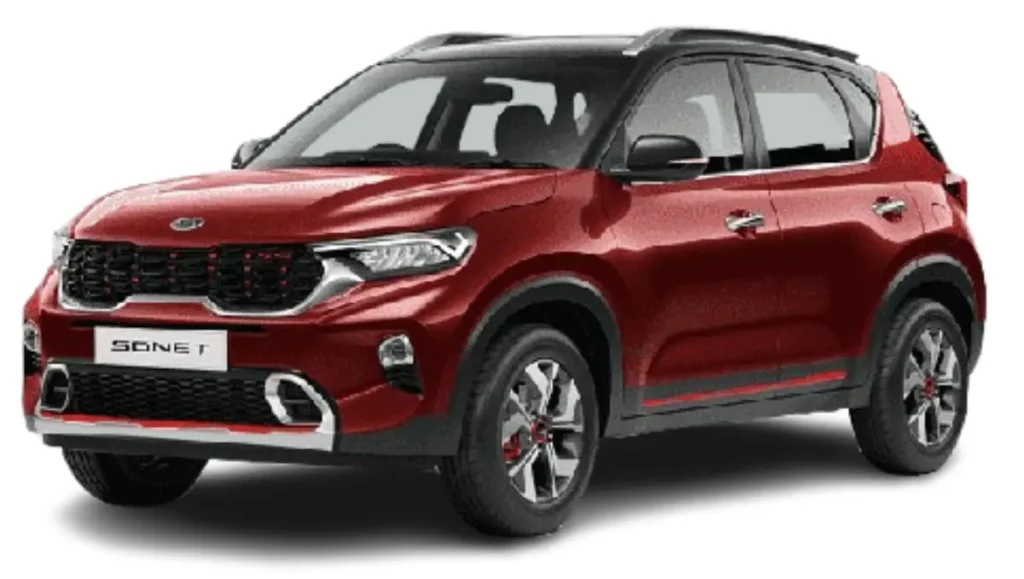
Kia Sonet Diesel 1.5 – Largest price revision for long-distance drivers
The diesel Sonet benefits from the highest price cuts following the GST revision. Diesel models have corrected by around ₹1.01 lakh to ₹1.64 lakh, enhancing the Sonet’s competitiveness for customers who value fuel efficiency and highway driving.
| No | Kia Sonet Diesel 1.5 Variant | Old Price (₹) | New Price (₹) | Difference (₹) | % Cut |
|---|---|---|---|---|---|
| 1 | HTE(O) 6MT | 9,99,900 | 8,98,409 | 1,01,491 | 11.30% |
| 2 | HTK(O) 6MT | 11,09,900 | 9,93,929 | 1,15,971 | 11.67% |
| 3 | HTK+ 6MT | 11,49,900 | 10,29,748 | 1,20,152 | 11.67% |
| 4 | HTK+(O) 6MT | 12,03,900 | 10,78,103 | 1,25,797 | 11.67% |
| 5 | HTX 6MT | 12,55,900 | 11,24,668 | 1,31,232 | 11.67% |
| 6 | HTX 6AT | 13,42,900 | 12,02,574 | 1,40,326 | 11.67% |
| 7 | GTX+ 6AT | 15,63,900 | 14,00,474 | 1,63,426 | 11.67% |
| 8 | GTX+ DT 6AT | 15,73,900 | 14,09,429 | 1,64,471 | 11.67% |
These changes position the diesel Sonet as one of the most value-for-money options in the segment for those who use the car for long commutes or fleet buyers who prioritize efficiency and torque.
Kia Sonet Turbo Petrol 1.0 – Value for money performance
The 1.0-litre turbo petrol version of the Sonet also saw significant reductions, with cuts between around ₹86,700 and ₹1.34 lakh. This does help close the gap between variants prioritizing performance and more frugal trims.
| No | Kia Sonet Petrol 1.0 Variant | Old Price (₹) | New Price (₹) | Difference (₹) | % Cut |
|---|---|---|---|---|---|
| 1 | HTK 6iMT | 9,65,900 | 8,79,178 | 86,722 | 9.86% |
| 2 | HTK(O) 6iMT | 9,99,900 | 9,10,124 | 89,776 | 9.86% |
| 3 | HTK+ 6iMT | 10,39,900 | 9,46,531 | 93,369 | 9.86% |
| 4 | HTK+(O) 6iMT | 11,03,900 | 10,04,783 | 99,117 | 9.86% |
| 5 | HTX 6iMT | 11,86,900 | 10,80,328 | 1,06,572 | 9.86% |
| 6 | HTX DCT | 12,73,900 | 11,59,514 | 1,14,386 | 9.86% |
| 7 | GTX+ DCT | 14,83,900 | 13,50,652 | 1,33,248 | 9.87% |
| 8 | GTX+ DT DCT | 14,93,900 | 13,59,753 | 1,34,147 | 9.87% |
| 9 | X Line DCT | 14,99,900 | 13,65,214 | 1,34,686 | 9.87% |
These price reductions position the turbo petrol Sonet as an attractive choice for buyers looking for a balance of day-to-day usability and sporty driving flair.
Kia Sonet Petrol 1.2 – Entry-level models become more affordable
The 1.2-litre naturally aspirated petrol Sonet, the lowest-priced entry into the line-up, has been re-priced as well to be more competitive for first-time buyers of SUVs.
Price reductions in the range of about ₹69,700 to ₹94,600 bring the Sonet’s starting trims into premium hatchback zone, tempting hatchback upgraders to look at an SUV without a hefty price premium.
| No | Kia Sonet Petrol 1.2 Variant | Old Price (₹) | New Price (₹) | Difference (₹) | % Cut |
|---|---|---|---|---|---|
| 1 | HTE | 7,99,900 | 7,30,137 | 69,763 | 9.55% |
| 2 | HTE(O) | 8,43,900 | 7,70,299 | 73,601 | 9.55% |
| 3 | HTK | 9,23,900 | 8,40,950 | 82,950 | 9.86% |
| 4 | HTK(O) | 9,59,900 | 8,73,717 | 86,183 | 9.86% |
| 5 | HTK+ | 9,99,900 | 9,10,124 | 89,776 | 9.86% |
| 6 | HTK+(O) | 10,53,900 | 9,59,274 | 94,626 | 9.86% |
Why this price reduction matters
The sub-4-metre SUV segment is extremely price-sensitive and highly competitive. Even modest price movements have the ability to change buyer choices and dealer stocks rapidly. By bringing prices down across its range, Kia has managed a few things:
- Better affordability for new entrants, inducing entry-level buyers to trade up.
- Better value proposition for mid and high trims, where comparisons with competitors are made on the basis of features.
- Wider appeal across segments of buyers: city users, performance-oriented buyers, and highway cruisers all win.
- A strategic advantage that has the potential to generate greater showroom traffic and conversions, especially in cost-sensitive markets.
How the Sonet compares with competitors now
- Hyundai Venue: The Venue is still a straight competitor, but the Sonet’s price reductions bring some Sonet models more on par price-wise and feature-wise.
- Maruti Brezza: Famous for operating expenses and extensive dealer network; Sonet’s updated pricing may lure customers looking for additional technology and premium features.
- Tata Nexon: Dominant in safety; Sonet now undercuts some Nexon models while presenting a contrasting feature and design proposition.
- Mahindra XUV300: Strong performance credentials make it a consideration for performance shoppers, but Sonet’s diesel price realignment makes it more desirable as a long-distance commuter car.
What this does to prices
Potential purchasers now have more defined options. The reduced starting price of the Sonet appeals to first-time SUV purchases and hatchback upgraders, while mid and upper trims offer improved value against comparable competitors. Purses must also be considered for ongoing expenses, feature list, and post-purchase servicing when making ultimate purchase considerations.
Expert take
The GST 2.0 led price updates placed the Kia Sonet in a more competitive position. By enhancing affordability without compromising on features, Kia can look forward to better volumes and possibly bigger market share in the segment of compact SUVs. Competitors can also react with their own price updates or offers, and these could help customers in the short run.
Practical suggestions to buyers
- Drop by neighboring dealerships to compare on-road prices and dealer-level deals that can further lower cost.
- Run cost estimates of diesel and petrol variants on the basis of your usage patterns.
- Check available feature lists for individual trims so that you purchase the variant that suits your requirements best.
—