Maruti Suzuki e Vitara gets 5-star Bharat NCAP Safety Rating and Sets a New Standard for EV Safety
Maruti Suzuki e Vitara gets 5-star Bharat NCAP Safety Rating, making it a solid electric SUV for those who look for range, usable features, and dependable safety. Most EV conversations get stuck on battery timing and fast charging, but a safety result like this steadies the buyer’s mindset. It offers reassurance that goes deeper than simple performance figures and reaches into real comfort. In a growing EV culture like ours, that kind of reassurance matters.
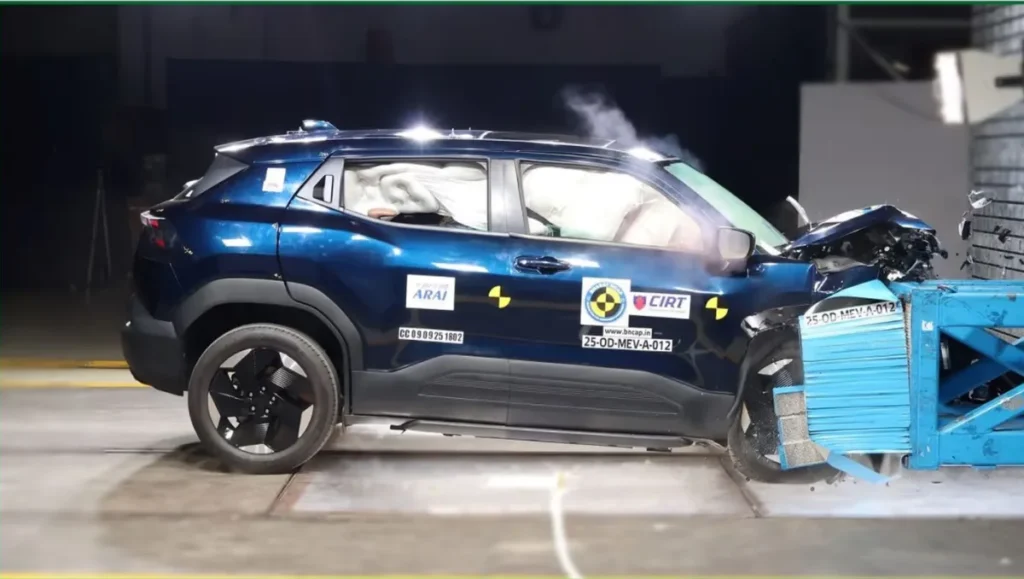
With e Vitara’s official 5-star certification from Bharat NCAP, the SUV sets a fresh benchmark for Indian-made electric vehicles. What makes this more interesting is that the rating applies across variants because key structural and safety-assist elements remain consistent no matter which model a customer chooses.
Why Maruti Suzuki e Vitara Gets 5-Star Bharat NCAP Safety Rating Matters Today
The fact that Maruti Suzuki e Vitara gets 5-star Bharat NCAP Safety. It proves how committed the brand is to the EV direction. The SUV achieved 31.49 out of 32 in Adult Occupant Protection, practically perfect. It also achieved 43 out of 49 in Child Occupant Protection, placing it among Bharat NCAP’s top scorers. These results aren’t polished statements; they come from crash tests designed to copy real impacts across multiple speeds and angle.
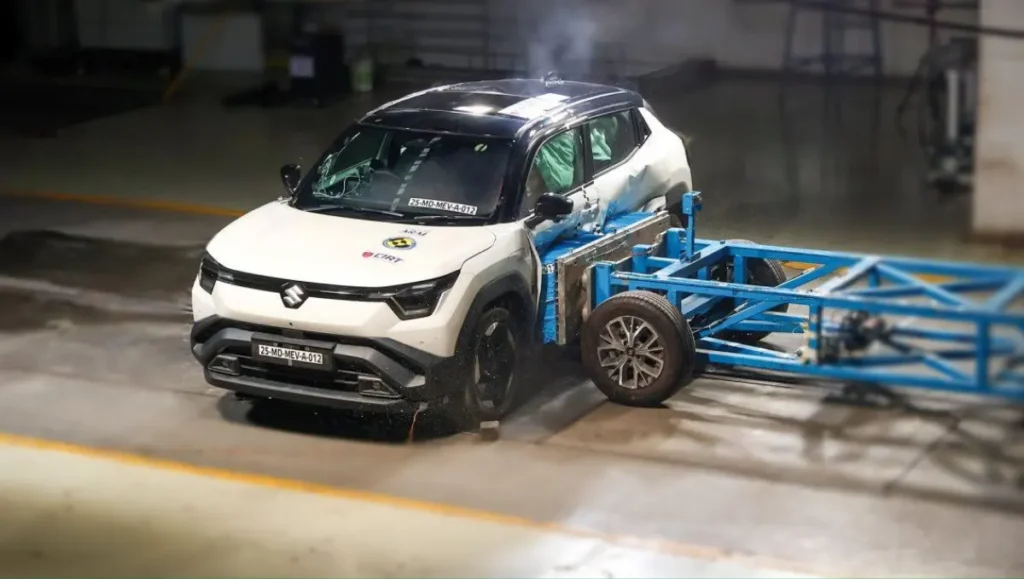
In the frontal offset crash test, the e Vitara secured 15.49 of 16. That points to a sturdy front structure and proper impact energy handling. In the side-impact test, it claimed all 16 points. Even the side pole test, known for exposing issues in side beams or airbag deployment, was graded fully acceptable by the officials. Put simply, it held up well in situations that many lower-rated vehicles usually struggle with.
Child occupant protection also stood out. The rear ISOFIX mountings, proper safety belt reminders, and compatibility with certified CRS units helped secure a 24 out of 24 dynamic score. Add to that 12 out of 12 points in CRS installation and a high vehicle assessment value, and it becomes clear why families see value in this result. Safety is no longer just an adult driver conversation; it’s a complete cabin-level conversation.
How Strong Structure Helped e Vitara Reach 5-Star Status
A big part of why Maruti Suzuki e Vitara gets 5-star Bharat NCAP Safety Rating is the platform underneath it. The SUV uses Suzuki’s new HEARTECT-e architecture, which has been optimized for EV-specific weight balance and impact absorption. Unlike many earlier platforms modified to fit a battery pack, this one integrates the EV battery into the core structure rather than adding it later. More than 60 percent of the frame uses high-tensile or ultra-high-tensile steel. This material choice increases torsional rigidity and keeps the cabin stable during high-energy impacts.
Another important engineering focus was battery protection. EV users often worry about thermal events or battery damage during a crash. The e Vitara’s battery area uses reinforced frames and energy-dissipating bracing so that, even in a major collision, the chances of intrusion or structural breach stay minimal. This design plays a silent but major role in meeting crash benchmarks.
On the feature front, seven airbags come standard across variants. Many SUVs still sell airbags as premium add-ons, but here, even the entry model gets curtain airbags, a driver knee airbag, and passenger protection that matches the higher variants. ESC, traction control, hill-hold assist, tyre pressure monitoring, and full seat belt reminders also come included by default. These small inclusions are actually big contributors to avoiding accidents before they even happen.
ADAS Features Add Another Layer of Safety
Maruti also introduced level-2 ADAS for the first time in this EV, which also helped the rating indirectly. Features like lane-keep assist, adaptive cruise control, blind-spot alert, forward collision warning, autonomous emergency braking, rear cross-traffic alert, and adaptive high-beam make the SUV safer in both city and highway conditions. These systems do not aim to take over the job of the driver, but they help avoid mistakes that humans tend to make, especially in stressful or crowded driving situations.
Combine these safety-assist features with the already-strong crash scores, and it’s easier to see why Maruti Suzuki e Vitara gets 5-star Bharat NCAP Safety Rating confidently.
What This Rating Means for EV Buyers in India
EV buyers in India often hesitate because they are unsure about long-term reliability and safety. This rating changes that conversation. Suddenly, an EV produced in India, by a company known for mass mobility rather than luxury engineering, delivers top-tier crash protection. It feels like a strong step forward for the local EV space.
Families looking for a practical electric SUV also gain confidence. The fact that both adult and child safety numbers stay high removes the hesitation that usually surrounds newer technologies. The consistent safety equipment across variants also prevents confusion that many buyers face when comparing lower trims versus top trims.
What This Means for The Brand
For Maruti, this is a breakthrough. It sends the message that the company is fully prepared for the EV era, not just by making a new powertrain, but by evolving its engineering to match global safety expectations. The brand already dominates sales in multiple segments, but this rating helps reposition Maruti in the premium EV conversation as well.
FAQs- Maruti Suzuki e Vitara gets 5-star Bharat NCAP Safety Rating
FAQ 1: Is the 5-star Bharat NCAP rating for the e Vitara actually meaningful?
Yeah, it is. The rating basically means the SUV handled all the crash tests well enough to give real-world confidence. It’s not just a badge; it shows the structure, airbags, and overall design held up the way they should.
FAQ 2: How well does the e Vitara protect adults in a crash?
Pretty well. The score was close to perfect, and that usually happens only when the cabin stays steady and the front end absorbs impact the way engineers intended. In simple terms, adults sitting in the front have strong protection.
FAQ 3: Is the e Vitara a safe pick if I regularly travel with kids?
Yes. The child protection numbers are high, and with ISOFIX mounts and proper CRS fitment, it handles child-safety requirements properly. Parents will likely feel more at ease because of that.
FAQ 4: Which crash tests were the toughest for the e Vitara?
The side pole test is normally the tricky one for most cars, but even there the SUV got an acceptable rating. The frontal offset and side-impact tests also showed strong results, so overall it held its ground.
FAQ 5: Do all e Vitara variants get the same level of safety?
From what’s known right now, yes. The structure and the main safety kit don’t really change between the trims, so the rating applies across the line instead of just one version.
FAQ 6: How much does the HEARTECT-e platform affect the safety score?
Quite a bit. The platform is built using a lot of high-tensile steel, and that helps the cabin stay rigid during a strong hit. EVs carry extra battery weight, so this setup makes a noticeable difference.
FAQ 7: Is the battery protected if there’s a major collision?
The battery pack sits inside a reinforced frame, so there’s added protection around it. That reduces the chance of damage or intrusion during a heavy crash, which is something EV buyers usually worry about.
FAQ 8: Are the safety features standard or do I need to buy a higher variant?
Most of the important stuff—seven airbags, ESC, traction control, tyre pressure monitoring—comes standard. You don’t really need to upgrade just to get basic protection.
FAQ 9: Does the ADAS system actually help while driving?
It does. Things like lane-keep assist, blind-spot alerts, and emergency braking can step in when a driver gets distracted or tired. It’s not going to drive the car for you, but it’s useful in the background.
FAQ 10: Why are people saying this rating is a big deal for EV buyers?
Because EV safety is still a new topic for many folks. When a locally built electric SUV gets a clean 5-star score, buyers start trusting the category a little more, not just the brand.
—