Maruti Suzuki Becomes A Global Top 10 Carmaker by Market Value
Maruti Suzuki, India’s biggest automobile seller, has achieved a historic milestone in the international auto arena. Maruti Suzuki Joins Global Top 10 Carmakers based on market capitalisation, ahead of international giants such as Ford, General Motors (GM), and Volkswagen. This feat not only shows how Maruti is increasingly becoming powerful within the domestic sector but also indicates India’s increasing standing in the international auto sector.
A Historic Feat for Indian Automotive Sector
For the first time ever, an Indian automaker has reached the global top 10 list of the most valuable automotive corporations. As on late September 2025, the market value of Maruti Suzuki reached ₹5.15 lakh crore, which is almost 58 billion US dollars. This market value places Maruti above some of the world’s most renowned car manufacturers, such as:
- Ford at 46.3 billion USD
- Volkswagen at 54.5 billion USD
- General Motors at 57.6 billion USD
Maruti is currently in the ninth position in the world, just after the Honda Motor Company that is worth approximately 59 billion USD. Such a fast rise indicates how far the Indian automobile sector has reached, with Maruti as the leading homegrown success story.
Interestingly, Maruti Suzuki has also overtaken the market capitalisation of its own parent company, Suzuki Motor Corporation of Japan. While Suzuki is valued at around 29 billion USD, Maruti’s current valuation is nearly double. This is a rare instance where the subsidiary has outshined the parent company in terms of global value.
The GST 2.0 Boost – A Gamechanger for Maruti
One of the key reasons behind Maruti Suzuki’s surge has been the implementation of GST 2.0 reforms from September 22. Under the revised tax regime, vehicles in the small and mid-sized segment have seen a significant reduction in GST rates. Cars with engines up to 1,200 cc, which make up the majority of Maruti’s portfolio, are now taxed at just 17 to 18 percent, compared to the earlier 28 percent.
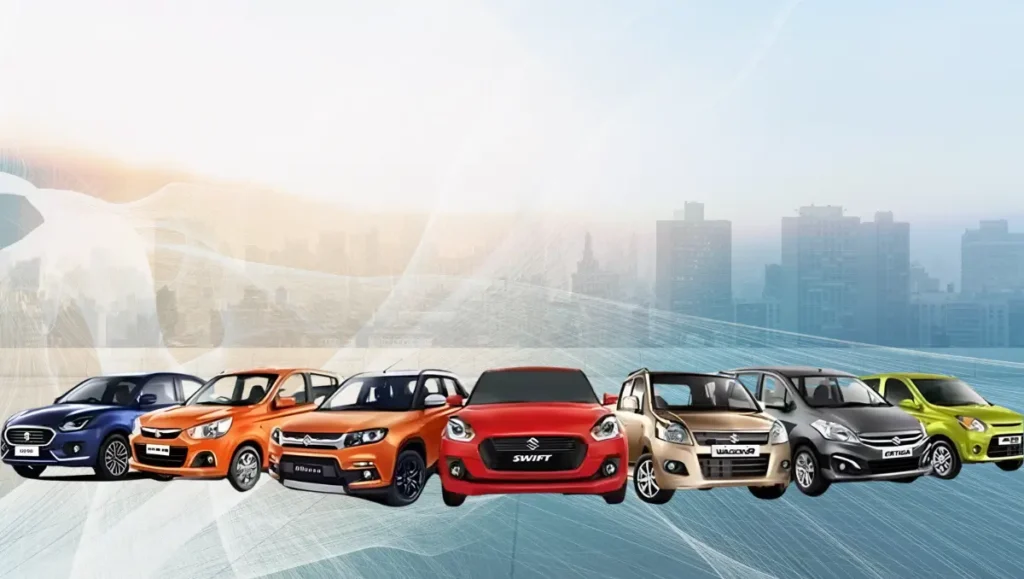
Maruti Suzuki, the market leader in small car and compact SUV segments in India, has also transferred the whole GST advantage to consumers. Price reductions from ₹70,000 to well over ₹1.2 lakh on best-selling models such as the Alto K10, S-Presso, WagonR, Ignis, and Celerio have also made its cars more appealing to consumers.
This has rung through as an uptick in customer demand. Maruti car inquiries on a daily basis are almost doubled to 80,000, while bookings are running at about 18,000 a day. The company has already sold about 75,000 cars since the beginning of Navratri festive period.
The festive season along with the relief from taxes has resulted in a perfect storm for Maruti, enhancing investor psyche as well as consumer sentiment.
Record-Breaking Stock Performance
The stock market too has reacted positively to the growth pattern of Maruti Suzuki. During mid-August to the end of September 2025, the share price of Maruti zoomed from approximately ₹10,725 per share to nearly ₹16,435 per share — a whopping 53 percent rise over a matter of just weeks.
This makes Maruti one of the best-performing automobile stocks not just in India, but globally. The Nifty Auto index, in comparison, rose by 43 percent during the same period, underscoring Maruti’s leadership in driving auto sector growth.
Investor confidence has been further boosted by expectations of strong earnings in FY26, with analysts predicting sustained volume growth due to lower vehicle prices and rising demand.
Expanding SUV Lineup for Market Dominance
While Maruti Suzuki is most famous for its budget hatchbacks and sub-compact cars, the company is also venturing in a big way into the SUV segment to bolster its market share. Its newest launch, the Victoris SUV, comes in various powertrains such as naturally aspirated petrol, CNG petrol, petrol hybrid, and even a 4WD petrol variant.
This multi-fuel plan is designed to appeal to a broad base of customers and compete better with competitors such as Hyundai, Kia, and Tata Motors in the fast-growing SUV market. Maruti has ambitious plans to grab a 50 percent market share of India’s passenger vehicle space, and its new expanded range of SUVs is likely to be a major driver of meeting this target.
What This Means for India
Maruti Suzuki’s rise into the global top 10 is more than just a corporate achievement — it is also a symbol of India’s growing presence in the global automotive industry. For decades, Indian carmakers were seen as primarily domestic players with limited international relevance. Now, with Maruti’s valuation ahead of established American and European automakers, India is firmly on the world automotive map.
This success also indicates the strength of India’s consumer market. With a burgeoning middle class, high demand for low-priced cars, and government policies supportive of the auto industry, India has emerged as one of the world’s most promising automotive markets. Maruti, with its unparalleled penetration and brand loyalty, has been the largest gainer of this trend.
Looking Ahead
Maruti Suzuki’s journey from a domestic market leader to a global top-10 automaker is a landmark achievement. With tax reforms, strong festive demand, and an expanding product portfolio, the company seems poised for even greater success in the coming years.
Industry analysts feel that if Maruti maintains this pace, it may soon move even further up the world rankings and challenge players such as Honda, Mercedes-Benz, and BMW in terms of market value.
The Indian consumer benefits from this success in the form of greater choices, improved prices, and greater competition in the market. For investors, it is a sign of good growth prospects and faith in India’s automotive sector.
FAQs
- Where is Maruti Suzuki placed currently globally on market value?
Maruti Suzuki is ranked ninth globally among auto manufacturers by market capitalisation.
- What is the valuation of Maruti Suzuki?
Maruti Suzuki, as of September 2025, is valued at approximately 58 billion US dollars (₹5.15 lakh crore).
- Which firms has Maruti Suzuki surpassed in value?
Maruti has surpassed Ford, General Motors, and Volkswagen in market value.
- How did GST 2.0 reforms help Maruti Suzuki?
GST 2.0 reduced the tax rate on cars under 1,200 cc from 28 percent to 17–18 percent. Since most of Maruti’s cars fall in this category, the price cuts boosted demand significantly.
- Has Maruti Suzuki surpassed its parent company in value?
Yes, Maruti Suzuki’s valuation of 58 billion USD is nearly double that of its parent Suzuki Motor Corporation, which is valued at about 29 billion USD.
- What are Maruti Suzuki’s plans for the SUV segment?
Maruti is expanding its SUV portfolio with models like the Victoris SUV in multiple fuel options to capture a larger share of India’s SUV market.
- How are Maruti Suzuki’s sales performing during the festive season?
Since the beginning of Navratri, Maruti has been selling approximately 75,000 vehicles, while daily bookings hit 18,000 and inquiries have doubled to almost 80,000 a day.
—