Renault India price hike up to 2 percent from Jan 1: What Buyers Should Know
Renault India price hike up to 2 percent from Jan 1 has been quietly circulating between dealers and buyer communities over the past few days recently. It is not the sort of announcement that triggers panic or headlines everywhere, yet it lands differently within a market like India today. Here, even a small increase can affect how people plan a purchase. Many buyers already stretch budgets, compare EMIs carefully, and think twice before locking in a variant. So while the number looks modest, the reaction on the ground is usually more layered than it appears at first glance.
What This Change Really Suggests
When people hear about Renault India price hike up to 2 percent from Jan 1, the assumption is often that prices will simply go up across the board. In reality, it rarely works that way. Manufacturers usually spread increases unevenly. Some trims move up, some stay put for a while, and others change only after dealer stock clears. Renault has not shared a detailed breakup, which gives dealerships room to manage the transition. For buyers, this uncertainty itself becomes a factor in decision-making.
Why These Revisions Keep Returning
The Renault India price hike up to 2 percent from Jan 1 is part of a cycle that has become almost routine. Costs tied to raw materials never really settle. Steel, plastics, electronics, shipping, all moving through the year. Then come safety norms and emission rules. Margins shrink, slowly. Even when sales appear strong, the math underneath can look uncomfortable, sometimes very different from what the outside picture suggests. Passing on a small part of that pressure is usually seen as unavoidable.
How Renault’s Portfolio Fits Into This
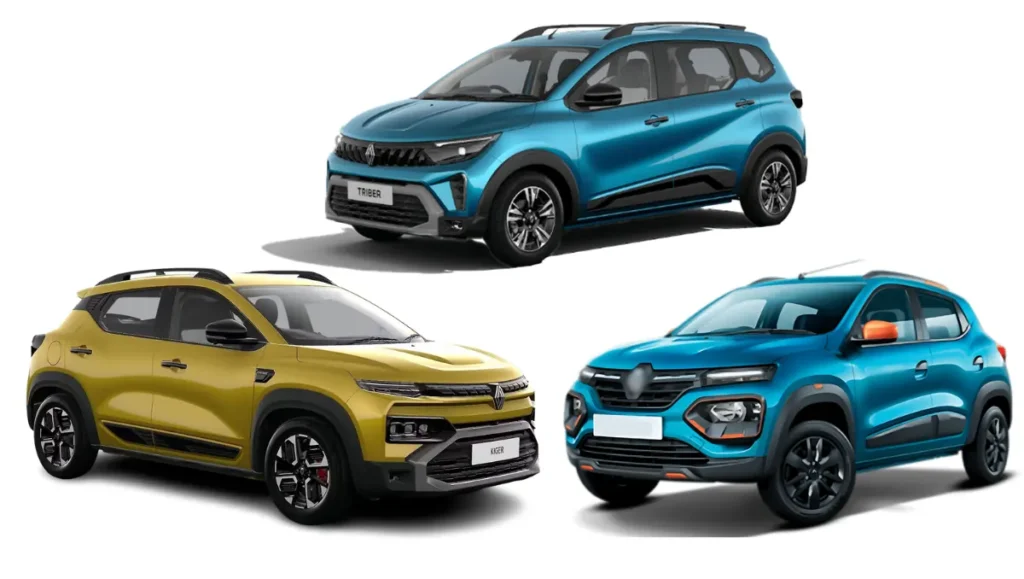
Renault India price hike up to 2 percent from Jan 1 is expected to touch the models that keep the brand relevant in India. The Kwid, Triber, and Kiger sit in segments where pricing is watched closely. These are not impulse purchases. Buyers compare across brands, talk to friends, and track offers for weeks. Even a small increase can shift interest toward a competing model or delay a final decision.
Kwid Buyers and Budget Realities
For many Kwid buyers, affordability is the primary reason the car makes the shortlist. In that context, Renault India price hike up to 2 percent from Jan 1 feels more noticeable than the percentage suggests. Budget-focused buyers usually work the numbers carefully. Every rupee counts. A higher ex-showroom price can change loans or monthly payments. Some rush to book before January. Others slow down instead, waiting to see if dealers quietly adjust prices later.
How Families Look at the Triber
The Triber attracts families who want space and flexibility without crossing into higher price brackets. With Renault India price hike up to 2 percent from Jan 1, the balance shifts slightly. Family buyers usually work within fixed limits. If the price moves up, the response is not dramatic, but practical. A lower variant, fewer accessories, or simply waiting becomes part of the conversation.
Pressure in the compact SUV space
In the compact SUV segment, things are less forgiving. Renault India price hike up to 2 percent from Jan 1 puts the Kiger in a segment where rivals constantly adjust prices and offers. Buyers here are more feature-aware and less loyal to a single brand. If prices rise, expectations rise too. Renault’s task will be to keep the Kiger feeling relevant even after the revision settles in.
Why January is usually chosen
The timing of Renault India price hike up to 2 percent from Jan 1 is hardly surprising. January marks a reset for many automakers. New production batches, updated cost structures, and fresh annual planning all begin around this period. Buyers also place value on newer manufacturing dates, which softens resistance to slightly higher pricing. From a business standpoint, it is a relatively safe window to make adjustments.
What Dealers Typically Do Next
On the showroom floor, Renault India price hike up to 2 percent from Jan 1 is rarely presented bluntly. Dealers often rely on small levers to ease the transition. Exchange bonuses, insurance tweaks, or limited-time benefits come into play. Buyers who walk in during the final weeks of December sometimes manage to secure earlier pricing, provided billing happens before the cut-off. This brief overlap period often rewards prepared customers.
Should Buyers Act Immediately
Whether someone should rush before Renault India price hike up to 2 percent from Jan 1 depends on where they are in the buying process. Those who have finished test drives and sorted financing might move ahead early. Others, still thinking, may wait it out. In a few cases, rival brands react quietly, countering price hikes with short-term promotions or offers meant to hold attention.
A familiar Industry Rhythm
Renault India price hike up to 2 percent from Jan 1 fits into a larger industry rhythm. Annual price revisions have become standard practice. While each increase appears manageable on its own, the cumulative effect over several years is visible. Entry-level car prices today sit far above where they were not too long ago, even when products themselves have not changed dramatically.
Ownership Costs Beyond the Sticker Price
A change like Renault India price hike up to 2 percent from Jan 1 also nudges ownership costs slightly. Higher ex-showroom prices affect insurance premiums and loan amounts. At the same time, resale values may get mild support as newer cars enter the market at higher prices. For most buyers, these shifts are not deal-breaking, but they are part of the overall calculation.
Renault’s Broader Position in India
Renault India views these adjustments as part of remaining competitive without losing balance. The approach favors a focused lineup over aggressive growth plans. As expenses continue climbing, maintaining affordable pricing is challenging, leaving small revisions as the most realistic way forward for the company today overall now.
What Could Follow After January
Once Renault India price hike up to 2 percent from Jan 1 is implemented, the company will likely watch demand patterns closely. If sales remain steady, the increase will blend into the background. If momentum slows, marketing pushes or dealer-level offers may follow. This back-and-forth has become normal in the Indian auto market.
Closing Note
At a glance, the Renault India price hike up to 2 percent from Jan 1 feels minor, though its effect shows up slowly. It mirrors ongoing cost pressure and reinforces why timing stays important. Buyers who pay attention and prepare early are usually better placed in a market where prices move more often than they stand still.
FAQs – Renault India price hike up to 2 percent from Jan 1
FAQ 1: What is the Renault India price hike up to 2 percent from Jan 1?
It refers to a planned increase in vehicle prices by Renault India, effective from January 1. The hike can go up to 2 percent and may vary depending on the model and variant.
FAQ 2: Which Renault models are likely to be affected?
Models like the Kwid, Triber, and Kiger are expected to see revised prices. These are the core products Renault sells in India, so changes are likely to apply here first.
FAQ 3: Will all variants get the same price increase?
No. Price hikes are usually applied unevenly. Some variants may see a higher change, some a smaller one, and a few may stay unchanged for a short period depending on stock.
FAQ 4: Why is Renault increasing prices now?
Rising costs linked to raw materials, logistics, safety rules, and emissions compliance are the main reasons. January is commonly used by manufacturers to reset prices.
FAQ 5: Can buyers still get the old price in December?
In some cases, yes. If a vehicle is billed before the end of December, buyers may still get the current price. This depends on dealer stock and billing timelines.
FAQ 6: Does a 2 percent hike make a big difference?
For budget-focused buyers, even a small increase can matter. It can affect loan eligibility, EMI amounts, or the choice of variant, especially at lower price points.
FAQ 7: Should buyers rush to book before January 1?
That depends on how ready the buyer is. Those who have completed test drives and arranged financing may consider booking early. Others may prefer to wait and watch.
FAQ 8: Will dealers offer discounts to offset the hike?
Dealers sometimes use exchange bonuses, insurance adjustments, or limited offers to reduce the impact. These vary by location and availability.
FAQ 9: Do other car brands usually hike prices around this time too?
Yes. Annual price revisions around the start of the year are common across the auto industry, not just limited to Renault India.
FAQ 10: Could there be more price hikes later in the year?
It is possible. If costs continue to rise or regulations change, manufacturers may revise prices again later in the year, depending on market conditions.
—