Renault Kwid Facelift Spied in India: What to Expect from the New Hatchback
The Renault Kwid has been one of the key models for the French carmaker in India ever since it was launched in 2015. The hatchback, with its SUV-like design, affordability, and utilitarian appeal, has found a niche for itself in the budget car segment. Though, in recent times, its sales growth has dwindled, leading Renault to update its lineup. Having already done so with the Triber and Kiger earlier this year, the firm now appears to be gearing up for the Kwid facelift launch.
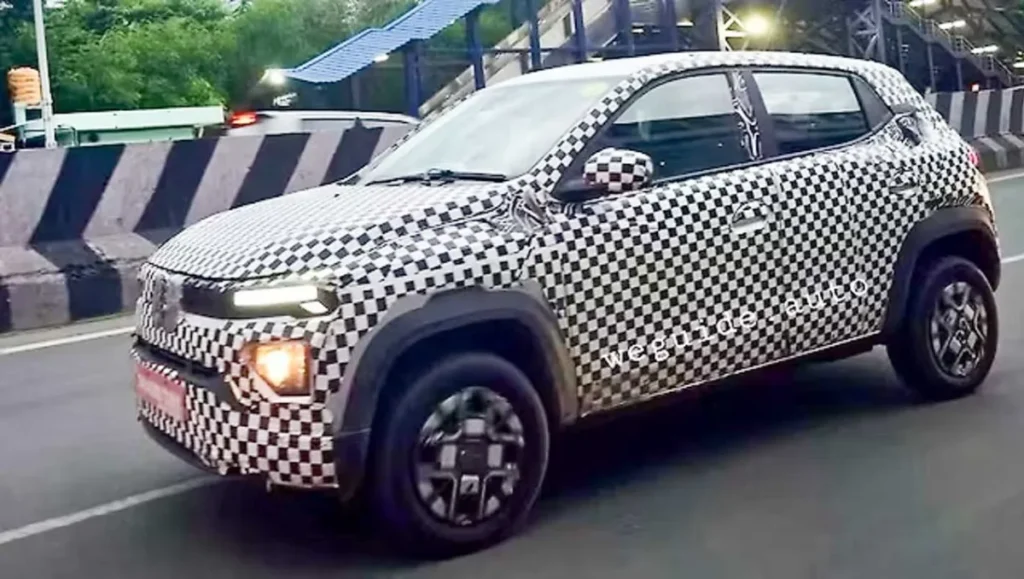
New spy photographs of the test mule in trials on Indian roads have provided us with a proper glimpse of the new model. The changes look substantial enough to make the hatchback stay competitive in a fast-changing market with the direction towards both advanced petrol powertrains and electric vehicles. Let’s take a close look at what the facelifted Renault Kwid will offer.
Exterior Design Updates
The new spy pictures show that Renault has redesigned the Kwid very heavily. Up front, the hatchback gets a new grille and an updated headlamp cluster. The dual headlamp arrangement persists, but the LED DRLs have been reworked into a Y-shape, giving the vehicle a contemporary appearance. Halogen projector headlamps are visible on the test mule, which indicates that the facelift could carry on with the normal lighting to keep costs down.
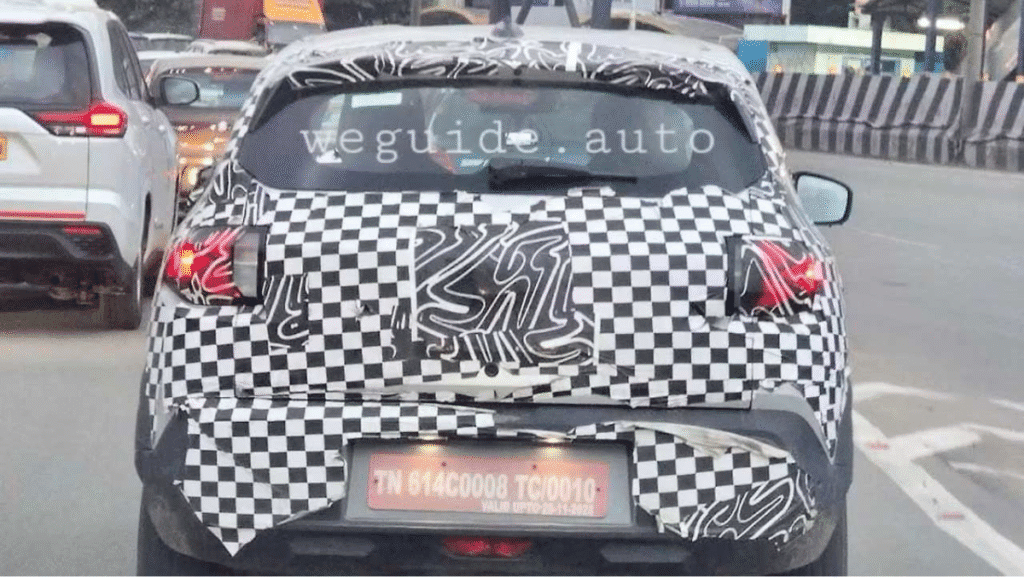
The front and rear bumpers have also been updated. The rear boasts a cleaner and more upmarket look with new Y-shaped tail lamps on the Dacia Spring EV sold in Europe. A chrome or glossy trim strip runs between the lamps, where presumably the Renault logo would sit. Squared-off wheel arches, flap-style door handles, and chunky black body cladding all continue to deliver an SUV-inspired look that has long been a mainstay of the Kwid.
The test mule was spotted running on steel wheels with new covers. Upper trims may, however, receive alloy wheels. Roof rails previously available appear to be omitted on the facelifted model, but a roof spoiler and rear wiper contribute to the sporty look. The overall styling on the outside looks to be sleeker, refined, and in accordance with Renault’s current design language, as found on the Triber and Kiger.
Interior Upgrades
The interior of the new Kwid also appears to be in line for significant upgrades. Spy images show a new big touchscreen infotainment system, perhaps a 10-inch unit on more expensive trims. The interface appears refreshed, and that should make it easier to use. A new all-digital instrument cluster, perhaps a 7-inch screen, is also likely to replace the existing setup.
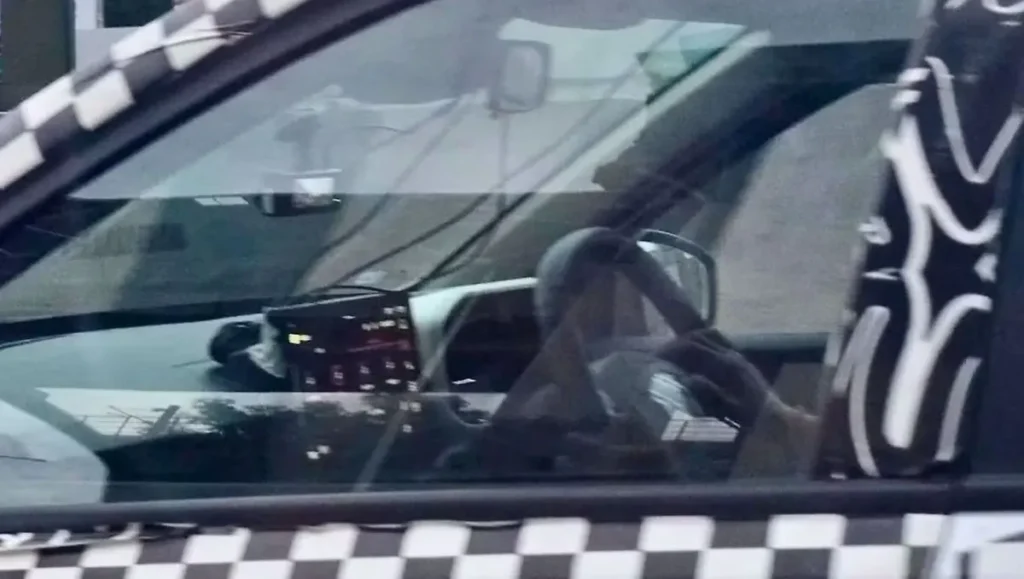
The steering wheel’s look has been redesigned, and we can also expect improved upholstery and new materials throughout the cabin for an upscale feel. Renault appears to be concentrating on making the Kwid more attractive to young customers who want big-car amenities in small cars. The interior changes ought to enhance the hatchback’s overall value proposition in a very competitive marketplace.
Powertrain Options
Mechanically, the facelifted Renault Kwid should carryover the known 1.0-litre naturally aspirated petrol engine. On the current model, this engine makes 67 hp and 91 Nm of torque, which comes with a choice of either a 5-speed manual or a 5-speed AMT transmission. Rumors indicate that the facelift might offer this engine in a marginally up-tuned form with better performance and driveability.
Renault has also been selling dealer-level CNG kits on the Kwid. The factory warranty remains even with the retrofitting, which is why it’s a budget-friendly option for customers looking to bring down running costs. The CNG kit is priced at about Rs 75,000 and has a standard 3-year/100,000 km warranty. Though not factory fitted, Renault’s CNG strategy provides Kwid customers with a budget-friendly option against increasing fuel prices.
Will There Be a Kwid EV?
Perhaps the most significant question about the upcoming Kwid facelift is whether or not Renault finally brings an all-electric variant to India. Internationally, Renault’s sub-brand Dacia currently retails the Spring EV, which shares the Kwid’s underpinnings. It has a 26.8 kWh battery pack and delivers a claimed WLTP range of approximately 220 km on a single charge. Powertrains are offered by 44 hp and 64 hp electric motors.
Speculation has it that Renault might use the same configuration for India if it decides to launch the Kwid EV here. This would compete the model against competition in the form of the Tata Tiago EV, MG Comet EV, and Citroën eC3. That said, due to the pricing issues, charging infrastructure, and battery cost challenges, Renault might at least keep going with the petrol facelift first before launching an electric version later on.
Market Position and Launch Schedule
The Renault Kwid facelift will be the key to rejuvenating the fortunes of the brand in India. Though the hatchback was once a high seller, it is now sold under intense competition from offerings such as the Maruti Suzuki Alto K10, S-Presso, and Hyundai Grand i10 Nios. With new-age styling, additional features, and a scope for possible future EV integration, the Kwid facelift should appeal to a broad set of buyers.
Although Renault has not made a formal announcement on the launch schedule, the number of spy shots indicates that the launch cannot be far off. There will probably be a formal launch in the next few months before its market launch towards the end of the year.
Conclusion
The new Renault Kwid facelift has the potential to introduce a new design, contemporary features, and ongoing affordability to the compact car market. The ICE variant is virtually bound to come first with the 1.0-litre petrol motor, but the prospect of a Kwid EV introduces a thrilling element to the hatchback’s future.
If Renault is able to price the facelift aggressively and yet maintain the Kwid’s signature value-for-money appeal, it can provide the French carmaker a much-needed boost in India. Consumers seeking a fashionably designed, affordable hatchback with SUV-like style will have a lot to look out for when the new Kwid rolls out into the showroom.
FAQs – Renault Kwid Facelift 2025
Q1. What are the key changes in the Renault Kwid facelift?
The new Renault Kwid facelift receives a new grille design, Y-shaped LED DRLs, new bumpers, and Y-pattern tail lamps. The interiors are also revamped with a bigger touchscreen display, digital instrument cluster, and a new steering wheel.
Q2. Will the Renault Kwid facelift receive a new engine?
The facelift is likely to carry over with the 1.0-litre petrol motor generating 67 hp and 91 Nm. It could, however, be slightly better tuned for improved performance and fuel efficiency.
Q3. Is there a CNG option on the Renault Kwid facelift?
Yes, Renault provides an aftermarket CNG kit solution for the Kwid at around ₹75,000. It has a 3-year/100,000 km standard warranty, which is a reasonable option for price-sensitive buyers.
Q4. Is Renault launching Renault Kwid EV in India?
Although Renault has not announced the Kwid EV for India, the global variant (Dacia Spring EV) employs a 26.8 kWh battery and has a 220 km range. The Kwid EV, if launched in India, will compete against the Tata Tiago EV, MG Comet EV, and Citroën eC3.
Q5. When will Renault Kwid facelift arrive in India?
Renault has not revealed a formal date, but regular spy photos indicate that a launch is imminent within the next few months, probably by the year’s end.
Q6. Which cars will the Renault Kwid facelift rival?
The updated Kwid will continue to compete with budget hatchbacks such as the Maruti Suzuki Alto K10, Maruti Suzuki S-Presso, and Hyundai Grand i10 Nios.
Q7. What can we anticipate inside the new Kwid?
The facelift will probably feature a 10-inch touchscreen infotainment system, 7-inch digital instrument cluster, enhanced upholstery, and a revamped cabin layout for a more upscale feel.
—