Suzuki Motorcycle India Slashes Prices After GST 2.0 Reforms
Suzuki Motorcycle India has rolled out dramatic price reductions across its scooter and motorcycle range subsequent to the Government of India’s GST 2.0 reforms. Suzuki Motorcycle India Slashes Prices with the tax rate on two-wheelers up to 350 cc lowered from 28% to 18%, Suzuki is transferring the full benefit to customers. The new, lower prices shall come into effect from September 22, 2025, just before the festival season.
GST 2.0: A game changer for affordability
The GST 2.0 rationalisation of the government has been praised as a milestone move for the auto industry. By reducing GST on motor bikes, scooters, and auto parts, the reform is set to make purchasing two-wheelers more affordable for millions of consumers.
Under this revamp, scooters and motorcycles with up to 350 cc capacity now charge 18% GST, as opposed to 28% previously. This not only decreases the initial cost of purchase but lowers maintenance charges too, as spare parts and accessories have been shifted to the 18% slab too.
For Suzuki Motorcycle India, which has a diversified portfolio serving commuters, touring enthusiasts, and scooter riders, this tax reduction offers a chance to widen its market coverage.
Full benefits passed on to customers
Suzuki Motorcycle India has announced that it will pass on the entire advantage of the GST reduction to customers. The company declared price cuts on all its two-wheelers as well as a reduction in the price of spare parts and accessories.
Deepak Mutreja, Vice-President, Sales & Marketing, Suzuki Motorcycle India, said:
“Our customers are always at the center of what we do.”. We appreciate the GST 2.0 reforms of the Government of India, a forward-thinking move towards making mobility affordable for the masses. In line with our customer-centric philosophy, we transfer the full benefit of the reforms on our two-wheelers as well as spare parts, making the purchase as well as maintenance costs lower. Arriving just before the holiday season, this action will further boost consumer confidence, enhance our product portfolio further, and provide a strong boost to demand in the two-wheeler segment.”
Customer savings model-wise
Here’s a break-up of how much customers can save based on the model they opt for:
| Maximum Savings (₹) | |
|---|---|
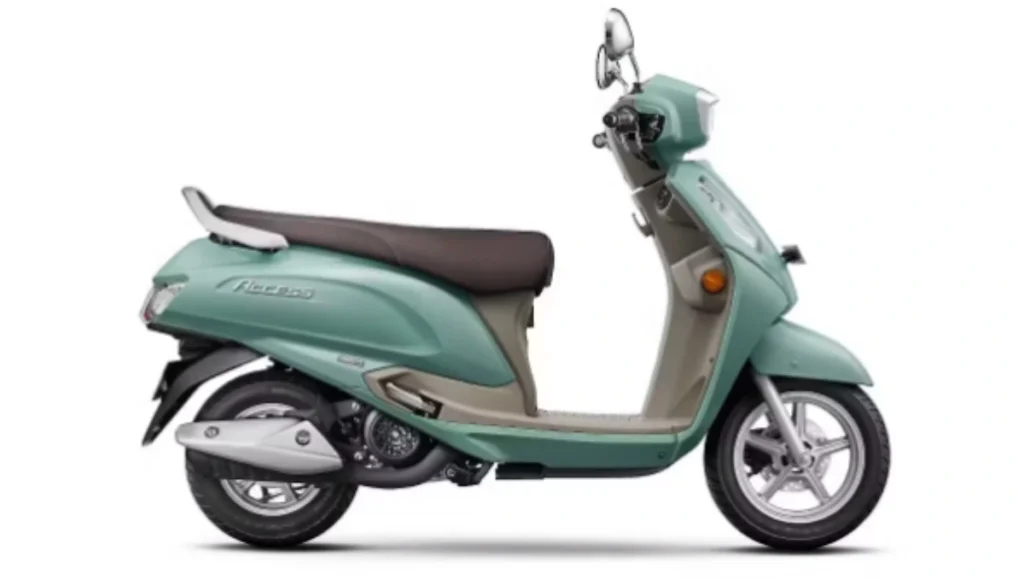
| Access | 8,523 |
| Avenis | 7,823 |
| Burgman Street | 8,373 |
| Burgman Street EX | 9,798 |
| Gixxer | 11,520 |
| Gixxer SF | 12,311 |
| Gixxer 250 | 16,525 |
| Gixxer SF 250 | 18,024 |
| V-Strom SX | 17,982 |
These discounts are considerable, particularly on larger-displacement variants like the Gixxer 250, Gixxer SF 250, and the adventure-focused V-Strom SX. Even scooters like Access and Avenis, which have been drawing good volumes to begin with, have become even more appealing with their refreshed prices.
Festive timing contributes to the frenzy
The timing of these price cuts couldn’t be any better. With the festive season fast approaching, consumer mood is generally more upbeat, and such high-value purchases as cars enjoy an increased demand. By cutting prices on its entire lineup, Suzuki is in an ideal position to ride this seasonal boost.
This move also strategically positions Suzuki against rivals in the highly competitive two-wheeler segment. With demand in urban and semi-urban markets gradually reviving, Suzuki’s decision to pass on full GST benefits could help capture buyers who were previously price-conscious.
Lower running costs through reduced spare part prices
The advantage to Suzuki customers goes beyond the showroom floor. With spare parts and accessories also being included under the 18% GST slab, long-term costs of ownership will go down. Customers can look forward to reduced maintenance, replacement, and upgrade costs on a regular basis.
This makes owning a Suzuki two-wheeler not only more affordable at the time of purchase but also more economical over its life cycle. Such a strategy strengthens customer loyalty and reinforces Suzuki’s value-driven positioning.
Revitalising the two-wheeler market
The Indian two-wheeler industry has been under strain in recent years with increased costs, tighter emission standards, and international supply chain disruptions. Entry-level scooters and commuters suffered the most, as affordability was still a big issue for many families.
With the GST 2.0 reforms and Suzuki’s proactive price cuts, industry experts believe there could be a revival in demand across both rural and urban markets. For rural buyers, lower upfront prices and reduced maintenance costs provide a clear incentive to invest in personal mobility. For urban customers, models like Avenis and Burgman Street — which combine style, convenience, and efficiency — become even more appealing.
Conclusion
Suzuki Motorcycle India’s move to pass on GST 2.0 benefits in full goes on to add strength to its customer-friendly stance and build its position in the competitive Indian two-wheeler industry. By lowering scooters and motorcycles’ costs and reducing maintenance expenditure, Suzuki is going after one of the largest obstacles for potential customers: cost of ownership.
With the festive season around the corner, this strategy of pricing could not only drive Suzuki sales but also herald a broader resurgence in the Indian two-wheeler market. Saving up to ₹18,024, Suzuki buyers are among the largest gainers from the GST 2.0 reforms, it is a win-win for riders as well as the brand.
—