Tata Motors Leads EV Sales in November 2025- Half of India’s EVs Came From Tata
Tata Motors leads EV sales in November 2025. Registrations for electric passenger vehicles crossed roughly fourteen point five thousand units nationwide. That’s about sixty one percent higher than November last year, going by official retail data. Out of that, Tata’s electric cars alone account for a little over 6,000 registrations, giving the company a market share in the low-forties for electric four wheelers.

It means nearly 50% of the electric cars registered in India that month had Tata written on them. For something many treated as a niche experiment until recently, the numbers form a pretty firm signal that things are changing faster than expected.
Tata Motors Leads EV Sales in November 2025: What the Numbers Say
Tata Motors Leads EV Sales in November 2025 with just over 6,000 electric cars registered during the month, while total electric car and SUV registrations stand at around 14,700. That puts Tata’s share of the electric passenger vehicle market at roughly 42 percent for November.

There Are a Few More Useful Numbers Sitting Behind That.
- Overall electric passenger vehicle registrations in India climbed from a little over 9,000 units in November of the previous year to almost 15,000 this November, which works out to year-on-year growth of about 61 percent.
- Tata’s own electric car and SUV volumes grew by close to 38 percent compared to November last year, even though there was a month-on-month dip after the heavy festive season in October.
- The company is not only ahead in pure retail registrations. Across domestic and export markets combined, Tata’s electric vehicle sales for November touched 7,911 units, up a little over 52 percent year on year.
So while the overall EV market took a bit of a breather after the festival rush, Tata still finished the month with a comfortable lead at the top and with growth that remains well ahead of where it was a year ago.
It is also worth noting that the rest of the leaderboard is already taking shape. Brands like MG and Mahindra sit behind Tata in second and third place, with shares in the mid-twenties and around 20% respectively, which shows a market beginning to concentrate around a handful of strong names rather than being scattered between dozens of tiny players.

How Tata Built This Position
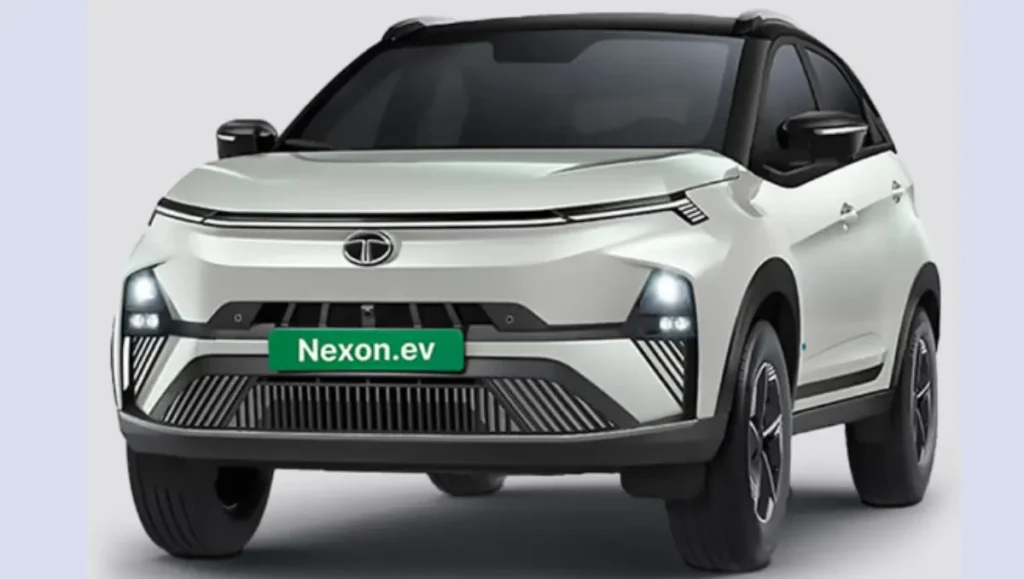
If you look at the last few years in slow motion, Tata’s current place does not look like an accident. It moved into electric versions of regular models earlier than most others. Now, the electric range runs from small hatchbacks to compact suvs and newer crossover shapes. cars like Tiago EV, Tigor EV, Nexon EV, Punch EV and Curvv EV sit across different prices and body types, so buyers usually end up finding something that fits their budget and daily use.
The company also has the advantage of scale on the passenger vehicle side. In November 2025, total passenger vehicle sales, including both internal combustion and electric, reached 59,199 units, up about 25 to 26 percent year on year. Domestic PV sales alone were over 57,000 units. When you sell that many cars overall, you naturally build a large network of dealers, workshops and touchpoints. That network then becomes the backbone for selling and servicing EVs as well.
Another piece in the puzzle is that a big part of Tata’s EV value chain is based in India. Localised production of vehicles and a growing share of local content help the company keep a tighter control on pricing at a time when global battery and logistics costs can move around quite sharply. That is one of the reasons why its electric cars often land in a price bracket that still feels reachable for many urban and semi-urban buyers.

What November 2025 Reveals About EV Demand in India
If you step back from individual brands and only look at the market picture, November 2025 is an interesting data point. Electric passenger vehicle registrations grew more than 60 percent year on year, even though the total number of cars sold in the country did not grow at that kind of pace.

What Those Numbers Actually Point To
First, Electric cars aren’t a side project for early adopters anymore. Anyone comparing new-car options tends to include at least one EV these days, and this habit shows up strongly in many of the larger cities.
Second, even with a month-on-month dip after October’s festival spike, the segment is still adding a lot of new buyers compared to last year. The high base of October was always going to be tough to repeat, and yet November’s EV count still made it one of the stronger months of the year.
Third, the fact that Tata Motors Leads EV Sales in November 2025 with a share above 40 percent, while the next two or three brands together command most of the remaining market, shows how quickly the electric four wheeler space is settling into a pattern where a handful of serious players carry most of the volume.
What This Means for Everyday Buyers
For an ordinary car buyer, all these numbers may sound distant. But they do translate into a few practical things.
If you live in a big city and your daily commute is mostly within urban limits, the chances are high that a Tata showroom near you now has multiple electric options in different price bands. Because the company has been selling EVs in decent numbers for a few years, sales staff and service centres are usually more familiar with common EV questions, from real-world range expectations to basic charging issues.
Running costs are another big draw. Owners doing most of their driving within city limits often see that home or office charging slashes monthly running costs compared to fuel. Putting those figures down clearly helps the higher upfront EV price feel easier to accept, particularly for buyers thinking beyond just a few years.
There is also the comfort of seeing more EVs on the road. A few years back, spotting an electric car was rare in most cities. Now, it is common to see multiple Nexon EVs or Punch EVs on a short drive, and that visibility plays a quiet psychological role. If something becomes part of the normal traffic mix, it feels less risky to buy.
The Flip Side And The Risks
Of course, the story is not only about smooth growth. Even though Tata Motors Leads EV Sales in November 2025, there are real challenges to work through.
The first is the month-on-month decline. Tata’s electric car registrations in November were lower than in October by roughly 14 to 20 percent, depending on which dataset you look at. Some of that is natural post-festival cooling, but it is also a reminder that EV demand is still sensitive to discounts, finance offers and broader market sentiment.
The second is competition. MG, Mahindra and a fast-rising VinFast are all growing their electric portfolios. Some of them are targeting slightly more premium segments, others are chasing value buyers, but collectively they are making sure Tata will not have this space to itself forever.
Third, infrastructure outside bigger cities is still patchy. While metro regions now have a reasonable spread of public chargers, many small cities and highways need faster build-out. If that infrastructure lags too far behind EV sales, early enthusiasm could flatten out.
Finally, there is the question of long term ownership and resale. Because mass adoption of EVs is only a few years old in India, there is not yet a deep, well-priced used EV market. Buyers who think a lot about resale value may still hang back until there is more data on how batteries age in Indian conditions.
Where This Could Go Next
Looking at where things stand after eleven months in 2025, electric passenger vehicle registrations have already gone beyond the total for all of 2024. There’s still one month remaining. That comparison, on its own, highlights how fast this shift is happening on the ground.
Viewed that way, Tata Motors Leads EV Sales in November 2025 as both a snapshot and a signal. It sums up a month where the automaker delivered over six thousand electric cars and held a little above two fifths of total market share at that moment nationwide overall. And it is a signpost pointing toward an Indian EV landscape shaped heavily by a few strong domestic and global players, with Tata currently setting the pace.
Over the next couple of years, as more models launch, battery technology improves and charging becomes easier even outside metros, those who stepped in early are likely to benefit the most. For now, though, November 2025 belongs clearly to Tata, and to a market that is beginning to treat electric cars not as the future, but as a normal choice on the showroom floor today.
FAQs – Tata Motors Leads EV Sales in November 2025
Faq1: Why Tata on top in November?
Mostly timing. Cars available. People already knew Nexon EV, Tiago EV etc. demand picked up and Tata happened to be ready with stock and dealers. No big mystery honestly.
Faq2: How many EVs Tata Sold?
Little over six thousand registrations for November. When total market is about fourteen and a half thousand, the share looks big very quickly.
Faq3: How big EV market was that month?
Around fourteen point five thousand electric passenger vehicles registered. Bigger than last year by a wide margin even though November isn’t peak festival season.
Faq4: Are buyers really choosing EVs now?
Not everyone but hesitation is lower. More people test driving EVs than before. Earlier people didn’t even ask, now they do.
Faq5: Which Tata EVs people ask for?
Mostly Nexon EV. Tiago EV too. Punch EV in some cities. Curvv EV getting curiosity but the older ones still do the heavy lifting.
Faq6: Was Tata growth real or just market growth
Both. Market expanded a lot year on year and Tata went up with it. Month on month dipped after October, which isn’t unusual.
Faq7: Who is behind Tata right now?
Mg and Mahindra. Gap still there but they aren’t small anymore. Top three is becoming clearer every month.
Faq8: Does EV make sense for city driving?
Usually yes. Short trips help. Charging at home or office keeps costs down. Upfront price still makes people think twice.
Faq9: What are the risks?
Charging outside metros patchy. Resale unclear. Discounts influence buying decisions more than people admit.
Faq10: What does November really signal?
Market moving faster than expected. EVs no longer niche. Still early, but direction feels locked in.
—