Tata Motors Breaks September 2025 Sales Records with GST Injection and Festive Demand
Tata Motors Sales Record Sept 2025, led by the implementation of GST 2.0 and the festive demand. From all automakers, Tata Motors was one of the largest beneficiaries, posting its highest ever monthly passenger vehicle sales figures while also capturing the number two market position.
According to official data, Tata Motors dispatched 60,907 passenger vehicles in September 2025, including 59,667 domestic units and 1,240 exports. This marks a 47.4 percent year-on-year growth compared to 41,313 units sold in September 2024. The surge was powered by strong demand across internal combustion engine (ICE), electric vehicle (EV), and compressed natural gas (CNG) models, showcasing Tata’s balanced multi-fuel strategy.
Record-Breaking Passenger Vehicle Sales
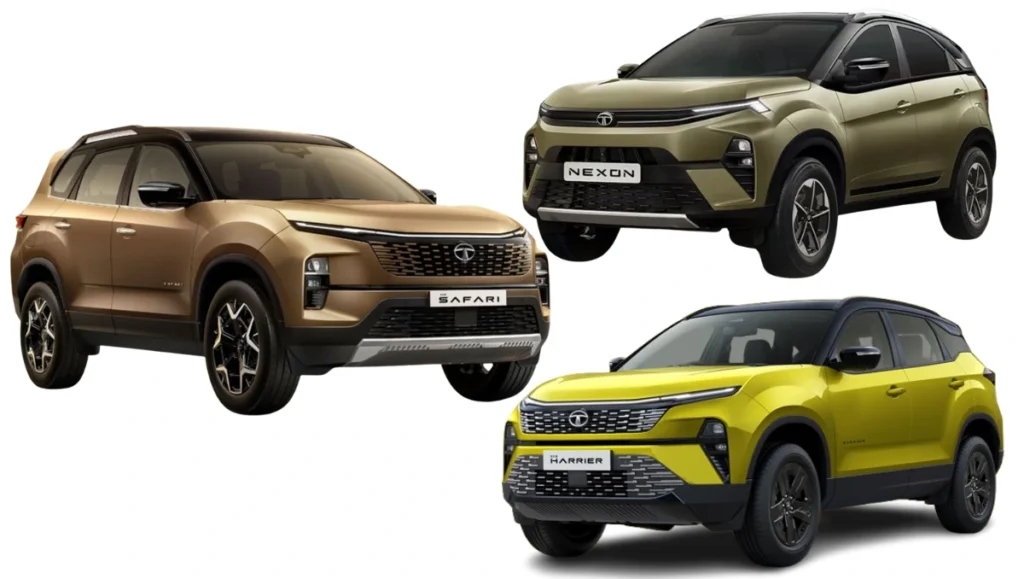
September 2025 will be etched as a milestone month in the history of Tata Motors. The company registered record sales volumes across various segments. The Nexon topped the sales charts at more than 22,500 units, recording the highest monthly sales for any month for Tata’s passenger vehicle. The Harrier and Safari, boosted by the Adventure X variant and added features, too, reported their best-ever combined sales. The Punch also continued to lead the compact SUV space thanks to the GST-induced price reductions.
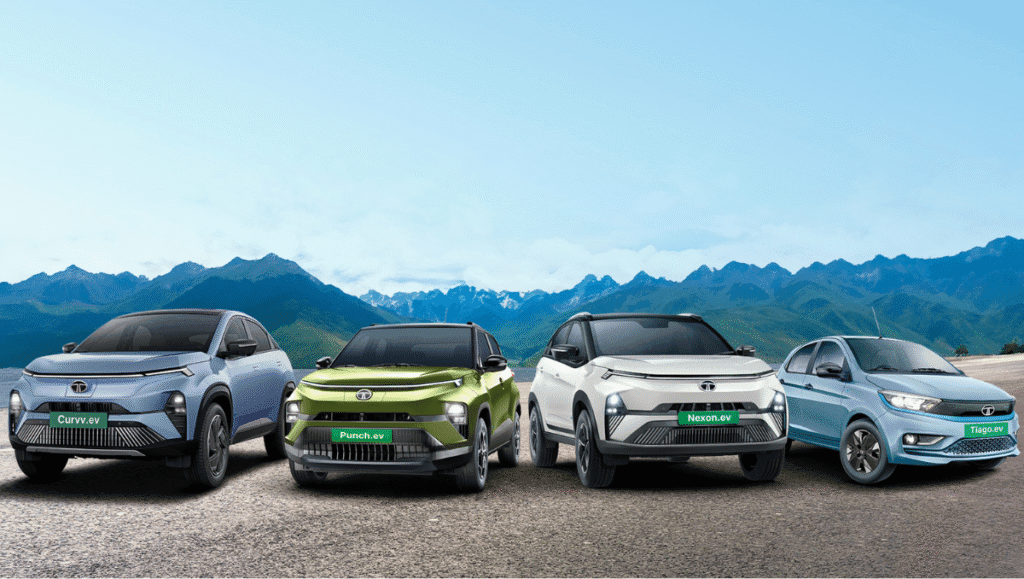
Electric vehicles were the star attraction. Tata retailed 9,191 EVs last month, almost doubling last year’s comparable figure of 4,680 units, a growth of over 96 percent. EV share in Tata’s offerings climbed to 17 percent during the quarter, reflecting the increasing adoption of green mobility in India.
Sales of CNG also reached a new high with more than 17,800 units sold, representing a year-on-year increase of over 100 percent. Both EV and CNG cars accounted for 44 percent of the total sales of Tata, further strengthening the company’s dominance in alternative fuel technologies.
| Metric | Value (units) | Notes / Breakdown |
|---|---|---|
| Total passenger vehicle dispatches (Sep 2025) | 60,907 | 59,667 domestic; 1,240 exports |
| Electric vehicle retail (Sep 2025) | 9,191 | Up ~96% YoY; EV share ~17% in quarter |
| CNG sales (Sep 2025) | 17,800+ | All-time high; part of EV + CNG 44% of volumes |
| Nexon monthly sales (Sep 2025) | 22,500+ | Highest-ever monthly sales for any Tata PV |
| Retail registrations (Vahan) – Tata (Sep 2025) | 40,594 | Placed Tata at number two in retail PV registrations |
| Retail registrations (Vahan) – Mahindra (Sep 2025) | 37,015 | Mahindra retail PVs |
| Retail registrations (Vahan) – Hyundai (Sep 2025) | 35,443 | Hyundai retail PVs |
| Retail registrations (Vahan) – Maruti (Sep 2025) | 122,278 | Market leader |
| Commercial vehicle retail (Sep 2025) | 35,862 | Up 19% YoY; domestic 33,148; exports 2,714 |
| Quarter Q2 FY26 PV wholesales (Tata) | 144,397 | Up 10.4% YoY |
| Quarter Q2 FY26 CV wholesales (Tata) | 94,681 | Up 12% YoY |
Impact of GST 2.0 Price Cuts
One of the key reasons for Tata’s success in September was the GST 2.0 reform, which had streamlined tax rates and greatly minimized the cost of ICE passenger vehicles. Small cars measuring less than four meters in length now attract an 18 percent tax, compared with the previous 28 percent plus compensation cess, effectively taking the incidence to close to 30 percent. Big SUVs and luxury vehicles now command a flat 40 percent duty, down from the 43 to 50 percent in the previous GST regime.
For the buyer, this meant upfront savings. Tata slashed prices across its ICE range, bringing models such as the Tiago, Altroz, and Tigor cheaper by as much as Rs 1.1 lakh. The best-seller Punch was reduced by as much as Rs 1.08 lakh, and Nexon was made cheaper by as much as Rs 1.55 lakh. The Harrier and Safari too got price reductions of as much as Rs 1.44 lakh and Rs 1.48 lakh respectively. Added to festive discounts of as much as Rs 65,000, these cuts triggered enormous demand at dealerships across the country.
In fact, Tata posted sales of close to 10,000 passenger cars in one day just days after the GST announcement on September 22, 2025. More than 25,000 new enquiries also came in for the company, a testament to the power of government-initiated affordability initiatives on consumer confidence.
Tata vs Mahindra and Hyundai
While Tata achieved a major milestone in wholesale dispatches, retail data from the Vahan portal showed it also overtook Mahindra and Hyundai to claim the second spot in passenger vehicle sales during September. Tata registered 40,594 PVs at the retail level, ahead of Mahindra’s 37,015 and Hyundai’s 35,443 units. Maruti Suzuki, as expected, continued its dominance with more than 1.22 lakh units.
Mahindra also posted its own record performance, selling 56,233 SUVs in the domestic market and overtaking total monthly auto sales of 1,00,298 units. The company had been conservative in August by cutting wholesales to maintain dealer margins, but recovered strongly in September with record festive sales. Hyundai also picked up steam following steep price reductions under GST 2.0, selling more than 35,000 passenger cars and logging its highest ever single-day performance in five years with 11,000 billings on September 22.
Commercial Vehicle Growth
The passenger vehicle growth story was not unique to this instance. Tata Motors also had robust increases in the commercial vehicles segment. In September 2025, the company retailed 35,862 CVs, up by 19 percent year-on-year from 30,032 units in September last year. Domestic CV sales accounted for 33,148 units, while exports almost doubled to 2,714 units.
Segmenting further, Tata retailed 9,870 heavy commercial vehicles, 6,066 intermediate and light trucks, 3,102 passenger carriers, and 14,110 small commercial vehicles and pickups. The SCV and pickup segment led the growth with a growth of 30 percent, thanks to demand for models such as the Ace Pro and Ace Gold+.
In Q2 FY26, Tata’s CV sales were at 94,681 units, a 12 percent year-on-year increase. Export volumes jumped strongly by 75 percent to 7,620 units, reflecting Tata’s consolidating global presence.
Strategic Outlook
With September PV and CV sales totaling over 96,000 units combined, Tata Motors has started the second half of FY26 with good momentum. The leadership in EVs, increasing adoption of CNG, competitive ICE pricing, and forays into new geographies like South Africa reflect a solid long-term approach.
Shailesh Chandra, Managing Director of Passenger Vehicles at Tata Motors, while commenting on the September performance, stated that the spurt in demand post-GST 2.0 and festive offers has given a healthy direction to the rest of the year. He pointed out that new bookings have more than doubled in the second half of September, building a robust pipeline for the coming months.
Experts in the industry are also convinced that GST 2.0 will leave a long-term effect that extends beyond the festive period. While smaller cars have become much cheaper and larger SUVs have recorded moderate price cuts, the reforms are likely to drive demand across various customer segments. Coupled with better financing availability and growing consumer sentiment, the Indian automotive industry is set to maintain its growth pace through FY26.
Conclusion
September 2025 will be remembered as a historic month for the Indian automotive industry. GST reforms, festive benefits, and strong consumer demand aligned perfectly to deliver record-breaking sales across the board. Tata Motors stood out with its highest-ever monthly passenger vehicle sales, rapid EV adoption, and strong CV performance.
As the festive season runs on and GST-led affordability is redefining consumer purchasing, Tata Motors seems poised to carry the growth story forward and reinforce its position as one of India’s largest automakers.
FAQs about Tata Motors September 2025 Sales
- In September 2025, how many passenger vehicles did Tata Motors sell?
Tata Motors delivered 60,907 passenger vehicles in September 2025, its highest-ever monthly sales. This comprised 59,667 units in the domestic market and 1,240 exports.
- What led to Tata Motors’ record sales in September 2025?
The growth was fueled by GST 2.0 reduced prices, festival demand, and robust performance on ICE, EV, and CNG variants like Nexon, Punch, Harrier, and Safari.
- What was the performance of Tata Motors in the electric vehicle segment?
Tata retailed 9,191 EVs in September 2025, up 96 percent year-on-year. EVs contributed 17 percent of the brand’s passenger vehicle sales in the quarter.
- Which Tata models achieved the highest sales post GST 2.0 reforms?
Nexon topped the charts with sales of over 22,500 units, followed by Punch, Harrier, and Safari, which also witnessed record demand owing to price cuts and festival offers.
- How did GST 2.0 affect the pricing of Tata Motors?
GST 2.0 lowered taxes on small cars to 18 percent and reduced duties on SUVs. Tata slashed prices across its lineup, with models like the Nexon cheaper by up to Rs 1.55 lakh.
- How did Tata Motors compare with Mahindra and Hyundai in September 2025?
Tata overtook Mahindra and Hyundai to become the second-largest carmaker in retail sales. Tata registered 40,594 units, ahead of Mahindra’s 37,015 and Hyundai’s 35,443 units.
- What was Tata Motors’ September 2025 commercial vehicle sales?
Tata retailed 35,862 commercial vehicles, a 19 percent year-over-year growth. The SCV and pickup segment led the charge, fueled by high demand for Ace models.
- What is Tata Motors’ strategic vision post-September 2025 sales?
Tata is concentrating on EV leadership, growing CNG sales, competitive ICE prices, and exports. With increasing demand post-GST 2.0, experts expect sustained growth up to FY26.
—