
Tesla Profits Slide Despite Record Revenue in Q3 2025
Tesla profits slide despite record revenue — that’s the overall story coming out of the company’s latest Q3 2025 quarterly report. The EV behemoth reported record revenue of $28.1 billion, up 12% year-over-year, but its profits took a sharp drop as tariffs, climbing AI expenses, and lower regulatory credit sales took their toll on margins.
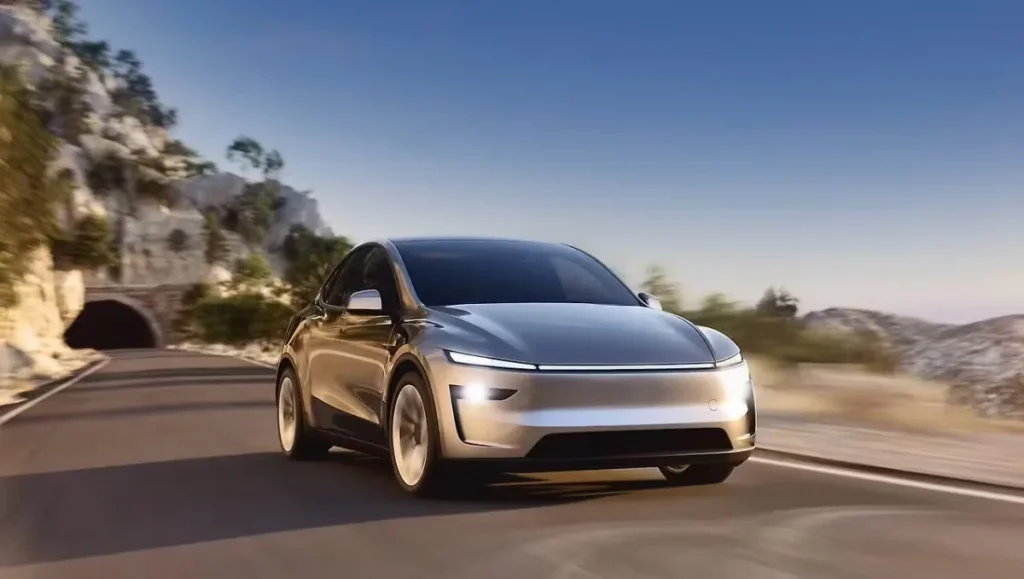
Albeit record automotive deliveries and surging energy storage revenue, Tesla profits slide despite record revenue, sending a shiver down investors’ and analysts’ spines. The operating margin of the company declined sharply to 5.8%, almost half the previous year’s 10.8%, indicating the extent of cost pressures in its operations.
Tesla Profits Slide Despite Record Revenue
Tesla posted a 37% decline in net profit for the quarter with adjusted net income of $1.8 billion, below consensus expectations of $1.9 billion. While the automaker had a record vehicle deliveries — 497,099 vehicles in the three months through September 30 — those sales gains were not sufficient to offset higher costs.
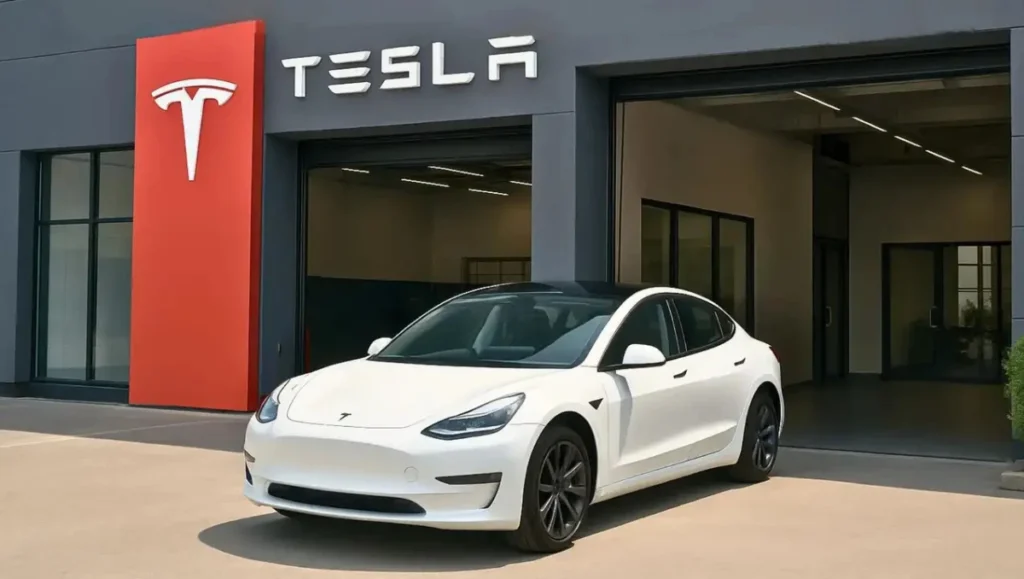
Tesla profits slide despite record revenue : revenues rose to new record levels, but the profitability of the company weakened amidst a tempest of economic and political problems.
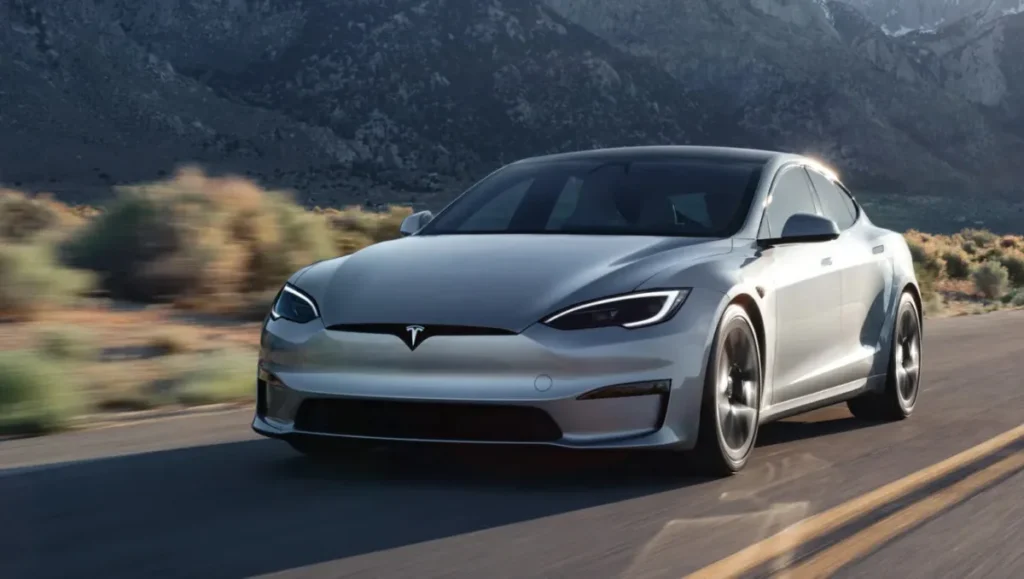
The main driver of profit shrinkage is increasing costs due to tariffs imposed by the Trump administration, along with increasing investments in artificial intelligence (AI) and robotics. Tesla Chief Financial Officer Vaibhav Taneja disclosed that tariffs have cost the company over $400 million for the quarter, divided evenly between its main EV and battery storage businesses.
Tariffs and Policy Shifts Erode Margins
One of Tesla’s largest headwinds is the trade war-initiated tariff increases on EV parts and rare earth metals. These policies have doubled the cost of key materials needed to make batteries and reduced the supply of parts through Tesla’s worldwide supply chain.
Tesla profits slide despite record revenue also supported by the manner in which such tariffs have warped cost structures. Taneja characterized them as “significant headwinds” affecting both automobile manufacturing and energy storage operations.
Tesla has fought these tariffs, saying they damage U.S. competitiveness in the EV market. Political tensions between CEO Elon Musk and President Donald Trump, however, have ensured that policy relief will not be forthcoming. The administration’s reversal of green incentives and emissions rules — which helped finance Tesla’s credit trading revenues in the past — further weighed on the profit decline.
Regulatory Credits Fall 44%
Another key reason for the slide in Tesla’s profits was the failure of its emissions credit revenue, which dropped 44% to $417 million from $739 million last year. With U.S. regulators cutting the price of not playing by the emissions rules, the formerly profitable carbon credit trade has fizzled.
Tesla made $2.8 billion in regulatory credits in 2024, though that number is dwindling quickly. Therefore, Tesla now has to depend increasingly on direct sales, AI technology, and energy offerings in order to maintain growth in revenues.
Record Sales Galvanized by Expired Tax Credits
Interesting to note, Tesla’s all-time high revenue in Q3 2025 was partially attributed to a stampede of U.S. consumers hurrying to take advantage of the $7,500 federal EV tax credit, which lapsed on September 30, 2025. This temporary surge inflated quarterly sales but left behind a demand cliff for subsequent quarters.
Tesla sold close to half a million cars, such as revised Model Y and Model 3, with new features and lower prices to stay competitive. Nonetheless, even with these record numbers, the central message does not change — Tesla profits slide despite record revenue due to the temporary nature and high cost of the tax-driven sales.
AI and Robotics Expenditure Boom
Yet another significant drag on Tesla’s profitability is the enormous investment it has made in AI and robotics. Tesla is going all out to rebrand itself not only as an automaker but also as an autonomous driving and humanoid robotics leader.
Tesla’s operating expenses soared 50% to $3.4 billion, largely due to heavy investments in Nvidia H100 GPUs, AI talent, and software development. The company disclosed that its Cortex data center in Austin, Texas, now houses 81,000 Nvidia GPUs, underscoring its ambition to lead in AI infrastructure.
Though these investments could power future growth, they’ve cut into short-term profitability — another obvious reason why Tesla profits slide despite record revenue in spite of long-term optimism.
Energy Division Shines Bright
One of the strong points in the report was Tesla’s energy generation and storage segment, whose revenue increased 44% to $3.42 billion. Tesla installed more Megapack battery systems among commercial and retail customers, making this section an important pillar for future growth.
Tesla’s services business, including the Full Self-Driving (FSD) software and Supercharger network, also climbed 25% to $3.5 billion. Yet, its adoption rate for its “FSD Supervised” system remains low, at just 12% of Tesla’s fleet.
Shareholder Tensions and $1 Trillion Pay Proposal
Adding to the theatrics, Tesla’s board is urging a $1 trillion compensation plan for Elon Musk that would give him up to 12% more stock if performance targets are reached. The plan has ignited outrage among proxy advisory companies ISS and Glass Lewis, who called it excessive and ill-designed.
Musk struck back, labeling the advisers as “corporate terrorists” and asserting that his ownership of Tesla is necessary in order to follow his vision in AI and robotics. This drama has bred uncertainty among institutional investors, contributing to further pressure on Tesla’s stock, which declined 3.5% following earnings.
Outlook: Long-Term Vision vs. Short-Term Pain
Tesla maintains its short-term margin squeeze is only part of a strategic shift to automation and future-generation products like robotaxis, Optimus humanoid robots, and energy systems. CFO Taneja explained that capital spending will surge significantly in 2026 as an indicator of continued investment in future technology.
But as competition from Chinese automakers like BYD stiffens on the international stage, the test for Tesla will be to translate its record revenues into profitable ones.
The Tesla profits slide despite record revenue story eventually shows a company in transition — forgoing near-term profits in favor of eventual supremacy in AI, robotics, and clean energy.
Conclusion
In short, Tesla profits slide despite record revenue is more than a headline — it summarizes the conflict between expansion and profitability at one of the globe’s most ambitious firms. When margins are pinched by tariffs, political changes, and AI expense, Tesla faces a fork in the road. The next few quarters will determine if Musk’s AI-fueled overhauling will revive investor trust or intensify financial pressure.
FAQs: Tesla Profits Drop Despite Record Revenue in Q3 2025
1. Why did the Tesla profits slide despite record revenue in Q3 2025?
Due to increased tariffs, increased AI expenses, and reduced regulatory credit sales.
2. How much profit did Tesla generate in Q3 2025?
$1.8 billion, down 37% year-over-year.
3. What was the total revenue of Tesla in Q3 2025?
A record $28.1 billion, up 12% from last year.
4. How did tariffs impact Tesla?
They contributed more than $400 million of additional expenses and impacted supply chains.
5. What became of Tesla’s regulatory credits?
Revenue fell 44% to $417 million.
6. How did investments in AI affect profits?
Substantial AI and robot spending increased costs by 50%, reducing margins.
7. Which Tesla segment fared the best?
Energy generation and storage, revenue up 44%.
8. Why were Tesla’s sales so strong?
Purchasers scrambled to qualify for the $7,500 EV tax credit before it expired.
9. What’s wrong with Elon Musk’s compensation scheme?
A $1 trillion plan triggered criticism for being outrageous.
10. How is Tesla’s future vision?
Maintained emphasis on AI, robotaxis, and energy expansion amid near-term stress.
—