Toyota Urban Cruiser BEV Introduced In Indonesia: What It Means
When Toyota Urban Cruiser BEV introduced in Indonesia it sent a clear signal that Toyota is getting serious about affordable electric SUVs for mass markets. The new Urban Cruiser BEV made its debut at the GJAW 2025 auto show, arriving as a fully imported EV priced at IDR 759 million (roughly ₹ 40.78 lakh).
For those watching closely, the launch of this compact battery-electric SUV is more than just a new model — it shows Toyota’s intent to see where demand lies for smaller, city-friendly EVs in Southeast Asia and beyond.
What the Specs Say: Battery, Range and Power
The version of Urban Cruiser BEV launched in Indonesia packs a 61.1-kWh battery and delivers a claimed range of up to 426.7 kilometres on a single charge.
Under the hood it uses an electric motor that produces about 172 hp and 192 Nm of torque, and comes with front-wheel drive in this configuration.
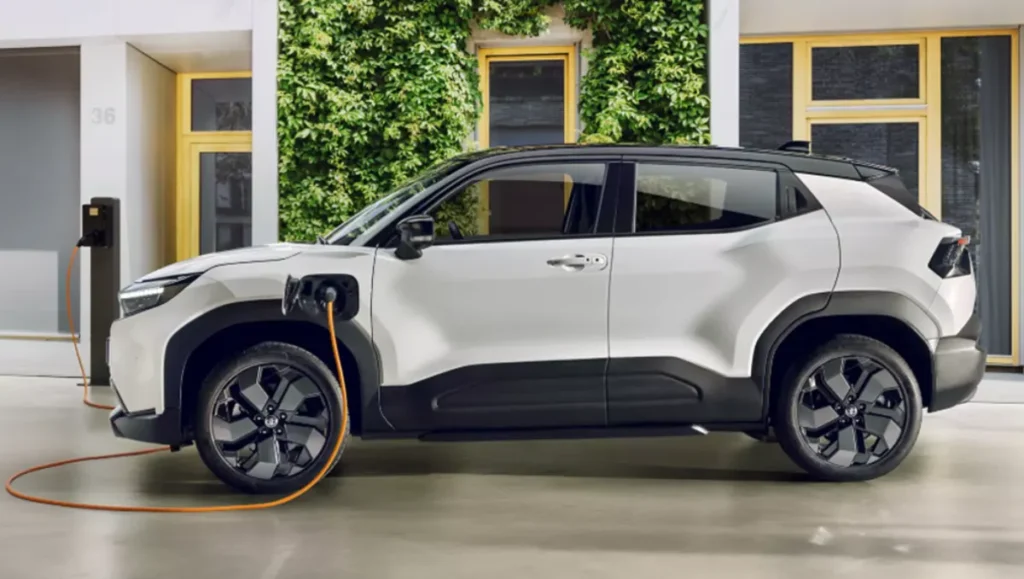
In terms of size, it’s compact and city-ready: about 4,285 mm long, 1,800 mm wide, with a wheelbase of 2,700 mm and ground clearance near 180 mm — dimensions that make it manageable for everyday urban driving.
What the Interior and Features Bring
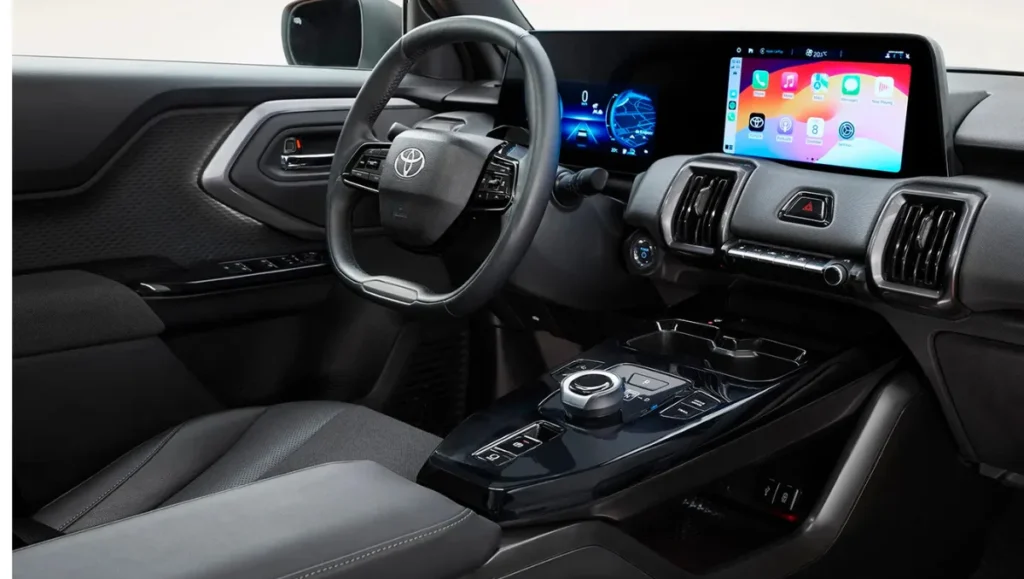
Toyota hasn’t skimped when it comes to features. The Urban Cruiser BEV comes with a nicely packaged cabin: a modern dashboard with dual-screen layout — a digital instrument cluster and a touchscreen infotainment system.
Expect comforts like automatic climate control, wireless phone charging, possibly a sunroof, and connected-car features via Toyota’s connectivity suite (in Indonesia the “T InTouch” system has been mentioned).
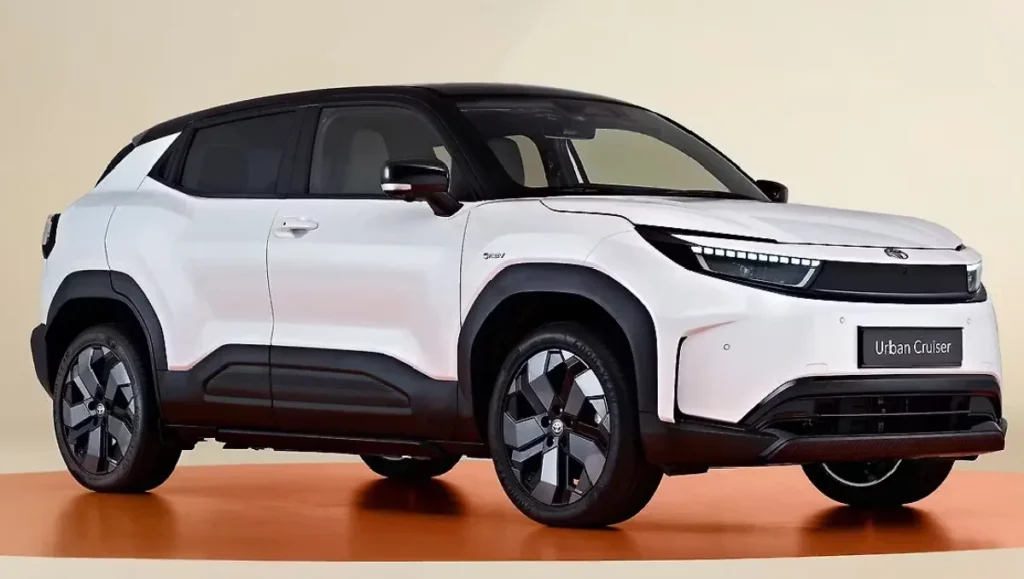
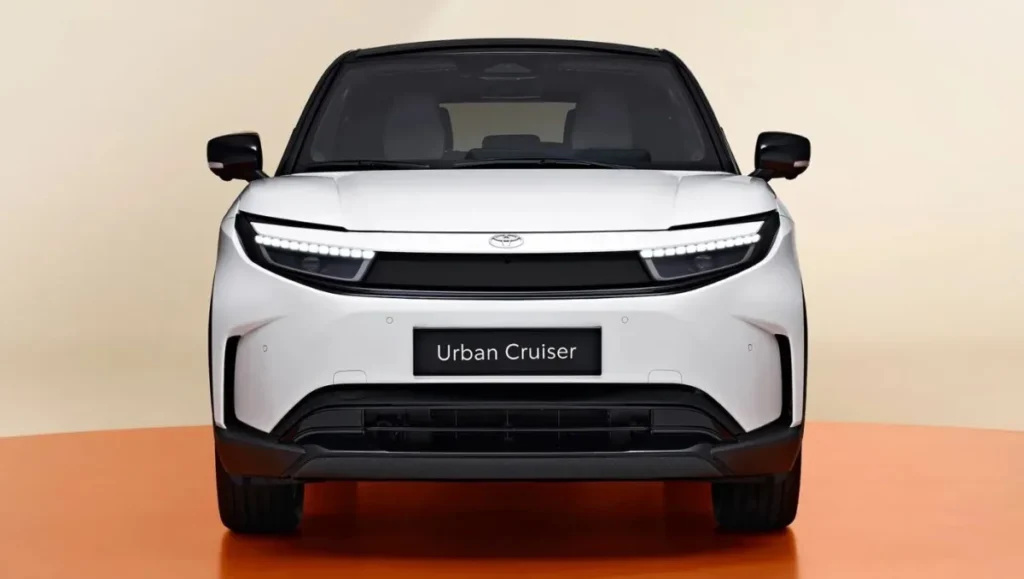
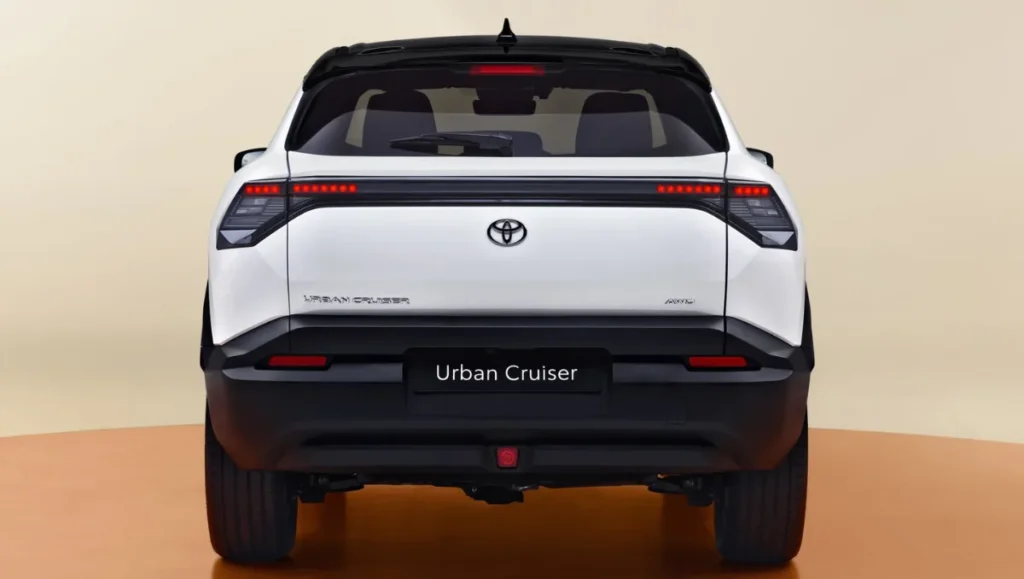
From a design standpoint it gets EV-style touches: a closed-off front grille replacing a traditional air-intake grille, sleek LED lights, aerodynamically styled wheels, and body cladding that gives it a slightly rugged-meets-modern EV vibe.
It’s positioned as a 5-seater compact SUV — a practical everyday EV that still carries the vibe of a modern crossover.
Why This Launch Matters — Especially for Asia and India
By launching the Urban Cruiser BEV in Indonesia first, Toyota seems to be testing waters where EV adoption is growing but affordability remains important. As a fully imported model there, it shows Toyota is ready to dip a toe without massive local investment yet.
But for markets like India — where compact SUVs and mid-size crossovers are extremely popular — this launch carries extra weight. The same platform underpins the version expected to come to India, built at Suzuki’s Gujarat plant.
Experts and enthusiasts expect the Toyota Urban Cruiser EV (as it will likely be called in India) to offer a mix of practicality, compactness and EV benefits — which may position it as Toyota’s first real push into everyday electric cars in the Indian market.
Where It Stands Compared to Other EVs
As a compact 5-seater EV SUV with decent range, Toyota’s newest electric offering enters a growing segment: buyers who want the feel of an SUV but with EV efficiency and without premium-SUV price tags.
Given the claimed 426 km range on a full charge, the Urban Cruiser BEV becomes a serious contender for those thinking of city commuting + occasional long drives. Its battery size, mid-size dimensions, and feature list make it a practical choice against alternatives that may be either too small or too expensive.
For markets like Indonesia or India, it could strike a sweet spot: smaller than large premium EVs but more capable than basic electric hatchbacks.
What’s Next: Timing, Market Response and Potential India Launch
While the Urban Cruiser BEV is already on sale (imported) in Indonesia, it’s not yet official for India — but that’s expected to change soon. Most sources suggest a launch in India in early to mid 2026.
Given Toyota’s global EV roadmap and the kind of demand for compact SUVs in India, the chance seems strong that this BEV could become India’s first affordable electric SUV from Toyota.
Buyers there will be watching factors like ex-showroom price, charging infrastructure, real-world range and ownership costs — but the Indonesia debut gives a real, tangible reference for what’s coming.
Limitations — What to Watch Out For
It is worth noting that, as of the Indonesia launch, Urban Cruiser BEV is being sold as a fully imported model (CBU), which tends to push price higher compared to locally manufactured cars.
Also, while Toyota claims 426.7 km range on a full charge, actual real-world performance can vary depending on driving conditions, climate, charging behaviour and load. That’s typical for all EVs — so potential buyers should temper expectations.
Finally, for markets outside Indonesia (like India), price, local incentives, and infrastructure readiness will play a significant role in long-term acceptance.
What Toyota Urban Cruiser BEV Introduced in Indonesia Says about Toyota’s Strategy
With the Urban Cruiser BEV launch, Toyota seems to be doubling down on a strategy that offers scalable, compact, affordable electric mobility rather than only expensive flagship EVs. This could help expand EV adoption among middle-class buyers who want a modern SUV feel but also good electric range and lower running costs.
By leveraging existing manufacturing (through Suzuki’s plant) and using a proven platform, Toyota minimizes risks and maximizes flexibility to respond to demand.
For markets like Southeast Asia and South Asia, this means Toyota is preparing to face growing competition in EV space not just from niche premium makers but also from mass-market players.
Final Thoughts
The moment when Toyota Urban Cruiser BEV introduced in Indonesia is more than a product launch. It marks a shift — a sign that electric SUVs may soon become accessible, practical and mainstream in markets where affordability matters.
If Toyota manages to bring this BEV to India with competitive pricing, good features, and reliable support, it might well change how Indian car buyers think about electric cars. For now, this compact SUV stands as a hopeful symbol of EV becoming more real, not just for tech-savvy buyers, but for everyday drivers.
Faqs – Toyota Urban Cruiser BEV Introduced In Indonesia
FAQ 1: What is this Toyota Urban Cruiser BEV thing that launched in Indonesia?
It’s basically Toyota’s electric version of the Urban Cruiser. They showed it off and started selling it in Indonesia first. Kind of like a test market move before taking it to more countries.
FAQ 2: Can people actually buy this car right now?
Yeah, but only in Indonesia for now. It’s being sold there as an imported car. In places like India, it’s still not officially on sale.
FAQ 3: How far does it really go on one charge?
Toyota says around 426 km, but to be honest, real world range is usually a bit different. Traffic, weather, driving style, all of that changes the number.
FAQ 4: Is this car only good for city use?
It’s more city friendly for sure, but it’s not stuck only in cities. You could take it on highways too. It just feels more made for everyday life rather than hardcore long trips.
FAQ 5: Is it coming to India anytime soon?
Nothing official yet, but most people think it will happen. Since Suzuki and Toyota work together and the platform is linked to India, chances are pretty good.
FAQ 6: Is this an affordable electric SUV?
Right now, in Indonesia, it’s not exactly cheap because it’s imported. If they start making or assembling it locally in other countries, it could become more affordable.
FAQ 7: What makes this different from other electric cars?
It kind of sits in the middle. Not super tiny like a basic EV, and not crazy expensive like luxury electric SUVs. That middle ground is what makes it interesting.
FAQ 8: Does it feel modern inside?
From what’s shown, yeah. It has digital screens, touchscreen system, wireless charging and that techy feel. It’s more like a gadget on wheels than an old-school car.
FAQ 9: Are there any downsides people should know?
The usual EV stuff. Real range depends on real driving. Charging still depends a lot on infrastructure. Also price will matter a lot depending on the country.
FAQ 10: In simple terms, why does this launch matter?
It shows Toyota is finally getting serious about electric cars for normal people, not just future concepts. It feels like they’re slowly moving towards making EVs more mainstream.
—