Toyota Urban Cruiser EV India Launch on January 19, Key Details Ahead of Debut
Toyota Urban Cruiser EV India Launch on January 19. While new car launches happen every week in India, the Toyota Urban Cruiser EV India Launch on January 19 carries a different kind of weight. We aren’t just looking at a new battery-powered SUV; we’re seeing a massive shift in strategy from a company that has, until now, been famously hesitant to jump into the “pure electric” deep end.

For years, Toyota’s stance in India was clear: hybrids were the bridge. They watched from the sidelines as Tata and Mahindra sprinted ahead. But Toyota Urban Cruiser EV India Launch on January 19 signals that the learning phase is over. Toyota isn’t just reacting to a trend anymore—they’re moving into the compact SUV space with a calculated, localized product designed for the long haul.
Beyond the Hybrid “Safety Net”
Toyota’s roadmap has been a masterclass in caution. Instead of chasing early adopters with niche, high-priced EVs, they stuck to their guns with the Hyryder and Innova Hycross. Selling vehicles wasn’t their only goal; it was a deep dive into user data. They spent years observing how Indians deal with range panic, how weird voltage spikes ruin charging, and exactly where the country’s infrastructure just isn’t up to scratch.
The Urban Cruiser EV is the result of that patience. It represents a pivot toward market readiness. By entering the compact SUV segment—the most competitive slice of the Indian car market—Toyota is betting that the average buyer is finally ready to trust a “T” badge with a charging port.

What Actually Happens on January 19?
This date is strategically placed at the start of the year to build a narrative long before the festive season rush. Unlike a quick “hype” reveal, this event is expected to go deep into the weeds: battery chemistry, localized supply chains, and the “Total Cost of Ownership” (TCO) that Toyota uses to win over practical buyers.
While the full price list might stay under wraps until closer to the actual showroom arrival, the January event will set the benchmark. It’s where Toyota has to prove that their EV isn’t just a rebadged experiment, but a reliable daily driver that can survive a decade of Indian road conditions.

Design: Tough, Not Trendy
Toyota Urban Cruiser EV India Launch on January 19 still we haven’t seen the final production sheet metal without camouflage yet, but the direction is obvious. Toyota isn’t going for a “space-age” look that will feel dated in three years. Expect a tidy, updated version of the first Urban SUV Concept’s rugged appearance.
Its front ditches the normal radiator grille to adopt a flush, aerodynamic surface. But it surely won’t look like a toy. It will likely keep the upright, “tall-boy” stance that Indian buyers love for visibility and road presence. It’s about “approachable tech”—something that looks like an SUV first and an EV second.
The Cabin: Logic over Flash
If you’ve ever sat in a Toyota, you know they don’t do “screens for the sake of screens.” The interior of the Urban Cruiser EV will likely be built around ergonomics.
- The Interface: A large central touchscreen is a given, but expect physical buttons for the AC and volume—the kind of things you actually need to use while driving on a bumpy road.
- The “Skateboard” Advantage: Because this is built on a dedicated EV platform (the “Heartect-e”), the floor will be flat. This means the kind of rear-seat legroom usually reserved for cars two sizes larger.
Real-World Performance over Paper Specs
Toyota rarely wins the “specs war.” They won’t claim the fastest 0–100 km/h time or the most radical tech features. Instead, they focus on “real-world” numbers.
- Range: While industry whispers suggest a 60 kWh battery and a 500+ km range, Toyota’s own communication will likely focus on “usable” range—what you get when the AC is on full blast in 45°C Delhi heat.
- Charging: Expect heavy emphasis on battery thermal management. Toyota’s goal is to ensure the battery lasts as long as the car does, avoiding the degradation issues that plague some earlier-gen EVs.
The Competitive Battlefield
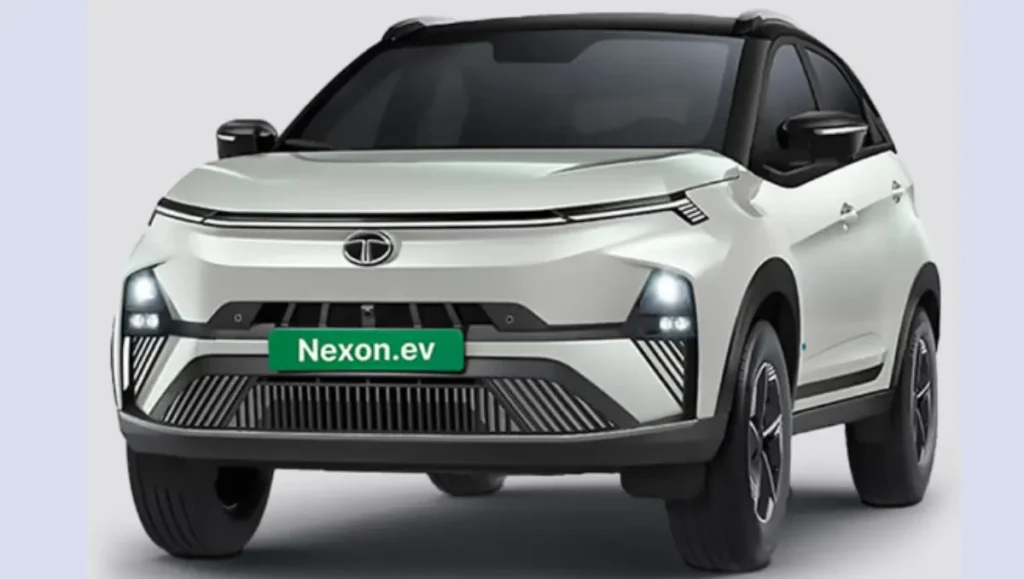
The compact EV SUV space is no longer an empty field. On one side, you have the Tata Curvv.ev and Nexon EV holding the fort. On the other, the upcoming Hyundai Creta EV is looming.
Toyota Urban Cruiser EV India Launch on January 19. Toyota’s edge isn’t going to be a lower price tag—they almost never underprice their rivals. Their edge is trust. There is a massive segment of Indian buyers who have been “EV-curious” but were waiting for a brand they associated with bulletproof reliability to enter the fray. January 19 is for those people.
Localization: The Secret Sauce
You can’t win in India with imports. The success of Toyota Urban Cruiser EV India Launch on January 19 hinges on how much of this car is built in Karnataka or Gujarat. From the battery assembly to the motor components, high localization is the only way Toyota can offer a competitive price while maintaining their famous service margins. Expect the January event to highlight “Make in India” initiatives that ensure parts are affordable and easy to find five years down the line.
Final Thoughts: The New Normal
By the time the dust settles after Toyota Urban Cruiser EV India Launch on January 19, the conversation in India will have shifted. It’s no longer about whether EVs are the future; it’s about which one fits your driveway. The Urban Cruiser EV isn’t just a new model; it’s Toyota’s way of saying they are ready to put their reputation for reliability on the line in the electric age.
There is a huge group of buyers who have been sitting on the fence, wanting an EV but worried about battery life or service support five years down the line. For them, Toyota entering the fray is the green light they’ve been waiting for. They aren’t just buying a motor and a battery; they’re buying a decade of engineering confidence.
FAQs – Toyota Urban Cruiser EV India Launch On January 19
1: So, basically a Maruti with badges?
In short, yes. This SUV actually uses the exact same platform as Maruti’s e Vitara. But Toyota has swapped the “rugged” Maruti look for something a bit more polished and “urban.”
2: What’s the real-world range?
Expect two options. The 49 kWh battery should do roughly 400 km on paper, while the 61 kWh pack targets 540 km. In actual Indian traffic? Think 300 km and 420 km respectively.
3: Will it be expensive?
Likely ₹21 lakh to ₹26 lakh. Toyota usually positions themselves a bit higher than Maruti to account for their service network and brand “premium.”
4: How fast does it charge?
At a mall DC fast charger, you’ll go from 10% to 80% in about 45–60 minutes. At home with a 7.2 kW box, it’s an overnight job—roughly 9 hours.
5: Does it get AWD?
The platform supports it, but Toyota will probably stick to Front-Wheel Drive for the India launch to keep costs from spiraling.
6: Is the interior “premium”?
It’s “Toyota premium.” That means it’s built to last 15 years, not to look like a nightclub. Expect great build quality and very comfortable seats.
7: When can I actually buy one?
Expect the booking lines to open immediately following the January 19 reveal, while deliveries probably start months later.
8: What about safety?
They are aiming for 5 stars. 6 airbags, ADAS, and disc brakes all around are pretty much guaranteed on the top trims.
9: Why choose this over a Tata Nexon EV?
Trust. Tata has the head start, but many buyers will prefer Toyota’s legendary service and the high resale value the brand usually carries.
10: Will it handle bad roads?
The “tall-boy” stance and high ground clearance are specifically there so you don’t scrape the battery on every speed breaker.
—