TVS Orbiter Review: Can This Be Your Daily use Electric Scooter?
The Indian electric scooter segment has seen huge growth in recent times, with increasing number of brands launching EVs that are practical, cost-effective, and suitable for daily commutes. One of the recent entrants in the segment is the TVS Orbiter, a scooter that seeks to offer convenience, comfort and ease of use while maintaining affordability. Held below the iQube, the Orbiter is the cheapest electric scooter to be offered by the company, but is it good enough to do away with your petrol scooter? Let’s see.
Design and Styling
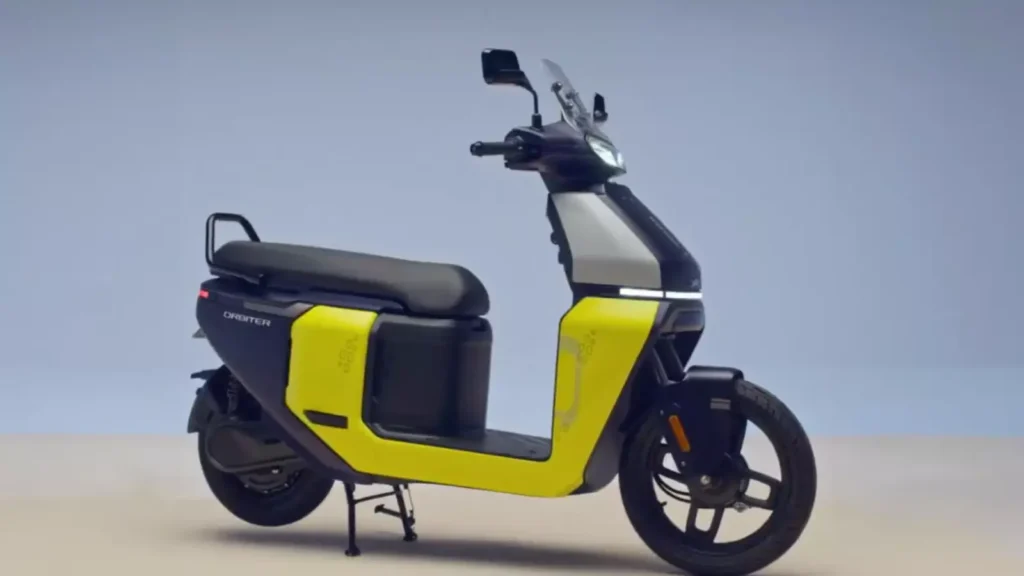
On the surface, the TVS Orbiter does not attempt too much to be different with any futuristic touches. Instead, it sports a neutral and utilitarian design approach. The sharp front apron incorporating DRLs provides just the perfect amount of modernity, while clean body panels provide a family-friendly appearance. The Orbiter comes in six different shades ranging from subdued hues to bright colours, so customers can pick something that suits their personality.
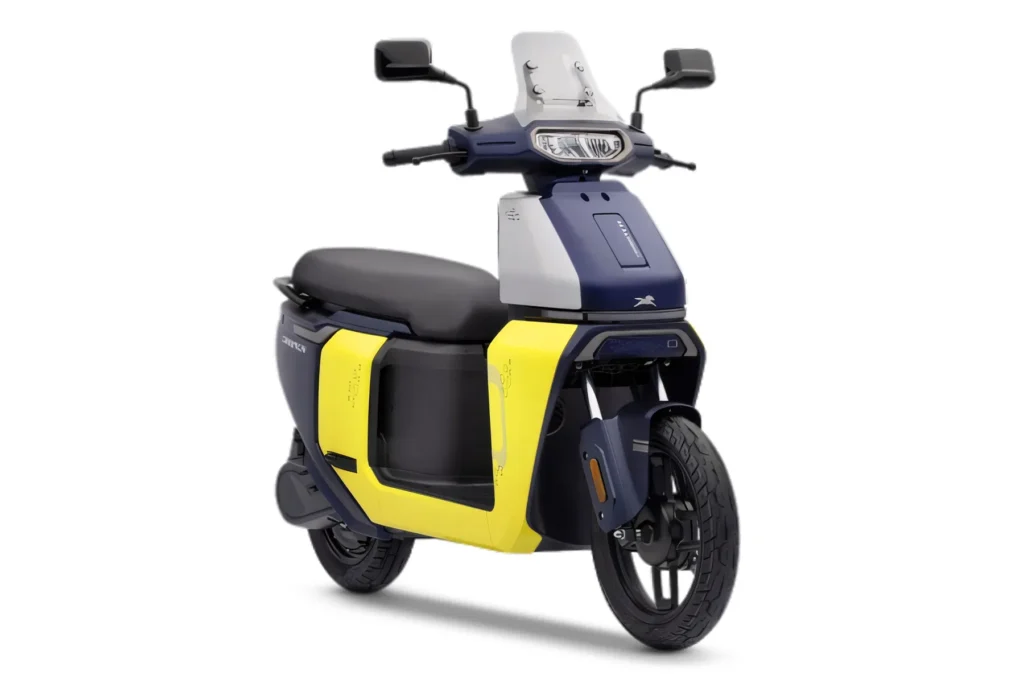
This design strategy is intelligent. Instead of dividing customers, TVS has designed a scooter that appeals to both young riders and mature commuters. It’s a reassuring familiarity that still retains its freshness sufficiently to appear contemporary on the road.
Comfort and Practicality
One of the Orbiter’s biggest selling points is its generous seating capacity. The 825mm-long and wide seat is more than spacious enough to suit both pillion and rider. The larger rider will be none the worse for it, and the traditional pillion grab handle also acts as a small rear backrest, easing the ride for older passengers.
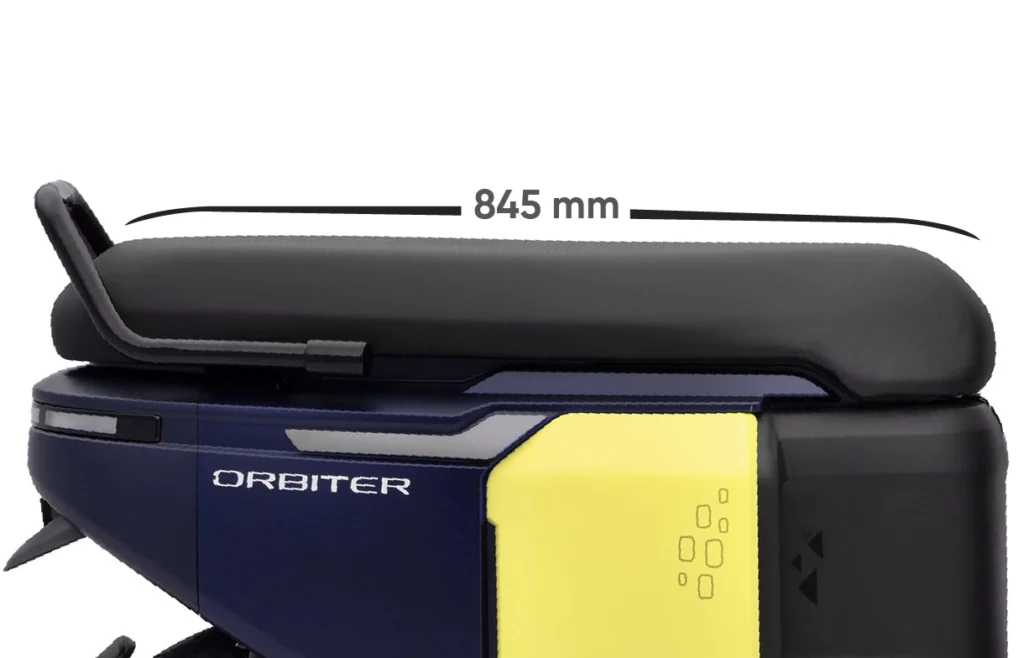
The scooter also performs well on accessibility. With a seat height of 763mm and kerb weight of only 112kg, it is both lightweight and easy to handle for the majority of riders, including novices and short riders. Nevertheless, the somewhat wide seat might necessitate shorter riders to stretch their legs further apart in order to flat-foot.
Practicality is another area where the Orbiter shines. The underseat storage is 34 litres, enough to fit a full-face helmet or two half-face helmets. This is larger than what many competitors offer and makes daily tasks like grocery runs or carrying office bags simple. Additionally, the scooter gets a front cubby hole for essentials like your phone.
Features and Technology
TVS has kept the Orbiter feature-rich but not over-gimmicky. It features a clear LCD instrument cluster that shows speed, battery level, range estimate and other information. It also has Bluetooth connectivity, turn-by-turn directions and call/message notifications. The display is clear and readable even in extremely harsh sunlight.
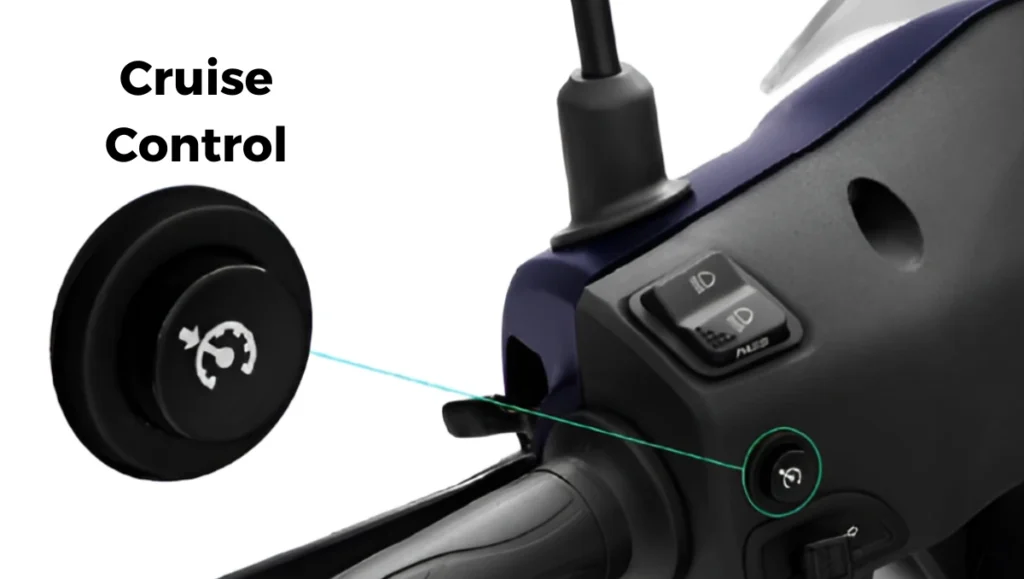
Riders also have access to several riding modes. The scooter prioritizes efficiency in Eco mode with a capped top speed of 45 kmph, whereas City mode provides slightly more enthusiastic performance at up to 68 kmph. The inclusion of features such as hill-hold assist and cruise control provides that extra layer of convenience, particularly when riding for longer distances or in stop-and-go traffic situations.
Performance and Ride Quality
The Orbiter is driven by a 2.2 kW motor with a top speed that is claimed to be 68 kmph. It is obviously geared for city use and not highway cruising. The power delivery is smooth and linear, and hence it’s suited for new riders and hassle-free to handle in traffic. Enthusiasts seeking quick acceleration, though, will be disappointed.
At the test track, the Orbiter’s agility was impressive. It is light and responsive, effortlessly cutting through curves and narrow lanes. The chassis tune is neutral and builds confidence, particularly in city life when manoeuvrability is of greater concern than straight-line speed.
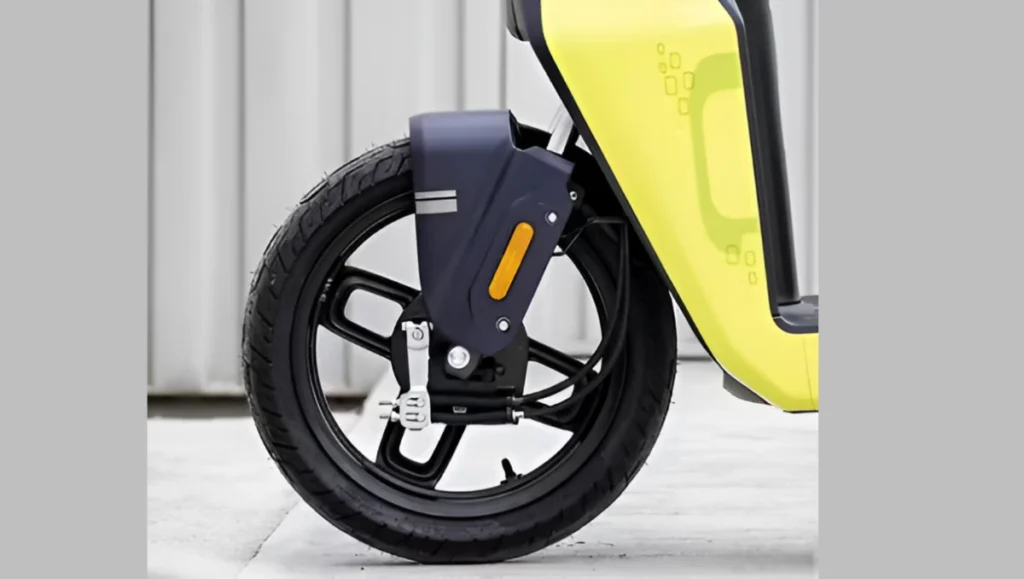
Where the Orbiter falls short is in its braking configuration. The scooter includes drum brakes at both the front and rear, which are not suitable for abrupt braking. A disc brake option would have greatly enhanced braking power. Comparatively, some of its competitors have disc brakes and superiorly calibrated regenerative braking, making them more competitive.
Battery and Range
Range anxiety was always the biggest worry for buyers of EVs, and TVS has countered this with assurance. The Orbiter boasts an IDC range of 158 km, which should practically be around 100 to 110 km in urban riding conditions. For ordinary urban commuters, this is more than sufficient for day-to-day trips without needing too much frequent recharging.
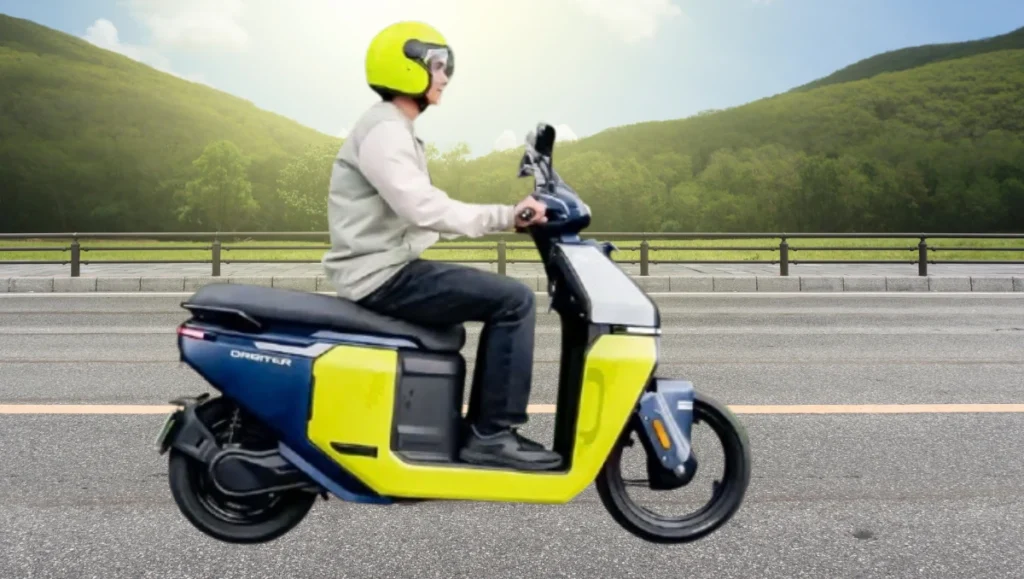
Charging is easy too. Orbiter has both standard and fast charging capabilities, with TVS aggressively building its charging stations in cities. Plugging it in overnight will be enough for a couple of days’ normal usage for most users.
Strengths of the Orbiter
- Balanced yet contemporary looks that find common ground across age groups
- Light and easy to ride, perfect for beginners
- Roomy seating and ample underseat space
- Practical elements such as Bluetooth connectivity, hill-hold assist and cruise control
- Real-world range of approximately 100 km, so a reliable commuter
Things That Could Improve
- Dull performance compared to some rivals
- Plain LCD console rather than a more upmarket TFT
- Weak braking performance thanks to drum brakes front and rear
Verdict: Is the TVS Orbiter Worth Buying?
TVS Orbiter is not meant to excite enthusiasts or take on top-performing scooters. It is actually crafted as a functional, comfortable and easy-to-use electric scooter for daily commutes. It ticks the right boxes for family requirements with its large seat, generous storage and handling suitable for learners.
There are, however, compromises. The poor acceleration and subpar braking configuration prevent it from being an outright versatile all-rounder. Those who need a pinch more of performance or want improved braking confidence might find a step-up to the TVS iQube or other high-end EVs preferable.
That being said, for its price of nearly a lakh ex-showroom, the Orbiter offers great value. For young riders purchasing a scooter as their first scooter, or families seeking an easy-to-use, low-maintenance substitute for petrol scooters, the Orbiter is a strong contender.
As the EV market improves, we anticipate TVS adding changes such as disc brakes or a marginally increased motor in later models. In the meantime, the Orbiter is an intelligent, affordable and reliable commuter scooter that combines contemporary convenience with day-to-day practicality.
FAQs
- How much does the TVS Orbiter electric scooter cost in India?
The TVS Orbiter is expected to cost approximately ₹1 lakh (ex-showroom), which will be the most budget-friendly electric scooter by TVS, below the iQube.
- What is the TVS Orbiter single-charge range?
The TVS Orbiter has an IDC range of 158 km, which in real-world conditions, equates to approximately 100 to 110 km in urban conditions.
- How long to charge the battery of the TVS Orbiter?
The Orbiter has both standard and fast charging capabilities. It can be charged overnight using a standard charger, but with fast charging, it minimizes charging time to be more suitable for daily use.
- What is the maximum speed of the TVS Orbiter?
The scooter is equipped with a 2.2 kW motor and a top speed of 68 kmph, but it is best suited for city riding and not for highway use.
- Is there storage space in the TVS Orbiter?
Yes, the TVS Orbiter has a 34-litre under-seat storage space that takes a full-face helmet or two half-face helmets, as well as a front cubby hole for keys and small things.
- What are the features of the TVS Orbiter?
The scooter boasts a digital LCD display, Bluetooth connectivity, turn-by-turn navigation, call and message notification, riding modes (Eco and City), hill-hold assist, and even cruise control.
- Is the TVS Orbiter appropriate for short riders or newbies?
Yes, with its low seat height of 763 mm and kerb weight of 112 kg, the Orbiter is a lightweight bike that is easy to maneuver, thus making it perfect for newbies and shorter riders.
- What are the disadvantages of the TVS Orbiter?
The principal disadvantages are its inferior performance compared to competitors, a simple LCD console rather than a TFT, and drum brakes rather than discs, which place a restriction on braking capability.
- How does TVS Orbiter compare to TVS iQube?
While the Orbiter is cheaper and more convenient for daily use, the iQube benefits from superior performance, better braking, and more high-end features, making it a step-up product for customers looking for more power.
- Is the TVS Orbiter worth buying?
Yes, if you’re looking for an affordable, practical, and beginner-friendly electric scooter for city commutes, the Orbiter is a strong choice. However, if performance and braking are top priorities, higher-end models like the iQube may be better.
—