TVS Tops E-2W Sales in November as the EV Scooter Market Shifts Again
From the first line: TVS Tops E-2W Sales in November — and that’s not just a headline, it’s a statement of momentum. As the EV scooter market in India continues to shift, the resurgence of TVS Motor Company (TVS) in November 2025 offers a glimpse into how competitive, unsettled and fast-evolving the electric two-wheeler (E-2W) space has become.
TVS Tops E-2W Sales in November — Reclaiming the Crown
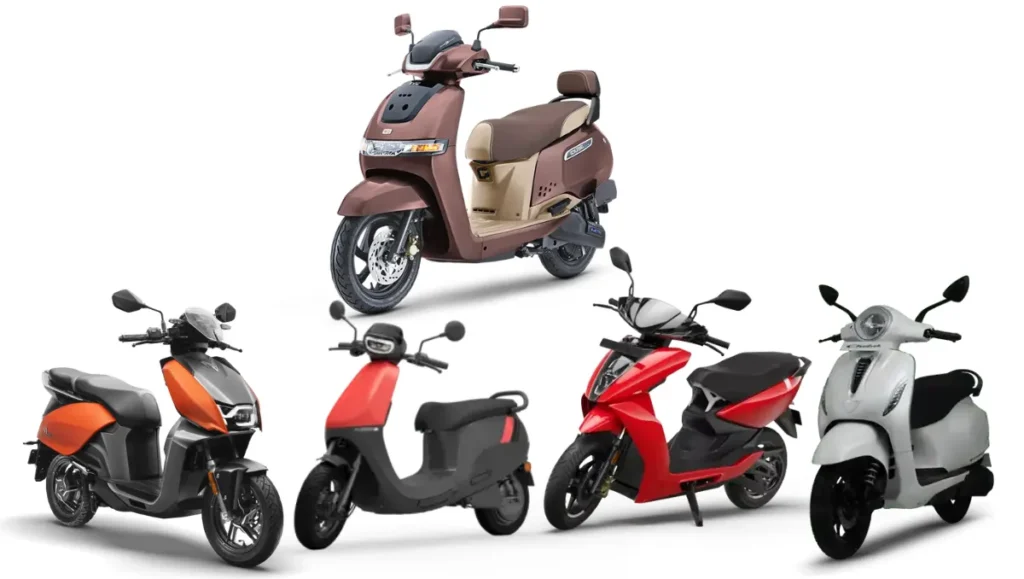
According to registration data published recently, TVS sold 30,309 electric two-wheelers in November 2025, putting it back on top of the monthly sales chart. That number outpaced its closest rival, Bajaj Auto (with 25,526 Chetaks), giving TVS a clear lead of 4,783 units.
This marks the seventh time in 2025 that TVS has secured the top spot, after a short break in October when it lost out to Bajaj. For November, despite a broader slowdown in overall demand, TVS regained momentum — showing strong sales growth even as several competitors faltered.
Context: A slower Month, but Still Meaningful
While November saw a retreat from October’s festival-driven highs, the overall electric two-wheeler registrations in the country remained significant. Around 1.16 lakh e-2W units were registered nationwide last month — down from the 1.44 lakh recorded in October.
In that context, TVS’s ability to lead reflects not just its own strength, but a degree of resilience in a market where buyers appear to be getting selective again.
What Drove TVS’s November Performance — and What’s Working
Why did TVS outpace rivals this month? A few likely factors stand out:
- Consistent product availability and inventory management. After supply tightness led to a dip in previous months, TVS seems to have steadied output, enabling it to take advantage of renewed demand.
- Strong overall brand and varied portfolio. With its mix of ICE- and EV-two wheelers, TVS has broad reach across urban and semi-urban buyers; EV models like the iQube and others seem to be the volume drivers.
- Competitor volatility. As some brands saw steep declines — for example, Ola Electric fell dramatically in November — TVS’s steadiness may have won over buyers looking for reliability.
Who Lost Ground — and What This Reshuffle Says About the EV Market
The biggest faller in November was Ola Electric: registrations reportedly fell to around 8,400 units — roughly half of what it sold in October. That plunge dropped it below not only TVS and Bajaj but also behind newer or smaller players.
Meanwhile, other competitors like Ather Energy and Hero MotoCorp’s EV arm Vida have held relative ground, but none matched TVS’s numbers.
This shake-up suggests that in electric scooters — much like smartphones or any high-velocity consumer category — trust and availability matter a lot. Brands that can’t deliver consistently run the risk of losing share fast.
What This Means for Buyers and The Larger EV Two-Wheeler Ecosystem
For someone considering an electric scooter right now, TVS’s lead is reassuring: it points to a brand that delivers, supports, and maintains scale. That is important because EV ownership isn’t just about the upfront cost — it’s also about after-sales service, battery support, spares, and reliability over time.
For the broader industry, this turnover confirms something observers have been saying for a while: the electric two-wheeler market in India remains fluid, competitive, and far from settled. Market leadership can shift quickly, especially with shifts in supply, pricing, policy or consumer confidence.
In the long run, this dynamic might benefit buyers most — because it keeps players on their toes. Better products, improved service networks, realistic pricing might become prerequisites rather than luxuries.
What to Watch Next
If I were you and keep an eye on EV scooters, I’d watch out for a few developments over the next few months:
- Whether TVS can keep this top-spot streak going — consistency matters more than one-off wins.
- How competitor brands respond: product updates, improved supply lines, promotional offers — any of these could shift demand again.
- Union and state-level EV policies: subsidies, infrastructure push (charging stations), incentives for mid- and small-city buyers could influence uptake.
- Customer feedback and real-world performance: especially how well EVs handle long-term ownership, battery life, and maintenance— as this will shape brand perceptions and resale values.
Final Thoughts
TVS Tops E-2W Sales in November is more than a headline — it’s an indicator of changing momentum in India’s electric two-wheeler space. For now, TVS looks like the most reliable bet among major players.
But the market is far from static. With shifting consumer behaviour, fluctuating supply and growing competition, the next few months could bring more surprises.
If you care about EVs — or are considering buying one — this is a good time to watch closely: volume wins can mean better deals, stable support, and smarter buying choices for riders.
FAQs – TVS Tops E-2W Sales in November
1: Why did TVS top the E-2W sales chart in November?
TVS had steady product availability and stable demand for the iQube lineup. While other brands struggled with supply or market dip, TVS maintained momentum and pulled ahead.
2: How many electric two-wheelers did TVS sell in November?
TVS sold around 30,309 electric scooters in November, which was enough to take the number one spot for the month.
3: Which brand came second after TVS?
Bajaj Auto took the second position with more than 25,000 Chetak units registered in the same month.
4: Why did Ola Electric fall in the rankings?
Ola’s registrations dropped sharply in November, falling to nearly half of what it sold in October. Lower numbers pushed it down the charts.
5: Does this mean the electric scooter market is slowing down?
The market did soften a little compared to the festival month of October, but overall numbers were still strong. Buyers just seemed more selective.
6: What helped TVS regain the top spot after losing it in October?
Better supply, consistent pricing, and a strong brand image worked in favour of TVS. When the market cooled, the brand’s reliability stood out.
7: Are Ather and Hero Vida still performing well?
They held their ground, but neither could match TVS’s volume in November. Vida showed some growth, while Ather stayed relatively steady.
8: Does topping the sales chart mean TVS has the best scooter?
Not necessarily the “best,” but it does show that buyers trust the brand and feel confident about its EV support network and long-term service.
9: What should potential EV buyers keep an eye on after these results?
Watch for changes in pricing, new features from competitors, and upcoming EV policies. These can quickly influence buying decisions.
10: Will TVS remain number one in the next few months?
That depends on demand and how rivals respond. The EV market shifts fast, so leadership could change again, but TVS currently has strong momentum.
—