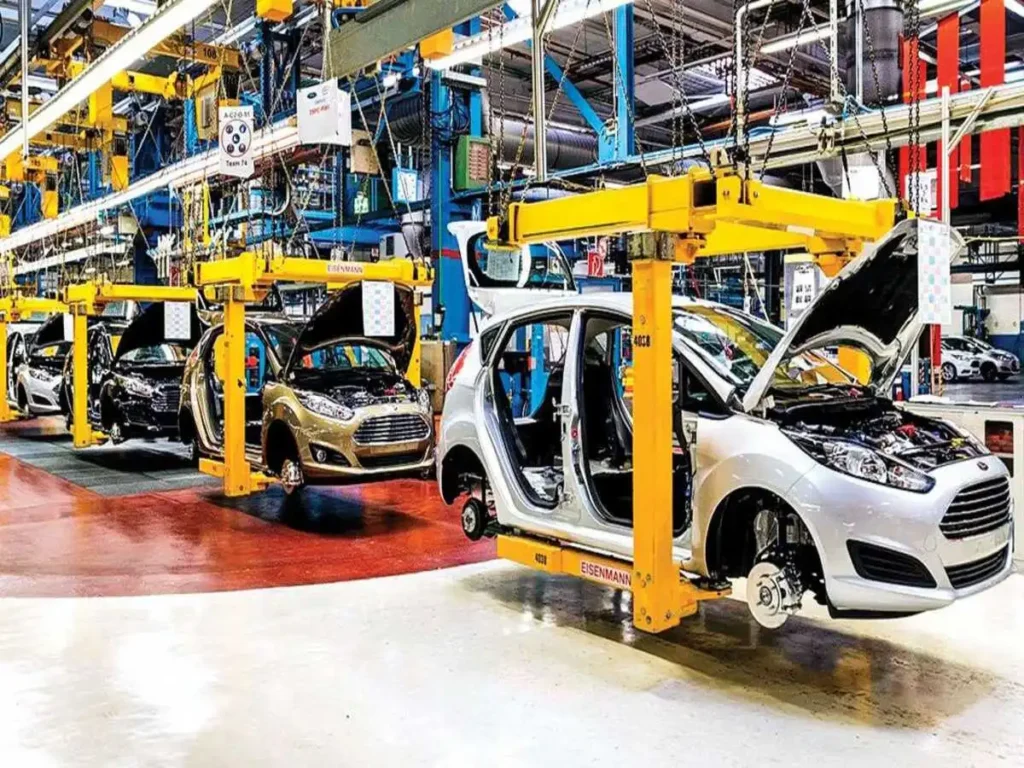
UK Car production Dips 27% in September 2025 Following Jaguar Land Rover Cyberattack
UK car production received its worst hit ever in September 2025 when a cyberattack on Jaguar Land Rover (JLR) led the country’s biggest automaker to suspend production for over five weeks. UK car production fell 27% from the corresponding month last year to the lowest September output since 1952, the Society of Motor Manufacturers and Traders (SMMT) reported. The crisis reveals intense vulnerabilities in the UK automotive sector and reveals its reliance on a handful of major players like JLR and Stellantis.

Cyberattack Brings Production to a Standstill
The core of the UK car production breakdown is the cyberattack that sabotaged Jaguar Land Rover’s IT systems in early September. The firm, which directly employs tens of thousands of individuals and indirectly supports thousands more with its supply chain, could not make a single car for more than a month. Its Solihull, Wolverhampton, and Halewood factories all ground to a halt.
JLR did verify that its computer systems were down as a precautionary step to limit the breach. That instant shutdown had rippling consequences in the entire auto supply chain. There were hundreds of suppliers, including small component makers and shipping companies, who suffered financially as orders got delayed or canceled.
Industry experts project that the cyber attack will have cost the UK economy close to £1.9 billion, making it the most costly cyberattack in the history of British industry. The magnitude of the disruption illustrates just how critical JLR is to total UK car production.
The Worst September Since 1952
Statistics from the SMMT showed that just over 51,000 cars were made during September 2025 — compared with an average of 70,000 during the same period last year. Production of commercial vehicles also fell greatly, declining by almost 40% following the shutdown of Stellantis’ Luton van factory earlier this year. When passenger cars and vans are included collectively, overall vehicle output fell by over 36%.
This collapse has pushed UK car production back to levels last experienced in the early 1950s when the sector was recovering from post-war shortages. Even during the COVID-19 pandemic, Production never declined this dramatically in one month.
Industry Under Pressure
The cyberattack merely exacerbated issues which had long been brewing under the surface. UK car production has been under pressure for many years, facing soft domestic demand, sluggish EV uptake, and increasing challenges from China’s booming electric vehicle sector.
The transition of the UK toward electric mobility has lagged behind forecasts. Companies have been compelled to juggle investments in EV technology alongside retaining current combustion-engine models. Increased energy prices, inflation, and high interest rates added to the pressures on both companies and consumers.
Mike Hawes, SMMT chief executive, said the recovery of JLR was underway but the industry itself continues to be under extreme pressure. He underscored that the UK’s production competitiveness would otherwise continue to decline without specific government assistance.
Supply Chain Chaos
The shutdown at JLR had a ripple effect throughout the whole supply chain, impacting more than 5,000 companies, the Cyber Monitoring Centre said. The Midlands-based suppliers of parts to transport firms and component makers all were hit by the shock.
Most suppliers indicated temporary layoffs and suspended production while they awaited the resumption of JLR operations. The insecurity created severe cash flow challenges, with some companies needing emergency funding to remain solvent.
The UK government intervened in order to underwrite a €1.5 billion loan to help distressed suppliers and stabilize the wider automotive supply chain.
Slow and Cautious Recovery
JLR resumed slowly expanding operations in early October 2025. Production has resumed in stages, with the firm focusing on its most sought-after models, such as the Range Rover and Defender. Full recovery, however, will take many months, with experts indicating that UK car production might not get back to previous levels until January 2026.
While the phased recovery has gone better than expected, thanks to JLR’s coordination with major suppliers, the long-term effects of the disruption will linger. Many in the industry believe that production volumes for the entire year will end at their lowest point in more than seven decades.
Economic Impact and Future Risks
The cyberattack revealed the vulnerability of digital infrastructure in UK car production. With cars becoming increasingly internet-connected and production networks more automated, cybersecurity has become a major risk. Experts caution that if large-scale investment in cyber resilience is not made, similar events may bring other manufacturers to their knees in the future.
Outside cybersecurity, other international challenges are also bearing down on UK car production. Shortages in semiconductor chip supplies, volatile material costs, and fresh geo-political tensions can make further trouble for operations. The Dutch government’s plan to take control of Chinese-owned chipmaker Nexperia has already worried European car manufacturers about the long-term stability of chip supplies.
A Call for Policy Intervention
Industry chiefs are calling for the government to take robust action to resuscitate UK car production. Ideas on the table range from continued tax relief for car-ownership schemes for staff to investing in home-based EV battery production and establishing rescue funds for supply-chain renewal.
The argument is that the UK should not depend on overseas investment alone and should instead build a robust, tech-focused automotive sector withstood both market and cyber-attacks.
The government’s previous goal to increase annual production to 1.3 million vehicles by 2030 now seems questionable unless immediate corrective action is initiated.
Lessons and the Road Ahead
The September UK car-making meltdown is a wake-up call to the industry. It shows how a single cyber incident can bring the whole motor business to its knees. Above all, it illustrates the requirement for a wider shake-up — one that integrates digital resilience, energy efficiency, and production excellence.
In spite of dire statistics, industry insiders think the industry can recover. British-made cars are in high demand among consumers, particularly high-end models such as Land Rover and Range Rover. With normalizing supply, a rebound in production might ensue, similar to the post-pandemic rebound in 2021.
But with little investment in technology, security, and green production, UK car production faces a continued decline. The next few months will tell whether this fall is a temporary dip or the start of a more profound crisis.
FAQs – UK Car Manufacturing Falls 27% Following Jaguar Land Rover Cyberattack
1. Why did September 2025 see UK car production fall?
Because a cyberattack on Jaguar Land Rover brought manufacturing to a standstill for more than five weeks.
2. By how much did UK car production drop?
It dropped by 27% against the same period last year.
3. Which carmaker was hit hardest by the cyberattack?
Jaguar Land Rover, Britain’s biggest motor manufacturer.
4. How many vehicles were made in September 2025?
Barely more than 51,000 units, the lowest September total since 1952.
5. What is the estimated cost of the economic loss from the cyberattack?
Approximately £1.9 billion, the most costly industrial cyberattack ever in the UK.
6. When did JLR resume operations?
Production gradually returned in early October 2025.
7. How did the cyberattack impact suppliers?
More than 5,000 suppliers experienced delays, cash flow problems, and short-term layoffs.
8. What assistance did the UK government offer?
A €1.5 billion guarantee loan to stabilize impacted suppliers.
9. When will UK car production return to normal?
Analysts predict normal levels by January 2026.
10. What were the lessons for the UK auto industry?
The demand for enhanced cybersecurity, digital resilience, and supply chain security.