Volkswagen India Cuts Prices after GST 2.0 Reform – Up to ₹3.26 Lakh Benefit
Volkswagen India Price Cut After GST 2.0 – In a step that demonstrates its customer-centric approach, Volkswagen India has formally announced that it will share the full benefit of the GST 2.0 reform with its customers. From September 22, 2025, the prices of all Volkswagen cars retailed in India will be cut across the board, making sought-after models such as the Virtus sedan, Taigun SUV, and Tiguan R-Line more affordable in time for the festive season.
For customers holding out for the opportune moment, this is easily one of the largest price adjustments ever by the German company in India.
Price Discounts Across Volkswagen’s Range
The new GST regime implies that some of Volkswagen’s most popular models are now priced much lower:
- Volkswagen Virtus – Savings of up to ₹66,900
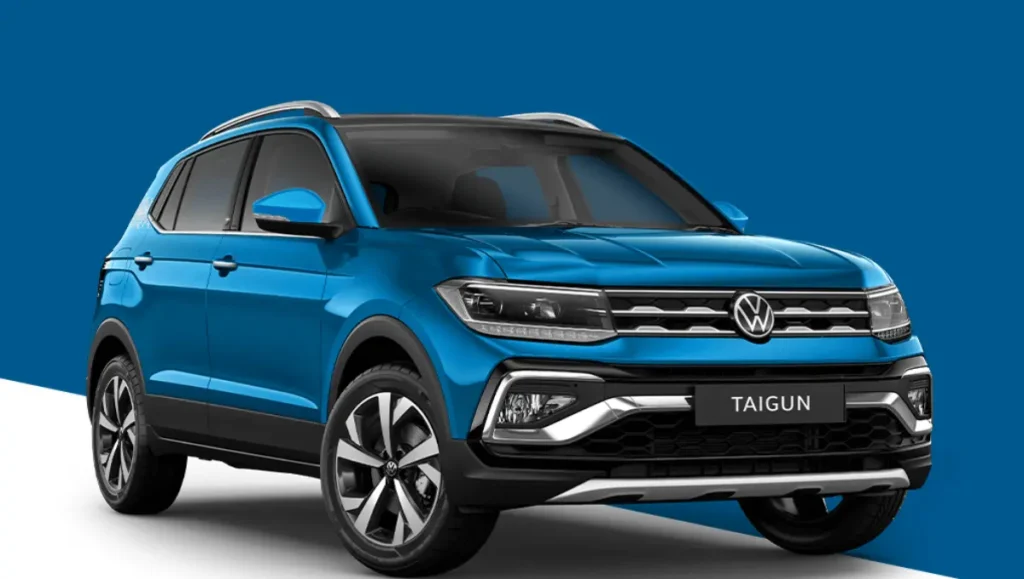
- Volkswagen Taigun – Savings of up to ₹68,400
- Volkswagen Tiguan R-Line – Savings of up to ₹3,26,900
Apart from GST-related discounts, Volkswagen is launching festive limited-period offers:
- In up to ₹1.61 lakh on chosen Taigun versions
- In up to ₹3 lakh on the Tiguan R-Line
These offers are applicable across dealerships, and customers can confirm variant-wise discounts at the nearest Volkswagen showroom.
What GST 2.0 Means for the Auto Industry
The GST Council’s GST 2.0 overhaul is a sweeping reform of India’s automotive tax system. Through the restructuring of tax slabs in different vehicle segments, the government hopes to boost demand in mass-market segment vehicles while levying greater taxes on luxury purchases.
Here’s a quick rundown of how things were changed with GST 2.0:
Small cars, two-wheelers of up to 350cc, three-wheelers, buses, trucks, and ambulances → Reduced tax rate from 28% to 18%
- Auto parts → Standardized at 18% GST, putting an end to confusion generated by dual HS codes
- Small hybrids (petrol < 1,200cc, diesel < 1,500cc, length < 4,000mm) → Reduced tax slabs to promote greener mobility
- Luxury vehicles, large SUVs, and bikes over 350cc → Tax rate raised to 40%
- Agricultural equipment → GST cut from 12% to 5%, benefiting tractors, harvesters, threshers, and sowing machines
Volkswagen’s Strategy: Aggressive Festive Push
By passing on the full GST benefit rather than subsidizing part of it, Volkswagen is sending out the message that it is committed to acquiring customers’ confidence in a competitive marketplace. The timing is no accident either—India’s festive season is when car sales historically experience a spike, and all automakers seek to ride consumer sentiment.
With competitors too planning to roll out GST-related cuts, Volkswagen’s pre-emptive action has an early mover advantage when it comes to luring cost-conscious customers.
How Volkswagen Models Gain
Volkswagen Virtus – The Premium Sedan Now More Affordable
The Virtus, Volkswagen’s fashionable mid-size sedan, already has a reputation for robust build quality, roomy interiors, and upscale feel. With savings of up to ₹66,900, it is now an even more formidable rival to the likes of Honda City, Hyundai Verna, and Skoda Slavia.
Volkswagen Taigun – Big SUV with Little Cost
The Taigun is Volkswagen’s best bet in India’s fiercely competitive compact SUV space. With discounts of up to ₹68,400 along with festive offers of up to ₹1.61 lakh, the Taigun is now priced more aggressively against rivals such as the Hyundai Creta, Kia Seltos, and Maruti Grand Vitara.
Volkswagen Tiguan R-Line – Luxury SUV Sees Drastic Drop
The most significant beneficiary of GST 2.0 is certainly the Tiguan R-Line, which receives a staggering ₹3.26 lakh GST-related price reduction along with festive offers of up to ₹3 lakh. That’s an almost-₹6 lakh discount for those looking to purchase a premium German SUV, which transforms the Tiguan R-Line into an unmissable alternative for potential buyers looking at cars in the luxury segment.
Customer-Centric Approach
Talking of the reform, Volkswagen India highlighted its customer commitment by making sure each rupee of GST savings reaches the consumer. In contrast to other brands that keep part of tax benefits to manage margins, Volkswagen is choosing full transparency—a decision bound to boost its goodwill among Indian consumers.
This aligns too with the company’s global reputation for placing importance on value, safety, and premium engineering without compromising.
Broader Effect of GST 2.0 on Consumers
- While Volkswagen’s portfolio directly benefits from price relief, the broader industry effect of GST 2.0 cannot be ignored:
- Frugal buyers will enjoy cheaper small cars and two-wheelers, driving demand in rural and semi-urban markets.
- Farmers and agribusinesses gain with lower GST on farm machinery, reducing equipment cost.
- Luxury consumers will now pay extra, establishing a stark divide where affordability fuels mass-market expansion while luxury is a premium dream.
- For buyers, this overhaul brings fairness and transparency—mass vehicles become affordable, while premium ownership is more expensive.
Volkswagen’s Position in India
Volkswagen presently retails Virtus, Taigun, Tiguan R-Line, and Golf GTI in India. Its sedan and mid-size SUV business will be expected to witness good traction with the introduction of GST-linked prices, particularly ahead of festive-season buying by Indian families.
- With its steeply discounted prices, Volkswagen is not just seeking to hold on to its existing clients but also win over new customers who were previously set to buy from Korean or Japanese competitors.
- With the roll-out of GST 2.0, India’s automobile sector entered a new paradigm of affordability and openness. For consumers, the most important takeaway is obvious—cars that were previously beyond their reach are now within their grasp.
- Volkswagen, in forwarding 100 percent of the GST relief, has emerged as one of the earliest auto manufacturers to welcome the shift with open arms. Starting from the Virtus sedan to the Taigun SUV and the luxury Tiguan R-Line, the automaker has made sure that each customer feels the benefit directly in their pocket.
- With India’s festival season looming, the timing can’t be more apt. For those wanting a combination of German engineering, safety, and style, Volkswagen’s lineup now has more value than ever.
- With this aggressive move, Volkswagen is not merely reducing prices—it’s reinforcing trust, fostering loyalty, and solidifying its position in India’s rapidly changing auto industry.
—