Yamaha FZ-Rave Vs TVS Apache RTR 160 – full spec comparison and buying advice
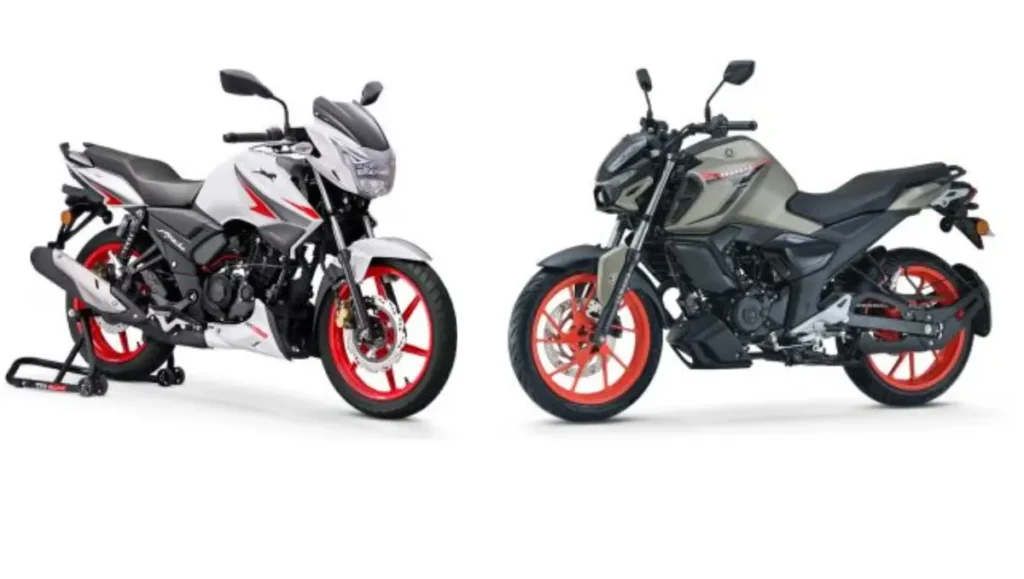
When people talk about the Yamaha FZ-Rave Vs TVS Apache RTR 160, the discussion instantly brings up how competitive the 150-160 cc space has become in India. These two motorcycles sit right in the heart of that segment, and although they might look similar to someone just beginning to explore their options, they’re actually built with fairly different intentions. And that’s where the confusion usually begins. So instead of just staring at spec sheets, it helps to approach this comparison the way an everyday rider would: by breaking things down into how they perform, how they feel and how they fit into real-life routines.
Pricing and variant lineup
Let’s start simple. Price. The Yamaha FZ-Rave usually sits close to the 1.17 lakh ex-showroom range, depending on location. The TVS Apache RTR 160, on the other hand, generally starts a bit lower, hovering around the 1.11 lakh mark for the base model. Now that gap isn’t massive, but when you’re buying a bike in this category, small differences matter because they tend to affect what features get added or skipped. The Apache offers more variants and colours, while the FZ-Rave keeps things tighter and more focused, which some riders appreciate because it avoids decision fatigue.
Engine and performance
Once you go beyond price, the Yamaha FZ-Rave Vs TVS Apache RTR 160 debate inevitably shifts to the engine. The FZ-Rave runs a 149 cc engine that produces modest figures—roughly 12.4 PS and 13.3 Nm. On paper it may look soft, especially when you put it next to the Apache’s bigger 159.7 cc unit, which pushes out around 16 to over 17 PS depending on the variant, and torque figures that also edge slightly higher.
But numbers can mislead if you don’t look at the experience behind them. The Apache is very much a performer—it wants to rev, it wants to be ridden fast and it rewards you for being an attentive rider. The FZ-Rave, in contrast, is more like that calm friend who doesn’t try to impress by being loud. It flows through traffic, feels noticeably smoother and behaves predictably, even when you’ve had a long and tiring day.
This is why many riders reconsider the Yamaha FZ-Rave Vs TVS Apache RTR 160 once they actually test both. The Apache thrills. The FZ-Rave relaxes. And the right choice depends heavily on the kind of riding you enjoy.
Yamaha FZ-Rave Vs TVS Apache RTR 160 Specification Comparison
| Specification | Yamaha FZ-Rave | TVS Apache RTR 160 |
|---|---|---|
| Engine Capacity | 149 cc | 159.7 cc |
| Power Output | 12.4 PS | 16 to 17.3 PS (variant based) |
| Torque | 13.3 Nm | 13.8 to 14.7 Nm |
| Kerb Weight | Around 135 kg | Around 137 to 139 kg |
| Mileage (Real World) | 42 to 45 kmpl | 45 to 48 kmpl |
| Braking System | Front Disc, Rear Drum, Single Channel ABS | Disc or Drum (rear based on variant), Single Channel ABS |
| Suspension Setup | Telescopic Front, Monoshock Rear | Telescopic Front, Monoshock Rear |
| Instrument Console | Digital Analog Combo | Fully Digital (variant based) |
| Seat Height | 790 mm | 790 mm |
| Price Range (Ex Showroom) | 1.17 lakh approx | 1.11 to 1.25 lakh approx |
Ride, handling and comfort
Move past the engine and you begin to notice how differently these bikes feel once they’re on the road. The FZ-Rave leans toward comfort. Its suspension does enough to absorb bad patches without making the rider bounce around. The riding posture is upright and friendly, and the seat seems tuned for people who spend a lot of time in city traffic.
The Apache, on the other hand, has a bit more edge. A sportier stance, quicker steering and a chassis that loves being flicked around corners. It feels alive, but that liveliness also comes with slightly firmer behaviour. If you ride on uneven roads, the Apache’s firmness shows up more often. But give it a smooth stretch or a twisty road, and that same firmness becomes a strength.
So again, the Yamaha FZ-Rave Vs TVS Apache RTR 160 comparison depends on where you ride and how often. For regular city runs, the FZ-Rave feels like less work. For spirited weekend rides, the Apache makes more sense.
Features and tech
Feature differences are subtle but noticeable. The FZ-Rave is more minimalistic with LED headlamp, clean styling and a cluster that gives you only what you need. The Apache adds a little more flair. More colours, more variants, digital displays, sport-inspired graphics and an overall sense of wanting to stand out. Even mileage claims tilt slightly in favour of the Apache in many tests, landing around the mid-40s in real usage.
Both bikes obey the segment rules, but one does so quietly and the other tries harder to grab attention. That’s probably the easiest way to sum up the feature comparison.
Value, ownership and long-term thinking
Ownership value is where things even out again. Yamaha has a reputation for refined engines, long-term durability and easy upkeep. TVS, however, has built a very strong service network across cities and smaller towns, often making it easier to get parts quickly.
If your daily riding is high and you want something that just gets the job done with zero drama, the FZ-Rave fits neatly into that lifestyle. If you’re someone who wants a bit of excitement every time you start the bike, the Apache tends to keep that excitement alive even years later. And that’s an underrated part of ownership.
Which bike should you choose?
The Yamaha FZ-Rave Vs TVS Apache RTR 160 debate isn’t about which machine is “better” objectively. It’s about which one aligns with who you are as a rider. A practical commuter who values comfort and quiet confidence? The FZ-Rave. A slightly aggressive rider who wants a punchy engine and enjoyable weekends? The Apache.
Think of it this way: the FZ-Rave blends into your daily routine and makes it easier. The Apache adds energy to your routine and makes it more engaging.
Final thoughts
After spending enough time understanding both, the essence of the Yamaha FZ-Rave Vs TVS Apache RTR 160 comparison becomes clear. The FZ-Rave is built for calm, consistent, everyday riding. The Apache is built for spark, excitement and the occasional adrenaline rush. They’re both competent, both reliable and both respected, but they aim at different personalities.
The smart choice isn’t the one with the bigger engine or the lower price. It’s the one that matches your riding habits, your comfort level and what you expect from your motorcycle every single day. And whichever side you choose in the Yamaha FZ-Rave Vs TVS Apache RTR 160 discussion, you’ll still walk away with a strong and capable machine that holds its ground in one of India’s toughest segments.
FAQs – Yamaha FZ-Rave Vs TVS Apache RTR 160 comparison
1. Which bike is better overall in the Yamaha FZ-Rave Vs TVS Apache RTR 160 comparison?
Both bikes excel differently. The Yamaha FZ-Rave offers more comfort and smoothness for daily commuting, while the TVS Apache RTR 160 gives stronger performance, quicker acceleration and a sportier feel.
2. What is the price difference between the Yamaha FZ-Rave and TVS Apache RTR 160?
The Yamaha FZ-Rave is priced around 1.17 lakh ex showroom, while the TVS Apache RTR 160 starts near 1.11 lakh. The Apache is slightly more affordable depending on location and variant.
3. Which bike has the more powerful engine in the Yamaha FZ-Rave Vs TVS Apache RTR 160 comparison?
The TVS Apache RTR 160 produces more power and torque from its 159.7 cc engine. The Yamaha FZ-Rave uses a smoother 149 cc engine that prioritises refinement and city-friendly performance.
4. Which bike offers better mileage?
The TVS Apache RTR 160 usually returns slightly better mileage, often in the mid-40 kmpl range. The FZ-Rave delivers competitive efficiency but focuses more on ride comfort than economy.
5. Which bike is more comfortable for daily commuting?
The Yamaha FZ-Rave is better suited for everyday commuting thanks to its upright seating, smoother suspension and relaxed ergonomics.
6. Is the TVS Apache RTR 160 better for performance riders?
Yes. The Apache RTR 160 has a sportier stance, sharper response and livelier power delivery, making it a strong choice for riders who enjoy enthusiastic riding.
7. Which bike handles better: the Yamaha FZ-Rave or TVS Apache RTR 160?
The Apache RTR 160 offers sharper handling and quicker steering. The Yamaha FZ-Rave prioritises stability and comfort, making it more friendly for long and relaxed rides.
8. Which motorcycle has lower maintenance costs?
Both offer manageable maintenance costs. TVS generally has lower parts pricing, while Yamaha is known for strong engine longevity and reliable build quality.
9. Which bike is better for pillion comfort?
The Yamaha FZ-Rave provides a more comfortable pillion seat and smoother suspension feel, making it a better option for frequent two-up riding.
10. Which should you buy: the Yamaha FZ-Rave or TVS Apache RTR 160?
Choose the Yamaha FZ-Rave if you prefer comfort, refinement and daily usability. Choose the TVS Apache RTR 160 if you want stronger performance, sportier handling and a more engaging riding experience.
—