Renault Kwid Facelift Debuts Abroad: Key Changes Revealed
The global automotive market has always had a voracious appetite for cheap and tough-looking entry-level hatchbacks and the Renault Kwid Facelift has recently made headlines after its official international debut. Originally unveiled in Latin America during a high-profile industry showcase at the Festival Interlagos in São Paulo, this heavily updated model brings a wave of comprehensive cosmetic, technological, and safety enhancements to the popular budget vehicle. Because the Kwid has historically served as a critical volume driver for the French automaker across emerging markets—including a very special place in the Indian entry-level segment—car enthusiasts and prospective buyers alike are eagerly asking a singular question: Will this intensive Renault Kwid Facelift eventually make its way to Indian showrooms?
To answer that question thoroughly, one must examine what makes this international iteration so different from older versions, how it compares to iterations sold in domestic markets, and what Renault’s overarching product strategy implies for the future of budget mobility.
Comprehensive Design Overhaul on the Renault Kwid Facelift
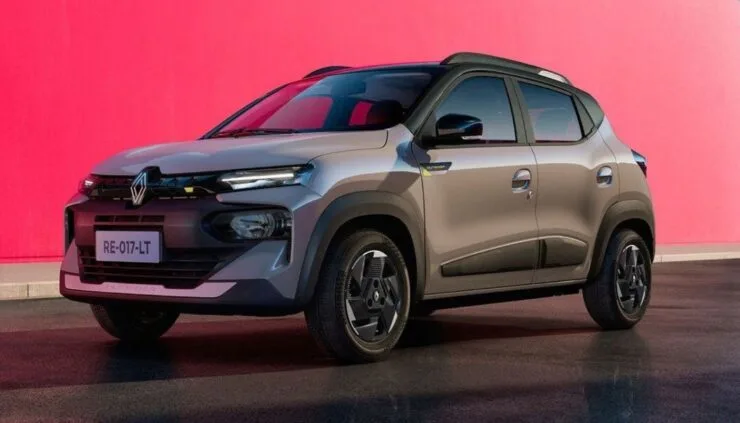
The most striking aspect of the newly introduced Renault Kwid Facelift lies in its heavily revised front fascia. While the vehicle retains its signature high ground clearance, squared-off wheel arches, and mini-SUV proportions that made the nameplate an instant hit a decade ago, the styling details have been thoroughly modernized to mirror Renault’s contemporary global design philosophy.
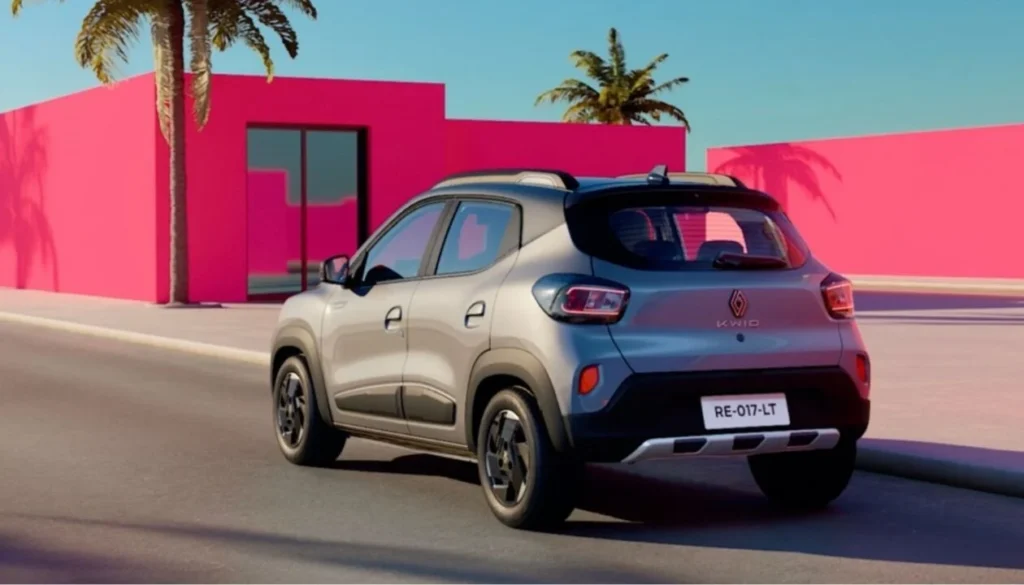
The front end now showcases a completely redesigned bumper assembly coupled with a gloss-black upper grille element that houses Renault’s latest corporate logo. Flanking this central structure are slim, modern LED daytime running lights (DRLs) that impart a much wider, more aggressive stance to the compact city car. Meanwhile, the main headlamp clusters have been repositioned lower down into the beefier two-tone front bumper, mimicking styling cues seen on larger global SUVs in the Renault-Nissan alliance stable.
Moving toward the side profile, the vehicle features revised side body graphics and new wheel options. Depending on the selected trim level—which spans across the Evolution, Techno, and range-topping Outsider variants—buyers are greeted with eye-catching 14-inch diamond-cut alloy wheels or redesigned wheel covers. The changes at the rear are a bit more subtle but equally effective, with clear-lens translucent tail-lamps with dark internals dominating the rear, a redesigned two-tone rear bumper with a silver-colored faux-skid plate and a sleek shark-fin antenna in place of the traditional roof-mounted aerial.
Interior Tech Upgrades and Cabin Layout Changes
While the exterior changes give the car a new lease of life, it’s the cabin of the Renault Kwid Facelift that gets the lion’s share of the functional upgrades. Step inside and you are immediately struck by a cleaner, more contemporary dashboard layout designed to appeal to tech-savvy young buyers.
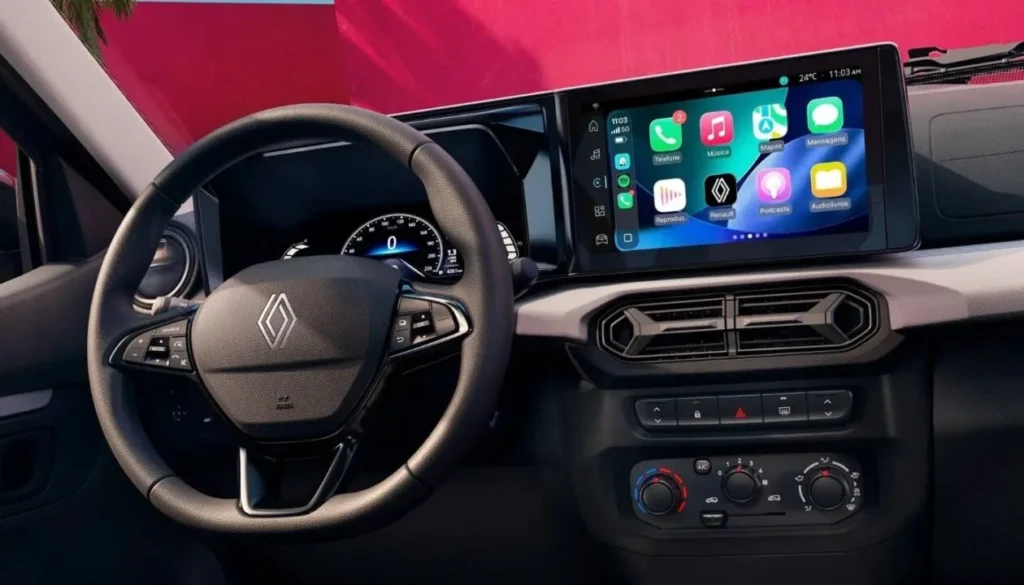
The biggest highlight of the interior is a massive, free-standing 10.1-inch capacitive touchscreen infotainment system on offer on the higher Techno and Outsider trims. The upgraded display now features seamless, wireless mirroring capabilities for Apple CarPlay and Android Auto, a significant improvement over the smaller 8-inch or 7-inch units in previous versions. Accompanying this central screen is a sharp 7-inch digital TFT instrument cluster that replaces the older semi-digital analog setups, offering the driver clear displays for vehicle telemetry, fuel efficiency, and trip information.
Now at the helm sits a modern three-spoke multifunctional unit with the new brand logo and integrated audio and phone controls. Renault has also paid attention to quality and comfort, with new seat upholstery options, detailed 3D patterns for mid-level trims and premium synthetic accents with laser-engraved details for premium variants. Practicality is also an important focus, with dual Type-C USB charging ports, manual air conditioning, power front windows and well-placed storage compartments throughout the cabin.
Under the Hood: Engine Specs and Efficiency
The International Renault Kwid Facelift keeps up with its legacy of being efficient. Powering the hatchback is the tried-and-tested 1.0-litre, three-cylinder naturally aspirated flex-fuel engine.
Because the international market model utilizes flex-fuel technology, its power output varies slightly depending on the fuel mixture:
- On Ethanol: The engine produces roughly 71 horsepower (hp) at 5,500 rpm and a peak torque of 98 Nm.
- On Petrol: The output shifts to 68 horsepower (hp) and 92 Nm of peak torque.
Power is transmitted to the front wheels via a standard 5-speed manual transmission. To boost urban efficiency and lower tailpipe emissions, Renault has also integrated a responsive Start-Stop engine system across the lineup, which automatically cuts power during extended idling periods at city traffic signals. Performance figures still make sense for city driving, clocking in at about 13.5 to 14 seconds from 0-100 km/hr.
Safety Equipment Updates on the New Kwid
Safety has always been a big talking point for entry-level hatchbacks, and the latest version of the Renault Kwid Facelift makes significant progress. The standard safety kit on all global versions now includes:
- Four Airbags as standard equipment
- Electronic Stability Control (ESC)
- Hill-Start Assist (HSA) for smooth incline starts
- Tyre Pressure Monitoring System (TPMS)
- Anti-lock Braking System (ABS) with Electronic Brakeforce Distribution (EBD)
- Rear Parking Sensors and Reversing Camera
- ISOFIX Child Seat Anchor Mounts
These upgrades boost the vehicle’s safety rating, giving it a well-rounded package for small families traveling through dense urban settings.
Is the Renault Kwid Facelift India-Bound?
The most burning question for automotive buffs in the subcontinent is whether this comprehensive Renault Kwid Facelift will launch in the Indian market. The context here is nuanced. Renault India introduced a minor, targeted update to the domestic Kwid lineup, featuring fresh 3D badging, updated steering designs, simplified variant structures (Evolution and Climber), and competitive ex-showroom pricing. However, that domestic update did not incorporate the radical sheet-metal and bumper transformations, the 10.1-inch floating display, or the aggressive split-headlamp layout seen on the Brazilian car.
Industry experts and insiders suggest that an immediate launch of the exact Brazilian-spec Renault Kwid Facelift in India is unlikely. And a lot of capital investment is required to localize the heavier front-end tooling, complete digital cockpit configurations and specialized global body panels. An expenditure that may not be in sync with the hyper-competitive, cost-sensitive nature of the Indian entry-level hatchback segment.
Instead, automotive analysts point toward a more strategic horizon. Renault is currently focusing on broader long-term product strategies for India, including rumors of developing a completely next-generation entry platform under its new global architecture program. The future platform is being developed for multiple powertrains – possibly ranging from advanced petrol, hybrid and electric configurations – which would be a much larger evolutionary leap than simply adapting an international cosmetic facelift.
Market Position and Future Outlook
The launch of the Renault Kwid Facelift in international markets proves that the French automaker still sees immense value in keeping its smallest vehicle visually sharp, technologically relevant and appealing to younger demographic buyers. While Indian buyers may not get this exact iteration in the immediate future, the refresh highlights features, cabin architectures and safety standards that Renault considers vital for the evolution of entry-level mobility.
As the automotive landscape moves toward smarter, more connected cabins and stricter safety regulations, the lessons learned from the global rollout of the Renault Kwid Facelift will undoubtedly impact a the trajectory of budget hatchbacks worldwide. be it minor cosmetic trickle-downs or a completely re-imagined future successor, the Kwid nameplate remains an indispensable pillar of Renault’s global footprint